How to Take Out a Street Light: Removing the Head, the Lamp or the Whole Pole
Step-by-step removal of a street light head for replacement or retrofit: who is allowed to do it, isolation, lifting weights from our product tables, disposal of old lamps, and when the pole goes too.
Key points
- Public street lights belong to the council or utility; only they or their contractor may remove one. Report a problem light rather than touching it.
- On a private road or site, removing a head is a two-person electrical job from a lifting platform, with the circuit isolated and locked off.
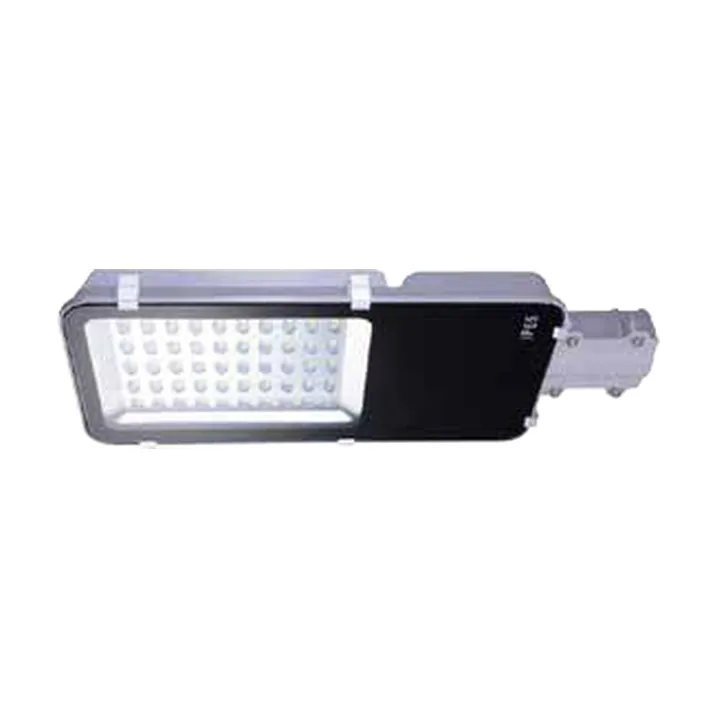
- Old heads are often far heavier than LED replacements: our LED heads weigh 1.1–12 kg depending on size, so check the weight before lifting.
- Old sodium and mercury lamps contain mercury and must go to a lamp recycler, not general waste.
People search for how to take out a street light for very different reasons: a resident annoyed by glare, an estate manager with a broken lantern, or a contractor about to swap sodium heads for LED. The answer starts with one question: who owns the light? After that, removing a head is a short electrical job, but one done at height, on a live network, with heavy equipment. This guide covers who may do it and how it is done safely.
First: who owns the light?
On a public road, the light belongs to the council, the highway authority or the utility. Only they or their contractor may remove or disconnect it. If a light is broken, flickering or shining into a bedroom, report it to them. Many authorities can fit a back shield, change the optic or dim the light. The pole number, usually on a plate or sticker at eye level, tells the authority exactly which light you mean.
On private property such as a factory road, a car park, a residential estate or a campus, the owner is responsible. The work should be done by a qualified electrician with the right access equipment. The rest of this guide is for that case.
What you are removing
| Job | What comes off | Typical reason |
|---|---|---|
| Lamp only | Bulb from an old lantern | Lamp failure, before an LED retrofit |
| Head (luminaire) | Whole light from the arm | Replacement, LED upgrade, damage |
| Head and arm | Light and bracket | New arm length or angle |
| Complete pole | Pole, base and cable | Road works, accident damage, relocation |
Most jobs are a head replacement. The pole stays, and the new head goes on the same arm. If you are deciding between a new LED lamp in the old lantern and a complete LED head, see LED street light bulb vs fixture.
Plan the lift: know the weight
Old sodium lanterns with a magnetic ballast and glass bowl are heavy. LED heads are usually lighter, but the range is wide. From our product tables:
| Our model | Power | Weight |
|---|---|---|
| LDZ30J compact | 20 W | 1.1 kg |
| LDZ30J compact | 80 W | 3.82 kg |
| BGLDM30J slim modular | 150 W | 3.5 kg |
| BGLDM30G modular | 150 W | 4.1 kg |
| LDM30C modular | 150 W | 6.85 kg |
| LDM30C modular | 350 W | 12.0 kg |
At 8–12 m on a platform, even a 7 kg head is awkward to hold while undoing clamp bolts. Plan for two people, or a lifting sling on the platform. Our LED street light housing article lists the dimensions of every body.
Step by step: removing a street light head
- Set up traffic control. Cones, signs and, on busy roads, a traffic management plan. The platform truck will occupy a lane.
- Isolate the supply. Switch off at the feeder pillar or control cabinet, then open the pole’s hand hole and remove the cut-out fuse. Lock off and tag. Street lighting circuits are often fed from a common cable along the road; isolating one light at the pole fuse is usual practice, but follow your network’s rules. See light pole hand hole for what is inside.
- Prove dead. Test at the cut-out with an approved voltage tester before touching the cable. Photocells can switch lights on unexpectedly, so never rely on the light being off.
- Raise the platform to a comfortable working position beside the head, not under it.
- Open the head and disconnect the supply cable at the terminal block. Note the wire colours and any control wires (dimming, photocell socket).
- Support the head. Second person or sling takes the weight.
- Loosen the spigot clamp bolts (side-entry heads) or the post-top set screws. Corroded bolts may need penetrating oil and patience; do not lever the arm.
- Slide the head off the arm and lower it to the platform.
- Make the cable safe if the new head is not going on straight away: insulate and tape the ends, and leave the fuse out.
- Record the location, pole number and what was removed.
Fitting the replacement
Check three things before the new head goes up:
- Spigot fit. The clamp range of the new head must suit the arm’s outer diameter. Our street light bracket guide covers arm types.
- Pole capacity. A heavier or larger head increases the load on the arm and pole; see light pole EPA.
- Tilt. Set the tilt the design calls for. Most LED road optics are designed for 0–5°; too much tilt raises glare.
Then reconnect, refit the fuse and test, including the photocell or control node. Our street light installation procedure covers commissioning tests.
Removing a complete pole
Removing a pole is civil and electrical work together: the cable is disconnected at the cut-out and made safe at the feeder end or at the adjacent pole, the head and arm come off first, and a crane or truck-mounted lifter takes the pole once the anchor nuts are released or the buried section is excavated. Breakaway bases and direct-burial poles need different handling; see breakaway light pole base and direct burial light pole.
Disposal
- Sodium, metal halide and mercury lamps contain mercury. Keep them whole and take them to a lamp or WEEE recycler.
- Old lanterns and ballasts are electrical waste; ballasts may contain capacitors that should be recycled, not dumped.
- LED heads are electronic waste too; under WEEE rules in Europe they go to an authorised collection point.
When to replace rather than repair
If the head is a sodium lantern more than ten years old, replacing it with an LED head is often cheaper over a few years than repairing the old one. Our HPS to LED conversion chart and the LED retrofit savings calculator help put a figure on it.
What to send us
The number of heads, the old lamp type and wattage, pole height, arm diameter and a photo of the existing head. We will propose a replacement that fits the arm, with its weight and dimensions.
Sources
Frequently asked questions
Can I take out a street light outside my house?
No. Street lights on public roads belong to the local council or utility. Removing or disabling one is not allowed and can be dangerous. If a light shines into your window, ask the owner about a shield or a different optic.
Who removes street lights?
The council, the utility or a contractor working for them. On private estates, factories and car parks, the owner's qualified electrician does it.
How heavy is a street light head?
LED heads in our range weigh from 1.1 kg (20 W compact) to 12 kg (350 W modular). Older sodium lanterns with ballast and glass are often heavier, so check before lifting.
Do I need to remove the pole to replace a street light?
Usually not. The head comes off the arm and a new one goes on the same arm, provided the spigot size fits and the pole can carry the new weight and area.
How do I dispose of old street light lamps?
High-pressure sodium, metal halide and mercury lamps contain mercury. Take them to a lamp or WEEE recycler. Do not break them or put them in general waste.