
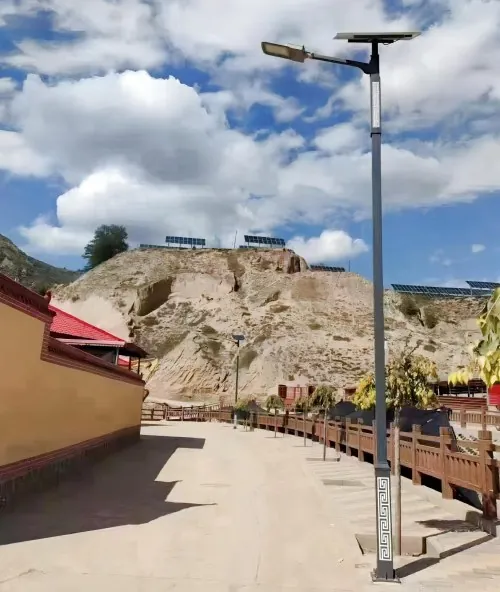
A solar street light is only as good as its sizing. The same 60 W lamp can work for years in Dubai and fail in its first rainy season in Lagos if the battery and panel are not matched to the site. That is why we start every solar project with your location, not with a catalogue.
All-in-one or split: which one fits your project?
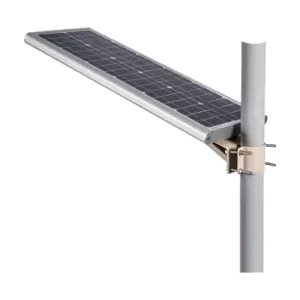
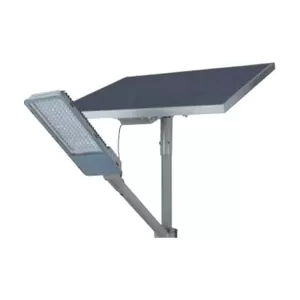
| All-in-one (integrated) | Split system | |
|---|---|---|
| Layout | Panel, battery, controller and LED in one housing | Separate panel on top of the pole, battery in a box or buried |
| Typical output | 20–120 W LED | 30–200 W LED |
| Installation | Fastest — one fixture per pole | More wiring, but more flexible |
| Battery size | Limited by the housing | Can be sized for long rainy seasons |
| Best for | Village roads, residential streets, car parks, rural electrification | Main roads, high poles, sites with low sun or 4–5 nights of autonomy |
What decides how long the light stays on
- Peak sun hours at the site. Nigeria's north gets far more sun than its coastal south. We use satellite data for your exact location.
- Nights of autonomy. How many cloudy days in a row the light must survive. Two to three is normal; monsoon regions need more.
- The lighting schedule. A typical profile is 100% from dusk to midnight, 30% until dawn, with motion sensors boosting to 100% when people or vehicles pass. This roughly halves the battery size compared with running at full power all night.
- Battery chemistry and depth of discharge. LiFePO4 can be used down to 80–90% depth of discharge; lead-acid should stay above 50%.
You can try the numbers yourself with our solar street light calculator, or send us your project and we will do the sizing.
What you receive from us
- A configuration sheet for your site: LED wattage, panel, battery, controller and lighting schedule
- A lighting layout for your road width and pole spacing on request
- Complete sets including poles, brackets and anchor bolts
- Factory testing before shipment and packing for container transport
Where our solar street lights are used
Rural and village roads, residential estates, car parks, campuses, parks, perimeter roads at factories and mines, and off-grid areas where running a cable would cost more than the light itself.