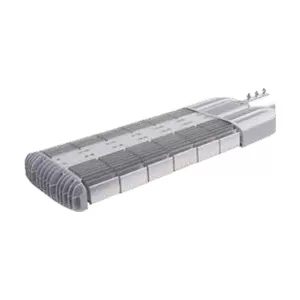
Light Pole vs Street Light: What Each Term Means and Why It Matters When Ordering
A street light is the luminaire; a light pole is the structure that holds it. How the two are specified separately, how pole height sets spacing, and an 8 m road example.
Key points
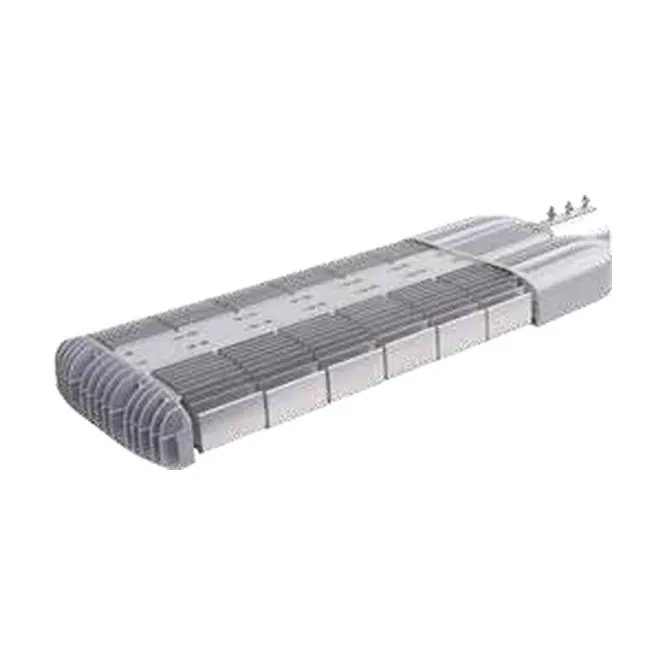
- A street light is the luminaire, the head that makes the light. A light pole is the support: shaft, base, arm and foundation.
- 'Street light' is also used for the whole assembly, which causes most ordering mix-ups. Quote the head and the pole as separate lines.
- The pole sets the mounting height, and height sets spacing: in our calculator an 80 W light on an 8 m pole covers a 7 m road at 28 m spacing.
- Light poles also carry area lights, floodlights, signs and cameras; street lights can also hang on walls, cables or wooden utility poles.
When a buyer asks us for “50 street lights”, the first question we ask back is whether that means 50 luminaires or 50 complete sets with poles. The two words are often used interchangeably, but they describe different products with different specifications, suppliers and lead times. This short guide sets out the difference and shows why the pole matters as much as the light when you plan a road.
The short answer
- Street light — the luminaire: housing, LEDs, optics and driver. It is what produces and directs the light.
- Light pole — the structure: the shaft (or column), the base plate or buried section, the arm or bracket, and the foundation. It holds the luminaire at a set height and angle.
In everyday speech, “street light” is also used for the whole assembly standing at the roadside. That is why a tender should always list the two as separate items.
What belongs to each
| Part | Street light | Light pole |
|---|---|---|
| LEDs, lens, driver | Yes | — |
| Housing and heat sink | Yes | — |
| Photocell or control socket | Usually on the light | — |
| Shaft and base plate | — | Yes |
| Arm or bracket | — | Yes (sometimes supplied with the light) |
| Anchor bolts and foundation | — | Yes |
| Hand hole, cable and fuse | — | Yes |
Our street light pole guide covers pole shapes, materials and typical dimensions. The parts where the two meet, such as the tenon and the bracket, are where most fitting problems happen.
Light poles carry more than street lights
A light pole is a general support. Besides street lights, it can carry:
- area and parking lot lights on square or round poles;
- floodlights on sports fields and high masts;
- traffic signs, cameras and small-cell radio equipment on smart poles; see our smart pole system guide.
Street lights do not always need a pole
Street lights are mounted on walls in narrow old streets, on bridge parapets, on catenary wires across a road, and on existing wooden utility poles with a bracket arm; see street light arm for wood poles.
Why the pole decides the lighting design
The luminaire’s wattage and optic set how much light reaches the road, but the pole height sets how far apart the lights can go. A taller pole spreads light over a longer stretch, so fewer poles are needed, up to a point where uniformity limits spacing to about 3.5 times the height.
We ran a two-lane, 7 m wide road through our pole height and spacing calculator with the LDM30C street light at 110 lm/W, lighting class M4, single-sided:
| Pole | Light | Spacing | Average | Per km | Load per km |
|---|---|---|---|---|---|
| 8 m | 80 W | 28 m | 17.2 lux | 36 | 2.9 kW |
| 10 m | 100 W | 35 m | 15.5 lux | 29 | 2.9 kW |
(open the 8 m example · open the 10 m example)
Both meet the M4 target of 11 lux on average in our calculation. The 10 m option needs seven fewer poles per kilometre for the same electrical load. Whether that saves money depends on the cost of taller poles and their foundations, which is why the pole and the light should be designed together. On the 8 m layout, the calculator also shows that 51 W would reach the target, so a 60 W head is a reasonable lower-cost alternative.
How to specify each one
For the street light, give: wattage or required lumens, efficacy, optic type, colour temperature, IP rating, voltage, surge protection and the control socket if needed. Our LED street light wattage guide helps with the first line.
For the pole, give: mounting height, arm length and number of arms, the luminaire’s weight and projected area (EPA), the design wind speed, base type (anchor plate or direct burial) and finish. Our light pole EPA article explains why the luminaire’s area matters for the pole. For the LDM30C, weights range from 4.5 kg (30–50 W) to 12.0 kg (350 W), and the housing length from 412 to 917 mm, so a pole designed for a 60 W head may not suit a 300 W one.
From our own projects
For the road lighting inside a Xiangtan steel plant, we supplied 43 new LED street light poles together with the luminaires, 47 floodlights, five control boxes and more than 1,600 m of cable, and carried out the foundations and installation. Supplying both made it possible to match pole height, arm and luminaire from the start rather than fitting a head to whatever pole arrived.
Common mix-ups
- “Price per street light” quoted for the head while the buyer expects a complete set.
- Replacement heads that do not fit the existing arm spigot or exceed the pole’s rated load.
- A taller pole with the same wattage, which can spread the light too thinly; check the average with the calculator.
What to send us
Road width, number of lanes, the pole height you have or plan, and whether you need luminaires only or complete sets. We will reply with a spacing and wattage from our calculator and a quotation split into the light and the pole.
Sources
Frequently asked questions
What is the difference between a light pole and a street light?
The street light is the luminaire that produces the light. The light pole is the column, with its base, arm and foundation, that holds the luminaire at the right height. In everyday speech 'street light' often means both together.
Is a lamp post the same as a light pole?
Mostly. 'Lamp post' is used for shorter, often decorative posts in parks, streets and gardens. 'Light pole' and 'lighting column' are the engineering terms for any height.
Do you sell street lights and poles together?
Yes, for projects. On a steel plant road project in Xiangtan we supplied 43 poles together with the luminaires and installed them. Our split solar street lights also come with a galvanised pole. Tell us whether you need the head only or the complete set.
How tall is a street light pole?
Usually 4–6 m for lanes and residential streets, 8–10 m for urban roads and 10–12 m or more for main roads. The pole height decides how far apart lights can be.
Can a street light be mounted without a pole?
Yes. Street lights are also mounted on building walls, bridge parapets, catenary wires and existing wooden utility poles with a bracket.