Pole-Mount LED Area Lights: Wattage, Pole Height and Spacing for Lots and Yards
Choosing pole-mounted LED area lights for lots, yards and depots: mounting options, wattage and pole spacing from our calculator, and what to check.
Key points
- Area lights mount on poles with a slip fitter, a straight arm or a direct (trunnion) mount; the mount decides the aiming and the look.
- For a 20 m wide lot lit from both sides at 8 m height, 60 W fittings at 110 lm/W give about 10 lux at 28 m spacing, by our pole spacing calculator.
- For a 12 m strip lit from one side at 6 m, 60 W fittings give about 12.6 lux at 21 m spacing; 40 W needs closer spacing (17 m).
- Check efficacy, distribution, IP rating, surge protection and the slip fitter size before comparing prices.
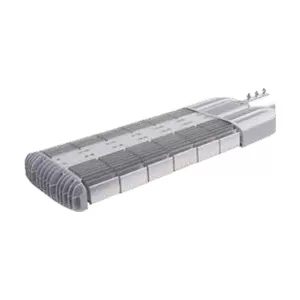
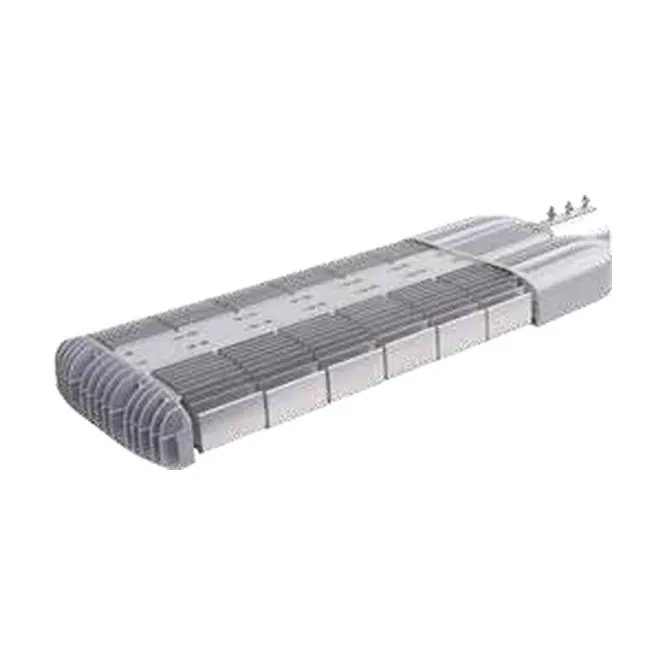
“Area light” is a broad name for LED fittings that light open spaces from poles: parking lots, truck yards, container depots, school grounds and industrial sites. Some are shaped like a shoebox, some like a street light, some like a floodlight. What they share is the job: put an even, glare-controlled level of light on a large area from a few poles. This guide covers mounting options, how to size wattage and spacing, and what to check before buying.
Three ways to mount an area light
| Mount | How it fixes | Best for |
|---|---|---|
| Slip fitter | Slides over a pole top tenon or arm end, clamped with set screws | Street-light style fittings on arms or post tops |
| Straight arm | A short arm bolted to the pole, fitting at the end | Shoebox fittings, one to four per pole |
| Direct / trunnion (yoke) | Adjustable bracket bolted to the pole or a cross arm | Floodlights aimed at a specific area |
Buyers searching for “direct mount” usually want the fitting bolted straight to the pole without an arm. That keeps the fitting close to the pole, which is neat, but it puts the light over the pole rather than over the lot. Arms of 0.5–2 m move the light outwards; our guide on street light arm design explains the effect of arm length and tilt.
Before ordering, measure the tenon or arm diameter. Slip fitters are made for specific diameters; a fitting that does not match needs an adapter.
Light levels for open areas
Typical design targets:
| Area | Typical average illuminance |
|---|---|
| Low-activity parking lot | 5–10 lux |
| Busy retail or office parking | 10–20 lux |
| Truck yards and loading areas | 20–50 lux |
| Container handling | 20–50 lux, with higher values at work points |
IES RP-20 covers parking facilities; EN 12464-2 gives values for outdoor work areas. Our parking lot lighting design guide works through a complete 100 × 60 m example.
Sizing wattage and spacing: two examples
The pole height and spacing calculator works for area lighting when the lot is treated as a wide road. Using our LDM30C modular LED light (30–350 W, more than 110 lm/W, IP67, 140° × 80° distribution), with a maintenance factor of 0.8:
Example 1: a 20 m wide lot, poles on both sides, 8 m high, 10 lux target
| Result | Value |
|---|---|
| Arrangement | Opposite (poles on both sides) |
| Utilisation factor | 0.55 |
| Spacing | 28 m (capped at 3.5 × height) |
| Average illuminance at 60 W | about 10.3 lux |
| Wattage that would just reach 10 lux at 28 m | about 58 W |
Example 2: a 12 m wide strip, poles on one side, 6 m high, 10 lux target
| Fitting | Spacing | Average illuminance |
|---|---|---|
| 60 W | 21 m (capped at 3.5 × height) | about 12.6 lux |
| 40 W | 17 m | about 10.3 lux |
The second example shows a trade-off that applies to most area lighting: fewer, more powerful fittings on taller poles, or more, smaller fittings on shorter poles. Poles and foundations often cost more than fittings, so fewer poles usually win when the site allows.
Taller poles for larger areas
For a 20 m wide lot with 10 m poles and 100 W fittings, the calculator gives 35 m spacing and about 12.7 lux. Above about 12–15 m, high mast lighting becomes more economical for very large yards; see our guide to high mast parking lot lights.
What to check before buying
- Measured efficacy of the whole fitting. Use the LM-79 figure, not the LED chip rating.
- Light distribution. Street-light optics spread light along the lot; floodlight optics throw it forward. A round or symmetric pattern suits the middle of a lot; asymmetric suits edges.
- Glare and spill. Flat-glass, full cut-off fittings keep light off neighbours and out of drivers’ eyes.
- IP and surge protection. IP66 or IP67 and surge protection of 10 kV or more are normal for pole-top fittings.
- Mount and weight. Check the slip fitter size, the weight and the wind area against the pole’s rating.
- Controls. Photocells, dimming schedules or motion dimming cut energy in lots used mainly in the evening.
Photocells and dimming
Most area lights run dusk to dawn, about 4,000 hours a year. A photocell is the minimum control; see our guide to photocells for outdoor lights. Dimming to 50 % after midnight, when lots are nearly empty, saves about a third of the energy. For a 60 W fitting at $0.15/kWh, that is about $12 a year per fitting, which adds up over a site with dozens of poles.
Solar area lights
Where power is not available at the pole, solar area lights avoid trenching. They need careful sizing for the winter sun at the site; our solar parking lot lighting guide shows how.
Post tops vs area lights
For walkways and plazas, decorative post tops on 3–5 m poles are often a better choice than area lights; see our post top area light guide. For vehicle areas, area lights on 6–10 m poles give better uniformity per pole.
What to send us
- Site plan with dimensions and existing pole positions
- Target lux or the type of activity
- Pole height and tenon or arm size, if poles exist
- Supply voltage and any control requirements
We will return fitting choices, pole spacing and calculated lux levels using the same calculator linked above.
Sources
Frequently asked questions
What is a pole-mount LED area light?
A floodlight-type or street-light-type LED fitting mounted on top of or on an arm from a pole, used to light open areas such as parking lots, yards, depots and campuses.
What wattage do I need for a parking lot area light?
It depends on pole height, spacing and the lux target. For a 20 m wide lot at 8 m, our calculator gives about 60 W per fitting at 110 lm/W for 10 lux with poles 28 m apart on both sides.
How far apart should area light poles be?
A common limit is about 3.5 times the mounting height for even light, so about 28 m for 8 m poles and 21 m for 6 m poles. Lower wattage means closer spacing.
What is the difference between direct mount and slip fitter?
A slip fitter slides over the top or arm of the pole and is clamped; a direct or trunnion mount bolts the fitting to the pole or arm with an adjustable bracket. Check the pole tenon or arm diameter before ordering.