
Photocells for Outdoor Lights: How Dusk-to-Dawn Sensors Work
How photocells switch outdoor and street lights at dusk and dawn: switching levels, NEMA twist-lock types, placement, faults, and photocell vs motion sensor.
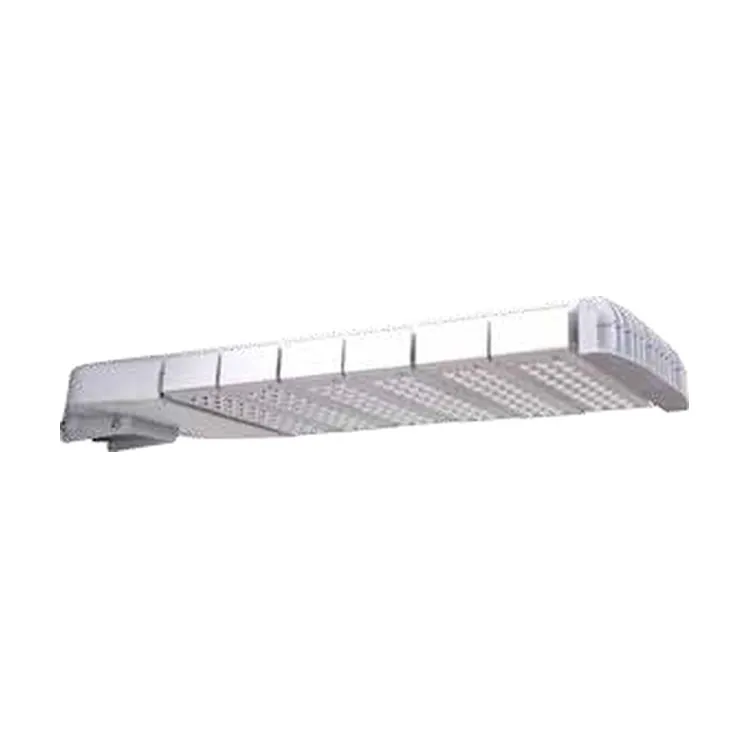
Key points
- A photocell measures ambient light and switches a light on when it gets dark and off when it gets light, with a delay so passing car lights do not trigger it.
- Street lights usually use twist-lock photocells on a NEMA socket (ANSI C136.10 three-pin, or C136.41 five- and seven-pin with dimming contacts).
- A photocell decides when a light is on; a motion sensor decides how bright it is while on. Many outdoor lights use both.
- Mount the sensor facing the sky away from the light it controls, ideally facing north in the northern hemisphere, so neither its own lamp nor the low sun fools it.
Almost every street light, wall pack and floodlight that switches itself on at dusk uses a photocell. It is one of the cheapest parts of a lighting system and one of the most frequent causes of complaints: lights burning all day, or switching off at midnight. Understanding how it works makes both easy to fix.
How a photocell works
A photocell contains a light-sensitive element (today usually a photodiode or phototransistor, older types used cadmium sulphide), a small circuit and a relay or electronic switch:
- As daylight fades below a set level, the circuit closes the switch and the light turns on.
- At dawn, as light rises above a higher level, it opens the switch.
- A time delay, typically a few seconds to a minute, stops car headlights, lightning or the light’s own reflection from cycling it.
The off level is set higher than the on level (hysteresis), so the light does not flicker on and off at twilight.
Types of photocell
| Type | Where used | Notes |
|---|---|---|
| Button (built-in) | Wall packs, floodlights, small fixtures | Wired inside the fixture, not replaceable without opening it |
| Swivel / stem-mounted | Retrofits on existing circuits | Screws into a conduit knock-out |
| Twist-lock, 3-pin (ANSI C136.10) | Street and area lights | Plugs into a NEMA socket on top of the luminaire |
| Twist-lock, 5- or 7-pin (ANSI C136.41) | Street lights with dimming | Extra pins carry 0–10 V dimming or data |
| Contactor control | Circuits of many lights | One photocell switches a contactor feeding a whole street |
The 7-pin NEMA socket is also where many smart street light nodes plug in, replacing the photocell with a controller that can dim, report faults and follow a schedule. See LED street light dimming controls.
Fail-on and fail-off
Photocells eventually fail. Many street light photocells are designed to fail on: if the electronics die, the light stays lit day and night. That wastes energy but keeps the street lit until someone notices. Fail-off types save energy but leave the street dark. Utilities often specify fail-on for safety, together with a replacement schedule.
Placement rules
- Face the sensor towards the sky, away from its own lamp. Light from the fixture reflecting back makes it switch off and cycle.
- Face north in the northern hemisphere (south in the southern), so the low sun at dawn and dusk does not hit it directly.
- Avoid other light sources: a neighbouring floodlight or illuminated sign can keep it off.
- Avoid deep shade: under a roof overhang, it may switch on in the afternoon.
- Keep it clean: dirt, bird droppings and paint raise the on time and shorten the burning hours unpredictably.
Photocell vs motion sensor
| Photocell | Motion sensor | |
|---|---|---|
| Responds to | Ambient light level | Movement (PIR heat or microwave) |
| Controls | When the light can operate | When it brightens or turns on |
| Typical use | Street lights, dusk-to-dawn lighting | Security lights, perimeters, quiet paths |
| Combined | Light stays off in daytime | Dims at night until someone passes |
For security lighting, the best results usually come from both: photocell for day and night, motion sensor for brightness. Our solar street light motion sensor guide shows how much energy motion dimming saves.
How solar lights switch without a photocell
A solar street light already has a light sensor: its panel. When the panel voltage drops below a threshold, the controller knows it is dusk and switches the LED on; when the voltage rises in the morning, it switches off. That is why a solar light placed near a bright street light or under a floodlight may not turn on. See solar street light not working for the usual fixes.
Troubleshooting
| Symptom | Likely cause | Check |
|---|---|---|
| Light on all day | Photocell failed on, bypassed, or sensor shaded | Cover the sensor in daylight; inspect wiring |
| Light never comes on | Photocell failed off, or other lights fool it | Cover the sensor at night; look for nearby light sources |
| Cycles on and off at night | Own light reflecting into sensor | Turn the sensor away, add a shield |
| Comes on too early or late | Dirty sensor, wrong orientation | Clean, re-aim north |
Replacing a photocell
Twist-lock photocells take seconds to change: switch off, turn anticlockwise, lift out, and twist the new one in with the north mark facing north. Button photocells inside a fixture need the fixture opened and are usually replaced with the driver at end of life.
What to specify
- Socket type (3, 5 or 7-pin NEMA, or Zhaga) on each luminaire
- Switching levels and time delay
- Fail-on or fail-off behaviour
- Surge rating for exposed poles
- Whether smart nodes may replace photocells later
For our modular LED street lights, the control interface and any photocell socket are confirmed with each order. Tell us how your lights are switched today, and we will propose a matching control option.
Sources
Frequently asked questions
What is a photocell on an outdoor light?
A small light sensor that turns the light on at dusk and off at dawn. It contains a light-sensitive element and a switch, often with a delay of a few seconds to a minute so that headlights or lightning do not switch the lamp off and on.
What is the difference between a photocell and a motion sensor light?
A photocell reacts to daylight and controls when the light operates. A motion sensor reacts to movement and controls when it brightens. A typical security light uses a photocell to stay off in daytime and a motion sensor to switch on or brighten at night when someone passes.
Why does my photocell light stay on during the day?
Common causes are a failed photocell (many fail in the on position by design), a sensor covered with dirt or paint, a sensor in deep shade, or wiring that bypasses the photocell. Cover the sensor with your hand in daylight: if nothing changes, the photocell or its wiring is at fault.