
Lighting Market Brief, 19 October 2026: Delhi Starts 100,000 Smart LED Streetlights, Lithium Carbonate Falls Again, Aluminium Steady
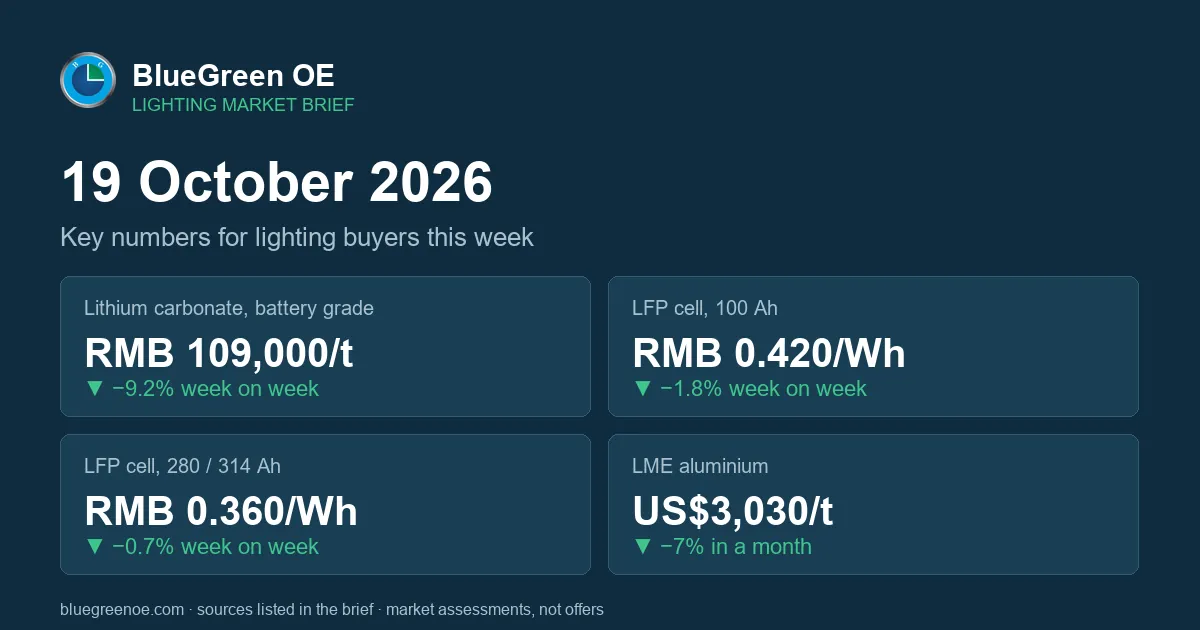
This week: Delhi launches the replacement of about 100,000 streetlights with app-monitored smart LEDs under a seven-year performance contract, battery-grade lithium carbonate drops another 9% to about RMB 109,000/t with LFP cells following, and LME aluminium holds near US$3,030/t.
Three things that matter to people who buy road and area lighting this week. Each item covers what happened, why it matters for a lighting project, and where to read more. Sources are listed at the end.
Key numbers this week
| Indicator | Latest | Change | What it affects |
|---|---|---|---|
| Lithium carbonate, battery grade (China, InfoLink) | RMB 109,000/t (14 Oct) | −9.2% week on week | Future cell prices |
| LFP cell, 100 Ah (China, InfoLink) | RMB 0.420/Wh (14 Oct) | −1.8% week on week | Battery cost of solar street lights |
| LFP cell, 280 / 314 Ah (China, InfoLink) | RMB 0.360/Wh (14 Oct) | −0.7% week on week | Large split-system batteries |
| LME aluminium | about US$3,030/t (19 Oct) | about −7% in a month, about +9% year on year | Luminaire housings and heat sinks |
1. Delhi starts replacing about 100,000 streetlights with smart LEDs
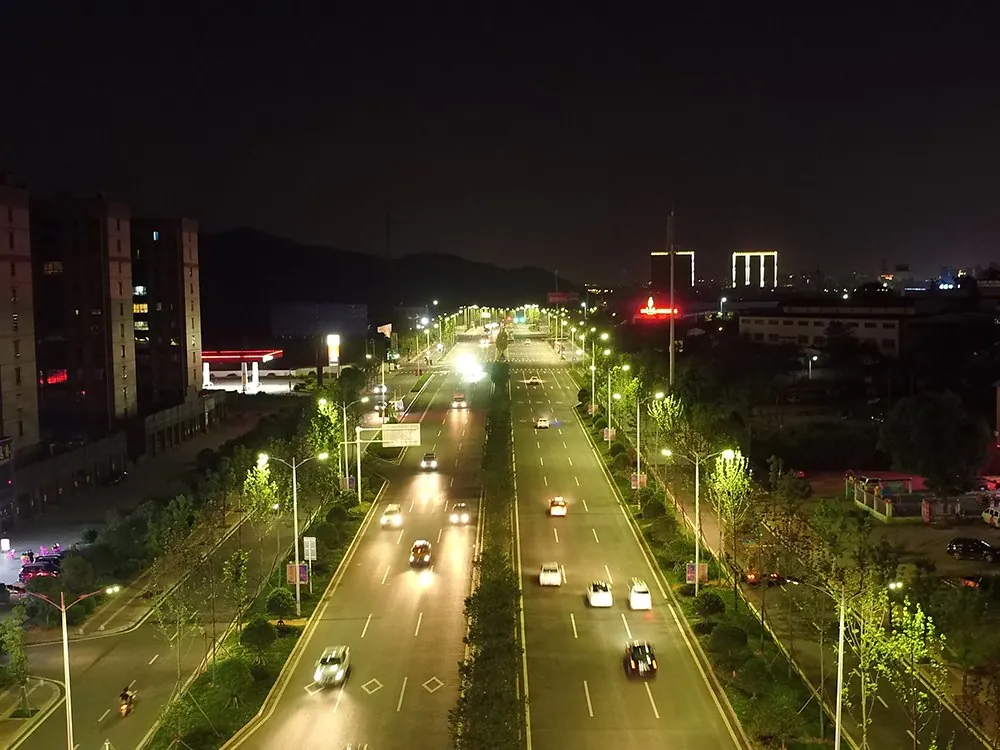
What happened. On 15 October, Delhi Chief Minister Rekha Gupta launched the replacement of about 1 lakh (100,000) streetlights on Public Works Department roads, starting with a pilot at the Moolchand underpass. About 45,000 of the existing lights are high-pressure sodium. The project, reported at about ₹473 crore and cleared in May, is to be rolled out over about four months. Each light connects to an app, a central dashboard and a control room that show faults in real time; a QR code on each pole lets residents see its details and report problems; and the lights switch and dim automatically with daylight. The reported specification calls for at least 150 lm/W, 3000 K, 35 lx on main roads and 25 lx on service roads. Contractors must keep 99% of the lights working and maintain them for seven years, and pay ₹2,000 per light per day if a fault is not fixed within 48 hours. The government expects about ₹100 crore in electricity savings over five years.
Why it matters. This is a clear example of where large municipal tenders are heading: high efficacy, warm colour temperature, individual monitoring, and a contractor who carries the maintenance risk for years, not just a supply price. Penalties per light per day make fixture reliability, driver quality and spare-parts logistics part of the commercial offer. For suppliers, it also shows the efficacy bar rising: 150 lm/W at 3000 K is demanding, because warm-white LEDs are typically 5–10% less efficient than 4000 K.
Read more: HPS to LED conversion chart and payback · LED retrofit savings calculator · Our LED street lights
2. Lithium carbonate falls another 9%; LFP cells follow, slowly
What happened. InfoLink’s assessment of 14 October put battery-grade lithium carbonate at about RMB 109,000 per tonne, down 9.2% from InfoLink’s previous assessment at the end of September (about RMB 120,000), which itself was down 9.1%. Cells moved less: 100 Ah LFP cells averaged about RMB 0.420/Wh (−1.8%), and 280 Ah and 314 Ah cells about RMB 0.360/Wh (−0.7%). InfoLink expects lithium carbonate to fluctuate between RMB 100,000 and 120,000 per tonne in the near term, with continued downward pressure on 100 Ah cells from inventory and ample supply.
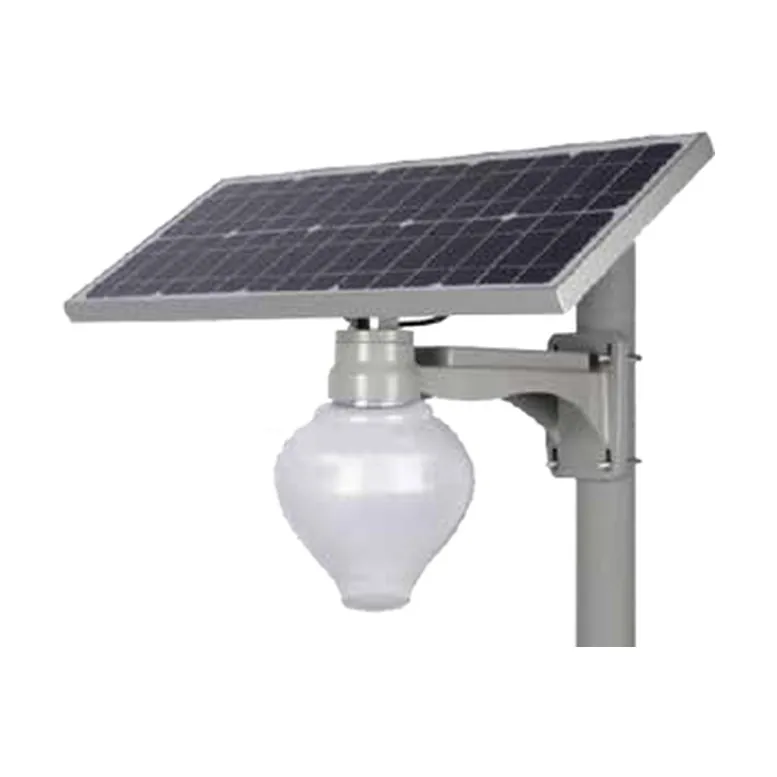
Why it matters. 100 Ah-class cells are the ones used in most solar street light batteries, and they are the format with the most downward pressure. For buyers, this is a good moment to insist on correctly sized batteries rather than accept a smaller pack to meet a price. When comparing quotations, check the usable battery energy in Wh and the date the price was set.
Read more: LiFePO4 vs gel vs NMC batteries · How to calculate solar street light battery capacity · Battery autonomy calculator
3. Aluminium holds near US$3,030
What happened. LME aluminium was about US$3,030 per tonne on 19 October according to Trading Economics, little changed from a week earlier. It remains about 7% below its level a month ago and about 9% above a year ago.
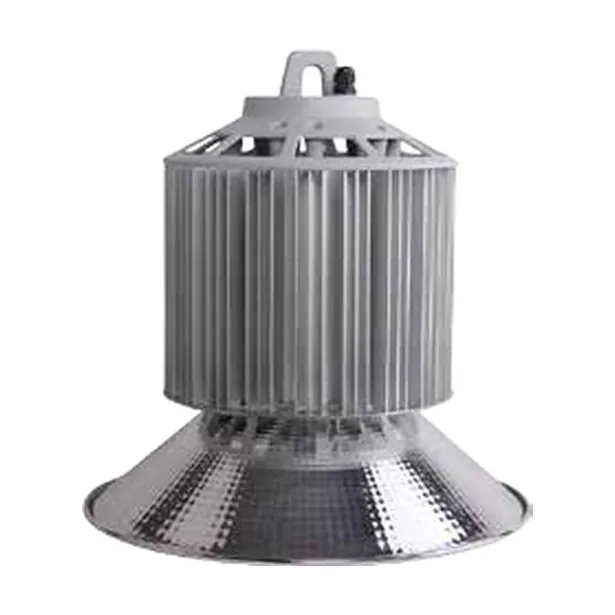
Why it matters. After the September fall, aluminium has stabilised for now. Housing and heat-sink costs for LED street lights, floodlights and high bays are therefore steady in the short term. The useful check for buyers is unchanged: compare heat-sink mass and the luminaire’s rated ambient temperature, not just the price, because that is where cost-cutting shortens LED life.
Read more: Solar vs grid street lights: which costs less over 10 years · LED high bay lights
The market brief is compiled by the BlueGreen OE engineering team from the public sources listed below. Prices are market assessments, not offers. Send us your project details for a current quotation.
Sources
Frequently asked questions
What did Delhi specify for its smart LED streetlights?
According to reports of the 15 October 2026 launch, the lights must reach at least 150 lm/W at 3000 K, with 35 lx on main roads and 25 lx on service roads, connect to an app and central control room for fault monitoring, and dim with daylight. Contractors must keep 99% of lights working and maintain them for seven years, with a penalty of ₹2,000 per light per day for faults not fixed within 48 hours.
Are solar street light battery costs still falling in October 2026?
Yes. InfoLink's 14 October assessment put battery-grade lithium carbonate at about RMB 109,000/t, down 9.2% in a week, and 100 Ah LFP cells at about RMB 0.420/Wh, down 1.8%. InfoLink expects lithium carbonate to fluctuate between RMB 100,000 and 120,000/t in the near term.