Milk Powder Plant Lighting: Spray Dryer Dust Zones and Hygienic Fittings
Lighting a dairy powder plant: where milk powder dust makes Zone 21 and 22, how to check surface temperature, hygienic design, and a calculated packing hall with BED and standard fittings.

Key points
- Milk powder is a combustible dust (group IIIB). Inside spray dryers, fluid beds, cyclones and bag filters it is Zone 20; around powder transfer, sifting and filling points Zone 21 or 22 is common.
- Milk powder layers can self-heat and smoulder, so the layer ignition temperature often sets the surface limit. Check the fitting's maximum surface temperature against test data for your product.
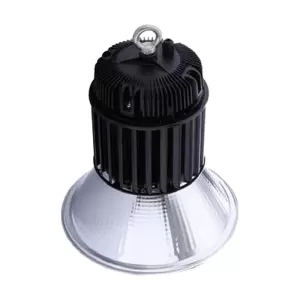
- For a 24 × 15 m powder packing hall at 6 m and 300 lux, our calculator gives 24 BED fittings of 100 W (about 395 lux) if classified, or 20 GKP40G high bays of 100 W (about 389 lux) if not.
- Food plants also need hygienic fittings: smooth, sealed housings that can be cleaned, no glass that can break into product, and positions that are not directly above open product.
A milk powder plant evaporates most of the water out of milk, then sprays the concentrate into hot air in a tall dryer, where the droplets dry into powder in seconds. The powder is collected, cooled, sifted and packed into bags or cans. It is food, but it is also a fine organic dust, and dryer fires are a well-known risk in the dairy industry. Lighting has to respect both sides: dust explosion protection where powder escapes, and food hygiene everywhere.
Where the dust zones are
| Area | Typical zone | Why |
|---|---|---|
| Inside spray dryer, fluid bed, cyclones, bag filters | Zone 20 | Dust cloud present in normal operation |
| Powder conveying, sifting, bag tipping, big bag filling | Zone 21 near openings, Zone 22 around | Powder released at transfer points |
| Can and bag filling lines | Zone 22, Zone 21 at filling heads | Small, frequent releases |
| Dryer tower platforms (outside the dryer) | Zone 22 or unclassified | Dust from leaks and maintenance openings |
| Evaporator, milk reception, CIP | Unclassified | Wet process, no dust |
| Finished goods store (sealed packs) | Unclassified | Powder contained |
Fixed lighting is not installed inside the dryer or filters. Dryer inspection is done through sight glasses with external lights or with certified portable lamps. The fixed lighting question is about Zone 21 and 22 around the equipment.
Checking surface temperature
Dust areas use the fitting’s maximum surface temperature, compared with two limits from IEC 60079-14:
- Two-thirds of the dust cloud ignition temperature
- The 5 mm layer ignition temperature minus 75 K
Milk powders contain fat, protein and lactose, and layers can self-heat and begin to smoulder at temperatures well below the cloud ignition temperature. For many dairy powders, the layer limit is the one that decides. Use test data for your product: whole milk powder, skim milk powder, whey and formula behave differently.
As an illustration only, if a test report gave a cloud ignition temperature of 440 °C and a 5 mm layer ignition temperature of 340 °C, the limits would be 293 °C and 265 °C, and a fitting marked T130 °C would pass with a wide margin. Our BED explosion-proof LED light carries Ex tb IIIC T130 °C Db under certificate ZJEx23.0914, suitable for Zone 21 and 22. Thick layers on top of a fitting change the picture completely, which is why housekeeping and fitting position matter. Our Zone 21 and 22 dust lighting guide explains the method in detail.
Hygienic design
A dairy plant is audited for food safety as well as fire safety. Lighting points that auditors and hygiene teams look at:
- Smooth, sealed housings without ledges or open fins where powder and dirt collect
- IP65 or better, so fittings survive wet cleaning in the wet areas and dust in the dry areas
- No unprotected glass above open product. Many schemes require a glass register and shatter protection
- No fittings directly above open product, such as above an open can filler or sifter, so nothing can drop in
- Easy access for cleaning on the plant’s normal hygiene schedule
Flameproof Ex fittings often have a glass window. In a food plant, place them so a breakage cannot reach product, and include them in the glass register.
Calculated layout: a powder packing hall
Take a packing hall of 24 × 15 m, fittings at 6 m, light surfaces (food plants are usually white), 300 lux.
If the hall is classified Zone 22. With BED fittings at 100 W and a conservative 110 lm/W, our high bay lighting calculator gives:
| Result | Value |
|---|---|
| Room index | 1.78 |
| Fittings | 24 (6 × 4) |
| Spacing | 4.0 m × 3.8 m |
| Average illuminance | about 395 lux |
| Power density | 6.7 W/m² |
If the hall is unclassified. With GKP40G heat-pipe high bays at 100 W and 130 lm/W, the same calculation gives 20 fittings (5 × 4) at 4.8 m × 3.8 m spacing, about 389 lux.
Both layouts come out above 300 lux because spacing, not lux, limits the count at this height. That is useful in packing halls, where filling machine displays, date codes and seal checks need good light anyway. In a mixed hall, the zone around filling heads may need Ex fittings while the palletising end does not.
Dryer tower platforms
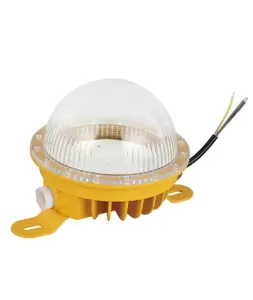
A spray dryer tower has platforms at several levels around the drying chamber, the cyclones and the fluid bed. These are often Zone 22 from leaks during operation and from cleaning. A 12 × 12 m platform at 4 m with 200 lux needs 16 BED fittings of 60 W for about 402 lux in the calculator; spacing again sets the count. The compact BAD8501B ceiling light (Ex d IIC T6 Gb / Ex tD A21 IP66 T80 °C, 15–30 W) suits stair landings and narrow walkways; its certificate is provided with the quotation.
Dryer towers also get warm near the drying chamber and hot air ducts. Check the rated ambient of each fitting against the temperature at its location.
Wet areas: reception, evaporators, CIP
Milk reception, evaporators and CIP rooms are wet and cleaned with caustic and acid. They are not dust areas, but they need IP65–IP66 fittings with corrosion-resistant fixings. The principles are similar to those in our wet location high bay guide.
Related plants
Many of the same rules apply in other food powder plants. See our flour mill lighting and sugar refinery lighting guides for two other combustible food dusts.
What to send us
- Plant layout with heights and the dust area classification
- Dust test data for your powders, if available
- Your food safety scheme’s rules on glass and fittings above product
- Required lux per area and supply voltage
We return a layout with BED Ex fittings in the dust zones and hygienic standard fittings elsewhere.
Sources
Frequently asked questions
Is milk powder an explosion hazard?
Yes. Dried milk, whey and infant formula powders are combustible dusts. Spray dryer fires and explosions are a known risk in dairy plants, which is why dryers have explosion vents and suppression, and why the area around powder handling is classified.
What zone is a milk powder packing room?
Often Zone 22, with Zone 21 close to filling heads, bag tipping and sifters where powder escapes in normal operation. With well-sealed equipment and good housekeeping some rooms are unclassified. The area classification decides.
Can I use glass light fittings in a food plant?
Many food safety schemes restrict glass in production areas because broken glass can enter product. Where a fitting has a glass window, as flameproof fittings often do, it should be protected, recorded in the glass register and positioned so a breakage cannot reach open product.
How much light does a dairy powder plant need?
Around 300 lux in packing and processing areas, 500 lux at inspection points and laboratories, and 150–200 lux in stores and on dryer platforms. Food safety audits often expect good light wherever product is exposed.