
Electroplating Shop Lighting: Acid Mist, Hydrogen and Corrosion-Resistant Fittings
How to light an electroplating line: what acid mist does to fittings, when hydrogen from the tanks makes a hazardous area, and a calculated 30 × 12 m plating hall two ways.
Key points
- The everyday enemy in a plating shop is corrosion: acid and alkaline mist, cyanide and chromic vapours attack aluminium, steel fixings and plastics. Sealed housings, corrosion-graded coatings and stainless fasteners matter more than lumens.
- Plating tanks release hydrogen at the cathode. With good tank extraction most plating halls stay unclassified, but some processes and poorly ventilated areas get a local Zone 2 for hydrogen, which is gas group IIC.
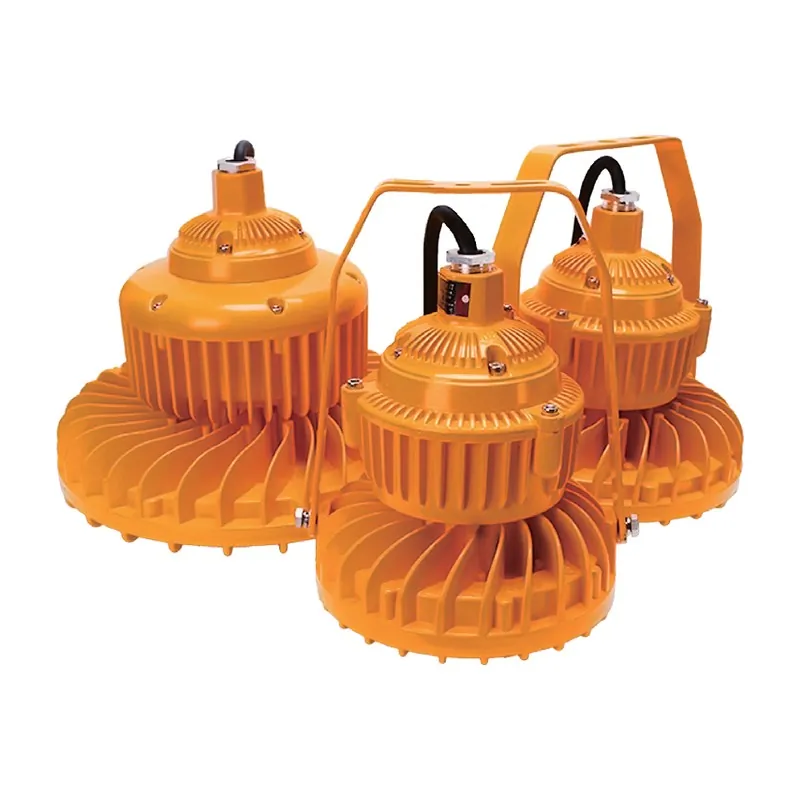
- For a 30 × 12 m plating hall at 6 m and 300 lux, our calculator gives 21 GKP40G high bays of 100 W (about 375 lux) if unclassified, or 36 BDE507 fittings of 70 W (about 381 lux, Ex d IIC T6 Gb, WF2) where a hydrogen zone applies.
- Mount fittings away from the plume directly above the tanks and out of the extraction path; light the tank surface from the side.
Electroplating is wet chemistry at an industrial scale: rows of tanks holding acids, alkalis, cyanide solutions and metal salts, with parts lowered in and out by hoists, and electric current driving metal onto the parts. The air above the line is warm, humid and full of fine mist from the tanks. Ordinary light fittings do not last long in that air. This guide covers what destroys fittings in a plating shop, when hydrogen makes part of it a hazardous area, and a calculated layout for a typical line.
What the air in a plating shop contains
| Source | What reaches the fittings | Effect |
|---|---|---|
| Acid pickling and activation (HCl, H₂SO₄) | Acid mist, HCl vapour | Corrodes aluminium, steel, copper wiring |
| Chrome plating (chromic acid) | Chromic acid mist, hydrogen | Corrosive, toxic; hydrogen at the cathode |
| Alkaline cleaning, zinc and cyanide baths | Alkaline mist | Attacks aluminium and some coatings |
| Rinsing, heated tanks | Steam and condensation | Water ingress, condensation inside poorly sealed fittings |
| Electrolysis in every plating tank | Hydrogen (and oxygen at the anode) | Potential flammable atmosphere |
Tank extraction systems pull most of the mist away at the tank lip, but some always escapes, and it condenses on cooler surfaces, including light fittings.
Corrosion: the first design problem
A light fitting for a plating hall should have:
- IP65 or IP66, so mist and hose spray cannot reach the driver and LEDs
- A corrosion-graded housing, such as WF2 for strong chemical exposure; the grade covers the coating and the materials
- Stainless steel fasteners and brackets, which do not seize or rust through
- Glass or chemically resistant covers, not cheap polycarbonate that clouds in acid vapour
- Sealed cable entries, so mist cannot enter along the cable
Our IP65 vs IP66 vs IP67 guide explains the water ratings; the corrosion grade is a separate line on the datasheet and worth asking for.
Hydrogen: when the plating hall becomes a hazardous area
Every plating tank releases hydrogen at the cathode, the parts being plated. The amount depends on the process and current efficiency. Chrome plating is notorious: most of the current produces hydrogen rather than chrome, and the gas bubbles carry mist out of the tank.
Hydrogen is gas group IIC, with a wide flammable range (about 4–75 % in air) and very low ignition energy. It is also much lighter than air, so it rises and can collect under roofs and in roof voids without ventilation.
With proper lip extraction, the hydrogen is diluted and removed at the tank, and the hall is usually unclassified. The area classification under IEC 60079-10-1 may still identify a Zone 2 close to tanks with high hydrogen generation, inside extraction ducts, or in poorly ventilated high points. Where that happens, fittings in the zone must be certified for IIC. Our hydrogen explosion-proof lighting guide covers IIC fittings in more depth, and our battery room guide deals with a similar hydrogen problem.
Calculated layout: a 30 × 12 m plating hall
Take a plating hall of 30 × 12 m with fittings at 6 m, medium reflectance and 300 lux.
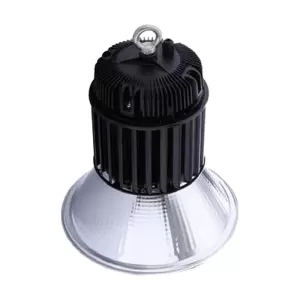
If the hall is unclassified. With GKP40G heat-pipe high bays (IP65) at 100 W and 130 lm/W, our high bay lighting calculator gives:
| Result | Value |
|---|---|
| Room index | 1.65 |
| Fittings | 21 (7 × 3) |
| Spacing | 4.3 m × 4.0 m |
| Average illuminance | about 375 lux |
| Power density | 5.8 W/m² |
If a hydrogen Zone 2 covers the line. The BDE507 round explosion-proof light is marked Ex d IIC T6 Gb, rated IP66 and corrosion grade WF2, and goes up to 70 W at 110 lm/W. The same calculation gives 36 fittings (9 × 4) at 3.3 m × 3.0 m spacing, about 381 lux. Its certificate is provided with the quotation; check that its marking matches the zone on your drawing. For higher wattages in IIC areas, our BED series (Ex db eb mb IIC T4 Gb, certificate ZJEx23.0914) goes from 30 W to 600 W, but at IP65 it should be kept out of direct hose spray.
Often only part of the hall needs the Ex fittings, for example over a chrome line, and the rest can use the standard high bays.
Where to put the fittings
- Not directly above the tanks. The plume of warm, wet, corrosive air rises straight up. Fittings in it fail first and drip condensate back into the tank.
- Not in the hoist path. Overhead hoists and their ropes need clear space, and maintenance from above the line is awkward.
- Light the tank surface from the side. Fittings along each side of the line, angled slightly, light the tank surface and the parts without being in the plume.
- Away from extraction intakes. Fittings near the intake slots see the highest concentration of mist.
Inspection areas
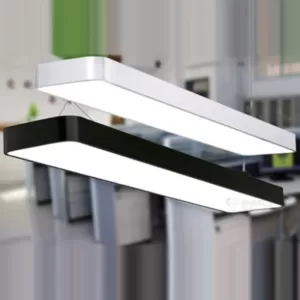
After plating, parts are inspected for coverage, burning, pitting, colour and gloss. Put inspection tables away from the line, in cleaner air, and light them to 500 lux or more with high colour rendering. Indirect or diffused light reduces reflections on bright chrome and nickel. A linear pendant over each table works well if the area is unclassified and dry.
Effluent treatment and chemical stores
Effluent treatment plants and chemical stores have the same corrosion issues and sometimes their own hazards: cyanide destruction, chrome reduction, and stores of flammable solvents for degreasing. Treat each as a separate area in the classification. Our wastewater treatment plant lighting guide covers similar wet, corrosive conditions.
Maintenance
Inspect fittings in the plating hall at least twice a year: gaskets, glands, fixings and lens clarity. Replace any fitting whose housing coating is blistering before the corrosion reaches the driver chamber. Keep a few spares; in a corrosive hall, a fitting that fails is often beyond repair.
What to send us
- Hall dimensions, mounting height and line layout
- The processes on each line (acid, alkaline, chrome, cyanide)
- The area classification, if any hydrogen zones exist
- Required lux at the line and inspection areas
We return a layout with corrosion-resistant fittings, and IIC Ex fittings only where the classification requires them.
Sources
Frequently asked questions
Does an electroplating shop need explosion-proof lighting?
Usually not throughout, but sometimes locally. Electrolysis releases hydrogen, and some processes such as hard chrome plating release a lot. With effective tank extraction the hall is normally unclassified; where the area classification identifies a hydrogen zone, usually Zone 2 close to the tanks, fittings there must be certified for gas group IIC.
What IP rating do lights in a plating shop need?
IP65 at least, and IP66 where lines are hosed down. Ingress protection keeps mist out of the electronics; the corrosion protection of the housing and fixings is a separate property, often given as a WF1 or WF2 grade.
Why do lights fail in electroplating shops?
Mostly corrosion: acid mist gets into unsealed drivers and terminal boxes, eats through cheap coatings and seizes steel screws. Fittings placed directly above the tanks, in the rising plume, fail first.
How much light does a plating line need?
Around 300 lux for loading, unloading and general line work, with 500 lux or more at inspection tables where operators check coating defects, colour and coverage.
Products in this guide
-
 Compact Heat-Pipe LED High Bay 60–250 W, IP65
GKP40G Specifications and quote →
-
 Explosion-Proof Round LED Light 20–70 W, BDE507
BDE507 Specifications and quote →
-
 Explosion-Proof LED Light 30–600 W, BED Series
BED Specifications and quote →
-
 LED Linear Pendant Light 24–60 W
BG-TXH Specifications and quote →