Pulp and Paper Mill Lighting: Machine Hall Heat, Corrosive Air and Methanol Areas
Paper mills combine hot, wet machine halls, corrosive bleaching areas, flammable methanol and turpentine systems, and paper dust. Fitting choices for each, and a 120 × 25 m machine hall calculated.
Key points
- The paper machine hall is hot and humid under the roof, especially above the dryer section. High-temperature, sealed fittings last far longer there than standard high bays.
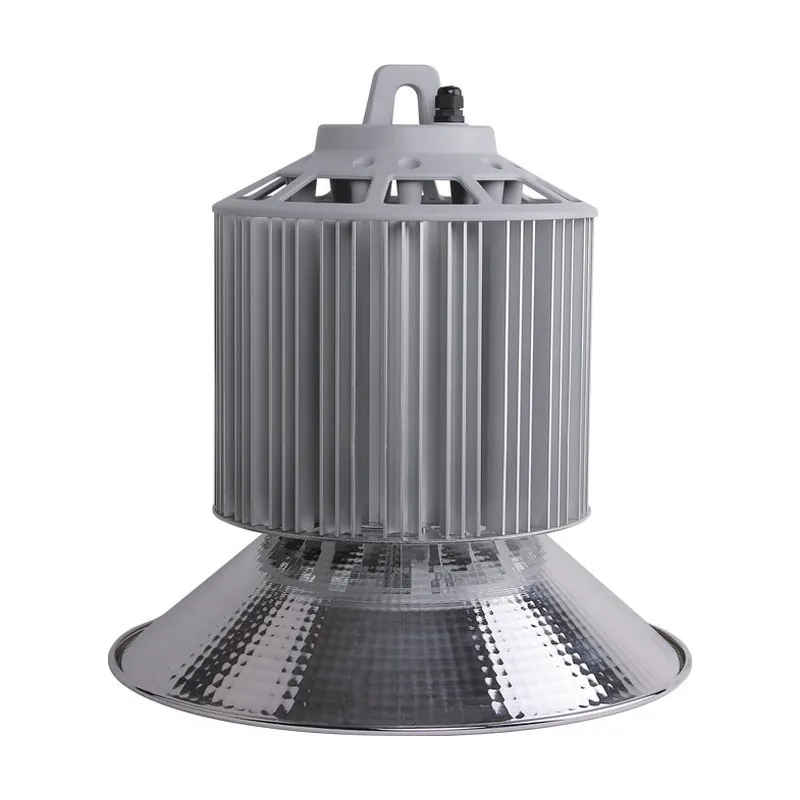
- For a 120 × 25 m machine hall at 14 m and 300 lux, our calculator gives 115 BG-NGW high bays at 150 W (about 323 lux, 17.3 kW) or 100 at 200 W (about 374 lux, 20 kW): the smaller fitting uses less power because spacing, not output, limits the count.
- Kraft mills recover methanol and turpentine, which can create gas zones around condensate stripping, storage and loading. Those areas need certified explosion-proof fittings.
- Bleach plants and chemical areas are corrosive; finishing and converting halls generate paper dust that settles on fittings.
A pulp and paper mill is several heavy industries in one site. Logs are debarked and chipped, chips are cooked into pulp, pulp is washed and bleached, chemicals are recovered, and the paper machine turns a dilute slurry into a dry sheet at high speed. Each step has its own environment, and lighting that works well in one place fails quickly in another. This guide goes through the mill area by area and calculates the machine hall.
Areas and their lighting problems
| Area | Main issue | Fitting approach |
|---|---|---|
| Woodyard and chip piles | Large outdoor area, mobile machinery | High masts or tall floodlight poles |
| Chip handling and conveying | Wood dust | Sealed fittings; dust-certified where classified |
| Digesters and pulping | Heat, steam | Sealed, high-temperature fittings |
| Bleach plant | Corrosive gases and humidity | Corrosion-resistant, sealed fittings |
| Chemical recovery, evaporators | Heat; methanol and turpentine systems | Ex fittings where classified |
| Paper machine hall | Heat and humidity above dryers; high roof | High-temperature high bays |
| Finishing and converting | Paper dust, precision work | Sealed fittings, high uniformity |
| Reel and roll warehouse | Tall stacks, clamp trucks | Aisle-focused high bays |
The machine hall
The paper machine is long, often well over 100 m, and the hall above it is high, to make room for overhead cranes that lift rolls and machine parts. The wet end is humid; the dryer section uses steam-heated cylinders and hoods, so hot, moist air collects under the roof. Ordinary LED high bays rated to +50 °C may run beyond their rating there in summer.
Our BG-NGW high-temperature high bay is designed for this: rated −30 °C to +65 °C, IP65, more than 110 lm/W, with an aluminium fin heat sink.
Take a machine hall of 120 × 25 m with 14 m to the roof, medium reflectance, and 300 lux on the operating floor. With a narrow beam to suit the height, our high bay lighting calculator gives:
| Result | 150 W | 200 W |
|---|---|---|
| Room index | 1.57 | 1.57 |
| Fittings | 115 (23 × 5) | 100 (20 × 5) |
| Spacing | 5.2 m × 5.0 m | 6.0 m × 5.0 m |
| Average illuminance | about 323 lux | about 374 lux |
| Total load | 17.3 kW | 20.0 kW |
The 200 W version needs 15 fewer fittings, but it over-lights the hall by about 25 % because the five-row grid is set by maximum spacing across the 25 m width. The 150 W layout meets the target with 2.7 kW less load. Over a mill running around the clock, that difference is about 23,600 kWh a year. The calculator also shows that 139 W per fitting would be enough with 115 fittings, so 150 W leaves a sensible margin for lumen depreciation.
Where to mount them
- Along the aisles on each side of the machine, not over the sheet, so a failed fitting can be changed without stopping the machine.
- Clear of crane paths and hood exhausts.
- With extra local lighting at the headbox, press section, reel and winder, where operators inspect the sheet and thread the machine.
Our guide to high-temperature LED high bay lights explains how heat shortens LED life and how to measure the ambient at mounting height.
Methanol and turpentine: the hazardous areas
Kraft pulping releases turpentine from the wood and generates methanol in condensates. Modern mills collect them: turpentine is recovered and sold, methanol is stripped from condensates and often burned as fuel. Both are flammable liquids. Around condensate strippers, methanol tanks, turpentine decanters and storage, and loading points, the area classification commonly sets Zone 1 or Zone 2.
Take a methanol storage and pump room of 20 × 15 m with an 8 m roof, classified Zone 2, at 200 lux. Using our BED explosion-proof LED light at 150 W and a conservative 110 lm/W, the calculator gives 9 fittings (3 × 3) and about 217 lux. The BED is certified Ex db eb mb IIC T4 Gb under certificate ZJEx23.0914; methanol (IIA, T2) and turpentine (IIA, T3) fall well within it. Our chemical plant lighting guide covers solvent areas more generally.
Bleach plant and chemical areas
Bleaching uses chlorine dioxide, oxygen, peroxide and caustic. The air is corrosive and humid. Fittings need sealed housings, corrosion-resistant coatings and stainless fixings, and inspection more often than in the rest of the mill. Avoid mounting directly above tank openings and washers.
Finishing and converting
Cutting, winding and converting paper produces fine paper dust. It settles on fittings and, in high concentrations, can be combustible. Where the area study classifies a dust zone, use fittings certified for it; the BED is also marked Ex tb IIIC T130 °C Db. Elsewhere, sealed IP65 fittings reduce cleaning. Converting lines need good uniformity and glare control because operators watch fast-moving webs.
Woodyard and outdoor areas
Woodyards cover large areas with log piles, chip piles and mobile equipment. Tall masts keep poles out of the way of loaders. Our 32 m high mast project at a steel pipe plant shows a comparable yard: two masts with 600 W LED floodlights, one with 10 and one with 8.
Emergency lighting
Mills run continuously, and a power failure in the machine hall leaves operators next to hot rolls and moving parts. Emergency lighting should cover escape routes, emergency stops and crane cabins. In classified areas, emergency fittings need the same Ex protection as the normal ones.
What to send us
- Hall dimensions and roof heights
- Measured ceiling temperature above the dryer section
- The area classification for methanol, turpentine and dust areas
- Lux targets and any local lighting needs
We return a layout for each area. For the counting method, see how many LED high bay lights do I need.
Sources
Frequently asked questions
How much light does a paper machine hall need?
Around 300 lux is a common design value for the machine floor, with more at the reel, winder and quality control stations, and local lighting for inspection of the sheet.
Do paper mills have hazardous areas?
Some areas. Kraft mills recover methanol and turpentine, which are flammable, so condensate stripping, storage tanks and loading points can be classified. Some chemical preparation areas and paper dust in converting may also be assessed. Most of the mill is unclassified.
What kind of light fixtures work above a paper machine?
Sealed, high-temperature fittings rated for the measured ceiling temperature, with corrosion-resistant finishes. Mount them where they can be reached for maintenance without stopping the machine, usually along the aisles rather than above the sheet.
Why not just use the most powerful high bays?
In a long, narrow hall, maximum spacing often sets the number of fittings. Larger fittings then over-light the space and use more power than necessary. Run the calculation for more than one wattage.