Diesel Generator Room Lighting: Hazardous or Not, Standby Supply and a 12 × 8 m Example
Does a diesel generator room need explosion-proof lights? Usually not. What it does need: lights on the standby supply, battery emergency lighting, heat and vibration resistance, and enough lux.
Key points
- Diesel's flash point is above 55 °C, so a generator room storing and burning diesel is normally not a classified area; heated fuel, petrol or gas engines change that.
- The lighting in a generator room must stay on when the mains fails: feed it from the generator side and add battery emergency lighting for the moments before the set starts.
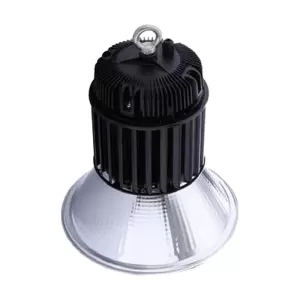
- A 12 × 8 m generator room with a 5 m ceiling reaches about 298 lux with 9 GKP40G high bays of 60 W, by our lighting calculator; 40 W fittings would just reach 200 lux on the same grid.
- Heat from the engine and radiator, and vibration on anything mounted to the set, are the usual causes of early fitting failure.
Standby generator rooms sit in hospitals, data centres, factories and telecom sites. They are visited rarely, until the moment the mains fails, when someone needs to see the control panel, check the fuel and fix whatever stopped the set from starting. The lighting in that room has one job above all: to work when nothing else does.
Is a diesel generator room a hazardous area?
Usually not. A flammable atmosphere needs enough vapour in the air. Diesel fuel to EN 590 has a minimum flash point of 55 °C, meaning it does not give off enough vapour to ignite below that temperature. In a normally ventilated generator room, the fuel stays well below that, even with a day tank in the room.
Exceptions that call for an area study:
| Situation | Why it matters |
|---|---|
| Fuel heated above its flash point (heavy fuel oil systems, fuel heaters) | Heated oil gives off flammable vapour |
| Gas engines (natural gas, biogas) | Gas trains and the engine can release gas |
| Petrol-fuelled sets | Petrol vapour forms at any normal temperature |
| Fuel tanks in pits or enclosed spaces with poor ventilation | Vapour and mist can accumulate |
For gas-engine rooms, the reasoning in our gas compressor station lighting guide applies: natural gas rises, and the roof space is where it collects. For boiler rooms, see does a gas boiler room need explosion-proof lighting. Our general article on when explosion-proof lighting is required explains the classification principle.
Lighting that works when the mains fails
This is the requirement that is easy to miss. If the generator room lights are fed only from the mains, they go out at exactly the moment they are needed.
- Normal lighting from the generator side. Feed the room’s lights from the essential or standby board, so they come back as soon as the set takes the load.
- Battery emergency lighting. NFPA 110 requires battery-powered emergency lighting in the location of Level 1 and Level 2 emergency power equipment. It covers the seconds before the set starts and the case where it does not start at all. Self-contained emergency fittings with a 90-minute or longer battery are the usual solution.
- A torch on the wall. A charged handheld torch at the door costs little and helps with work inside enclosures.
Our emergency light installation guide covers placement and testing of battery fittings.
Worked example: a 12 × 8 m generator room
The room is 12 × 8 m with a 5 m ceiling and holds one 1,000 kVA set with its radiator venting through a louvre. Walls are painted block, target 200 lux at 0.8 m. Using our GKP40G heat-pipe high bay at its smallest size, 60 W, at 130 lm/W with a wide beam, our lighting calculator gives:
| Result | Value |
|---|---|
| Room index | 1.14 |
| Utilisation factor | 0.51 |
| Fittings | 9 (3 × 3) |
| Spacing | 4.0 m × 2.7 m |
| Average illuminance | about 298 lux |
| Power density | 5.6 W/m² |
| Wattage that would just reach 200 lux | about 40 W |
The result is above target because the grid needs nine positions for even coverage around a large set, and 60 W is the smallest GKP40G. The extra light is useful: the set itself blocks a lot of light, and technicians work on its sides, not its top. In practice, position the fittings around the set, over the walkways on each side and at the control panel end, not directly over the engine where the exhaust and radiator heat rise.
Heat
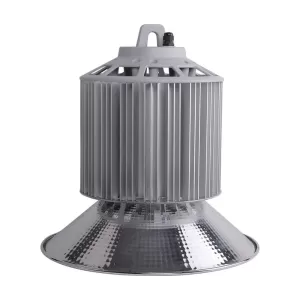
The room heats up quickly when the set runs, especially near the engine and along the exhaust. Ventilation is designed to keep the engine’s intake air within limits, but the ceiling can still be hot. The GKP40G is rated for −30 °C to +50 °C ambient. If the ceiling near the set is hotter than that at full load, mount fittings on the side walls, or use our BG-NGW high-temperature high bay, rated to +65 °C.
Vibration
A running diesel engine shakes everything attached to it. Fittings mounted on the building structure are rarely affected, because the set sits on anti-vibration mounts. Problems start when fittings are mounted on the generator enclosure, exhaust supports or steelwork bolted to the set’s base frame. If that cannot be avoided, use an anti-vibration design such as our BG-FZD crane light (100–300 W, IP66, WF2), which is built for cranes and other moving structures.
Containerised and outdoor sets
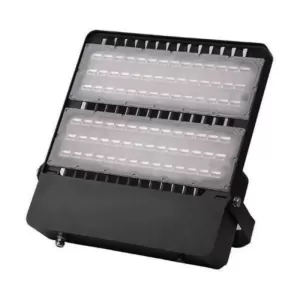
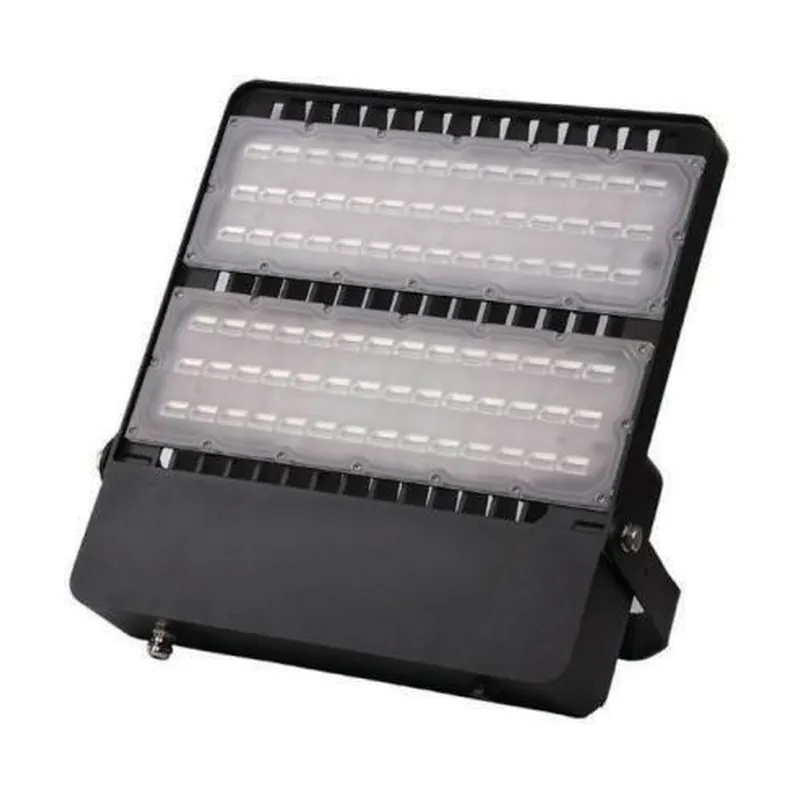
Containerised generators have their own internal lights, usually small IP65 bulkheads. Check that they are on the generator supply and have battery backup. Outdoor sets need a floodlight over the access doors and the fuel fill point, again on the generator supply.
Fuel tanks and fill points
Bulk diesel tanks and fill points are normally unclassified, for the same reason as the room. They still need light for deliveries at night and for checking spills. A floodlight over the fill point, switched from outside the bund, is enough for most sites.
Testing
Generators are tested under load, often monthly. Include the lights in the test: switch off the mains supply to the room lighting and check that the battery fittings come on, then that the normal lights come back when the set takes over.
What to send us
- Room plan, ceiling height and set position
- Fuel type and any fuel heating
- Expected ceiling temperature with the set at full load
- Which board the lighting is fed from, and the emergency lighting requirement
We return a layout with calculated levels and a fitting choice suited to the room’s heat and vibration.
Sources
Frequently asked questions
Does a diesel generator room need explosion-proof lighting?
Normally not. Diesel's flash point is above 55 °C, so at normal room temperatures it does not give off enough vapour to form a flammable atmosphere. Rooms with heated fuel, gas-fuelled engines or petrol need an area study.
Does a generator room need emergency lighting?
Yes. NFPA 110 requires battery-powered emergency lighting in the location of Level 1 and Level 2 emergency power equipment, so staff can work on the set during the seconds or minutes before it starts, or if it fails to start.
What lux level does a generator room need?
EN 12464-1 lists 200 lux for plant rooms of this kind. Control panels, fuel gauges and the transfer switch benefit from extra local light.
What kind of fitting suits a generator room?
An IP65 or IP66 industrial fitting rated for the room's maximum ambient temperature, mounted on the building structure. Where fittings must be mounted on vibrating steelwork, choose an anti-vibration design.