Cement Plant Lighting: Heat, Coal Dust and Two Calculated Layouts
How to light a cement plant: which areas are hot, which are dusty, where the coal mill needs Ex fittings, and two calculated layouts for a raw mill building and a coal mill.
Key points
- A cement plant has three lighting problems in one site: heat around the kiln and cooler, heavy abrasive dust everywhere, and a combustible coal dust hazard in the coal mill and its filters.
- Cement and raw meal dust is not combustible, so most of the plant needs dust-tight fittings rather than Ex fittings. The coal (or petcoke) grinding and firing system is the exception, usually with Zone 20 inside and Zone 22 around it.
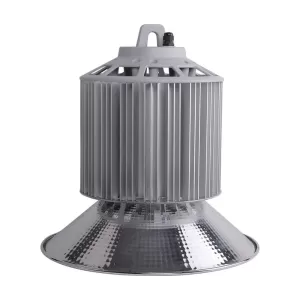
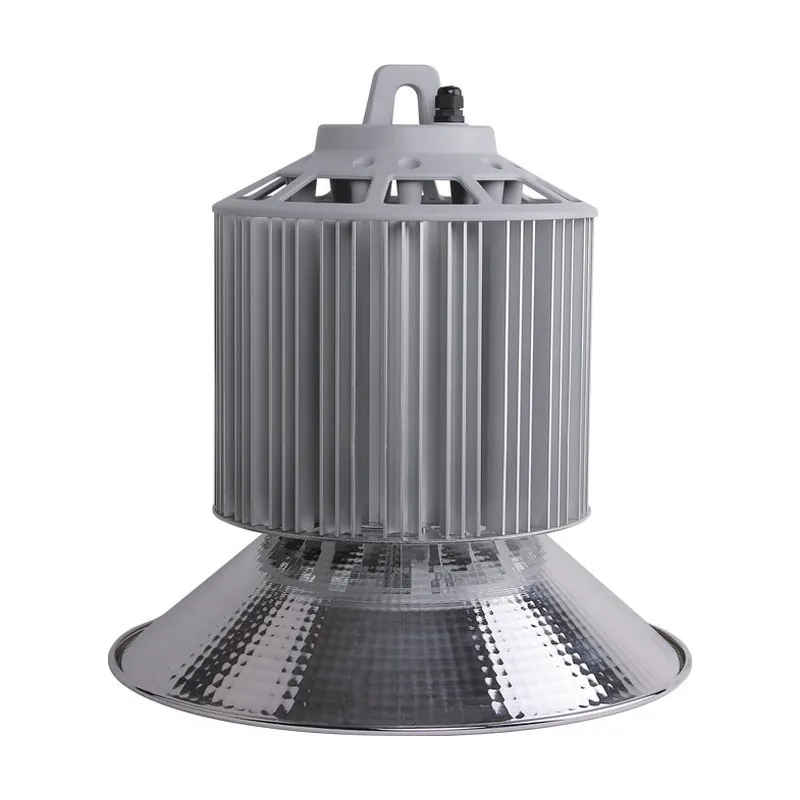
- For a 36 × 24 m raw mill building at 12 m and 150 lux, our calculator gives 20 BG-NGW high-temperature high bays of 150 W, about 151 lux, at 3.5 W/m².
- For an 18 × 12 m coal mill building at 10 m and 150 lux, 12 BED explosion-proof fittings of 100 W give about 183 lux; the spacing limit, not the lux target, sets the count.
A cement plant is hard on lighting. The kiln and cooler radiate heat into the buildings around them. Dust gets into everything, from limestone crushing to the packing plant. And one part of the process, the fuel system that grinds coal or petcoke for the kiln burner, handles a dust that can explode. This guide goes through the plant section by section, then calculates two buildings: a hot raw mill hall and a coal mill.
Three different problems
| Problem | Where | What it means for the fitting |
|---|---|---|
| Heat | Kiln burner floor, clinker cooler, preheater tower, some mill buildings | Rated ambient temperature above the usual 40–50 °C |
| Non-combustible dust | Crushers, raw mill, clinker handling, cement mills, packing | Dust-tight housing (IP65+), smooth top, easy cleaning |
| Combustible dust | Coal or petcoke mill, fine coal bins, bag filter, dosing system | Ex fitting for the dust zone, surface temperature checked against coal data |
Treating the whole plant as a hazardous area wastes money; ignoring the coal system is dangerous. The area classification drawing tells you where the line is.
The coal mill: the hazardous part
Pulverised coal and petcoke are combustible dusts, usually group IIIB (non-conductive). Under IEC 60079-10-2 the inside of the coal mill, the fine coal bins, cyclones and bag filters typically counts as Zone 20, because a dust cloud is present in normal operation. The rooms around them are commonly Zone 22, where dust only escapes through leaks, provided housekeeping keeps layers thin. Areas next to bag-tipping or open transfer points can be Zone 21.
Fixed lighting is not installed inside the equipment. In the coal mill building, the fittings sit in the Zone 21 or 22 area and need a dust marking. Our BED explosion-proof LED light carries Ex tb IIIC T130 °C Db under certificate ZJEx23.0914, which covers Zone 21 and Zone 22 and dust groups up to IIIC.
The surface temperature check is the same as for any dust: the fitting’s maximum surface temperature must stay below two-thirds of the dust’s cloud ignition temperature, and below its 5 mm layer ignition temperature minus 75 K. Coal layers can smoulder at fairly low temperatures, so use the test data for the coal or petcoke actually fired, and keep layers off the fittings. Our Zone 21 and 22 dust lighting guide explains the two limits in detail, and the coal handling plant guide covers stockyards, conveyors and crusher houses on the coal side.
Calculation 1: a hot raw mill building
Take a raw mill building of 36 × 24 m with fittings at 12 m, dark surfaces (cement plants rarely stay light-coloured for long) and a target of 150 lux. The roof space above the mill and its hot gas ducts can run well above 50 °C in summer, so we use the BG-NGW high-temperature high bay, rated for −30 °C to +65 °C ambient, at 150 W and a conservative 110 lm/W.
Our high bay lighting calculator gives:
| Result | Value |
|---|---|
| Room index | 1.29 |
| Fittings | 20 (5 × 4) |
| Spacing | 7.2 m × 6.0 m |
| Average illuminance | about 151 lux |
| Power density | 3.5 W/m² |
If the building were cooler and cleaner, a standard high bay with higher efficacy would need fewer fittings. In a mill hall the rated temperature matters more than the last 15 lm/W: an LED driver run above its rating fails early, and replacing fittings at 12 m in a dusty hall costs far more than the fittings. Our high-temperature LED high bay guide explains how ambient rating and driver life relate.
Calculation 2: the coal mill building
Now an 18 × 12 m coal mill building, fittings at 10 m, dark surfaces, 150 lux, classified Zone 22 outside the equipment. With BED fittings at 100 W and 110 lm/W, the same calculator gives:
| Result | Value |
|---|---|
| Room index | 0.78 |
| Fittings | 12 (4 × 3) |
| Spacing | 4.5 m × 4.0 m |
| Average illuminance | about 183 lux |
| Power density | 5.6 W/m² |
The lux comes out above target because the building is tall and narrow: to keep spacing within 1.2 times the mounting height, the calculator adds fittings beyond what the lumen method alone needs. That is normal in coal mill buildings, which are often tall for the mill, separator and filter. Dropping to 80 W fittings would push the count up to 16, not down, because spacing still rules. Our explosion-proof lights count guide explains this trade-off.
Kiln, preheater and cooler
The preheater tower is a tall open steel structure with platforms every few metres. Lighting there is mostly compact, robust fittings on each platform and at each cyclone inspection door, plus floodlights for the tower exterior. The kiln itself is outdoors or under a light roof; kiln shell scanners and burner-floor operators need steady light without glare on screens. Around the clinker cooler and the kiln hood the radiant heat is intense, so keep fittings away from the hottest zones and use high-temperature rated ones where they must be close.
Stores, crushers and packing
- Limestone and clinker stores. Large, tall and dusty. Low lux (around 100) is common. For a 60 × 30 m clinker store at 15 m, the calculator gives 18 high bays of 200 W with narrow beams for about 113 lux.
- Crusher houses. Vibration and dust. Use fittings with secured brackets and safety cables, and check bolts at every shutdown.
- Cement mills and separators. Similar to the raw mill: heat, dust, noise.
- Packing plant. Bag filling and truck loading release dust constantly. Light the operator positions and truck decks well, around 200 lux, because forklifts and trucks move close to people.
Outdoor areas
Quarry roads, conveyors, stacker-reclaimers and truck yards are lit with floodlights and high masts. EN 12464-2 gives values for outdoor industrial sites. Our 32 m high mast project at a steel pipe plant shows the kind of mast lighting used for large industrial yards, and our steel plant lighting guide covers a site with similar heat and dust.
Maintenance
Dust and heat both shorten fitting life. Plan the layout so every fitting can be reached by a lift or platform during kiln shutdowns, which are the only times many areas are accessible. Clean tops and lenses at each shutdown, and check cable glands and seals on the Ex fittings in the coal system as part of the hazardous-area inspection.
What to send us
- Building dimensions and mounting heights, section by section
- The area classification for the coal or petcoke system
- Maximum ambient temperatures near the kiln, cooler and mills
- Coal dust ignition data, if available, and supply voltage
We return a layout per building, with BED Ex fittings where the classification requires them and high-temperature or standard high bays elsewhere.
Sources
Frequently asked questions
Does a cement plant need explosion-proof lighting?
Only in part. Cement, clinker and raw meal dusts are not combustible. The coal or petcoke grinding, storage and dosing system is, and its area classification usually puts Zone 20 inside mills, bins and filters and Zone 22 around them. Fixed lighting in those Zone 22 areas needs a dust Ex marking.
What temperature can LED high bays take near a cement kiln?
Standard LED high bays are usually rated to 40–50 °C ambient. Under kiln burner platforms, near clinker coolers and in some mill buildings the air under the roof is hotter, so a fitting rated for higher ambient is needed. Our BG-NGW is rated for −30 °C to +65 °C.
How much light does a cement plant need?
Around 150 lux in mill and kiln buildings, 100 lux or less in clinker and raw material stores, 50–100 lux on walkways and platforms, and more at control panels and laboratories. The plant's own standard may set higher values.
How do you stop cement dust from ruining light fittings?
Use dust-tight IP65 or better housings with smooth, sloped tops where dust can be washed or blown off, mount them where the cleaning crew can reach, and avoid open fins that pack with dust. Dust on the fitting raises its temperature and cuts output.