Does a Gas Boiler Room Need Explosion-Proof Lighting? Classification, Heat and a 15 × 10 m Example
Most gas-fired boiler rooms are not hazardous areas, but some are. How to tell, why ceiling heat matters more than gas for most fittings, and a 15 × 10 m boiler house compared both ways.
Key points
- A boiler room on low-pressure natural gas with adequate ventilation is usually not a classified area, so ordinary industrial fittings are allowed; the area study, not habit, should decide.
- High-pressure gas trains, gas boosters, poor ventilation or LPG change the answer and can create a Zone 2 around the gas equipment.
- For a 15 × 10 m boiler house at 6 m, our calculator gives 6 GKP40G high bays of 100 W (about 225 lux) against 9 explosion-proof fittings of 100 W (about 286 lux) for the same 200 lux target.
- Heat under the roof is the bigger risk to an LED fitting in most boiler rooms: check the fitting's maximum ambient temperature against the measured ceiling temperature.
A common request is explosion-proof lighting for a boiler room “because there is gas”. Sometimes that is right. Often it is not, and the extra fittings, glands and cost buy nothing. Meanwhile the factor that actually shortens fitting life in many boiler rooms, heat under the roof, gets less attention. This guide covers both questions and compares a layout done each way.
Is a gas boiler room a hazardous area?
A hazardous area exists where a flammable atmosphere can form in quantities that need special precautions. In a boiler room, the potential sources are the gas pipework, valves, regulators, gas trains and burners. Whether they create a zone depends on:
- Gas pressure. Low-pressure natural gas, a few tens of millibar, releases very little through a small leak. High-pressure supplies release far more.
- Ventilation. Gas codes require boiler room ventilation for combustion air and cooling. Good natural or mechanical ventilation dilutes small leaks quickly.
- Joint types. Welded pipework has fewer leak points than threaded or flanged joints.
- The gas. Natural gas is lighter than air and rises out of high-level vents. LPG is heavier than air and collects at floor level, in pits and drains.
Under IEC 60079-10-1, a release that is small and well ventilated can be judged to have a zone of negligible extent, which does not need Ex equipment. Guidance such as IGEM/SR/25 in the UK applies this to natural gas installations. In the US, NFPA 54 and the mechanical code cover boiler room gas installations, and boiler rooms on natural gas are generally not treated as classified locations.
| Boiler room | Typical outcome |
|---|---|
| Low-pressure natural gas, ventilated to code | Unclassified; ordinary fittings |
| Medium or high-pressure gas train in the room | May have Zone 2 around the gas train |
| Gas booster or compressor in the room | Zone 2 around the booster is common |
| LPG supply | Zones more likely, especially at low level |
| Ventilation inadequate or relied on fans with no interlock | Larger zones; fix the ventilation first |
The decision belongs to the area classification, made by someone competent, not to the lighting supplier. If the study says unclassified, ordinary fittings are correct. Our article on when explosion-proof lighting is required explains the general principle.
The same room, two ways
Take a 15 × 10 m boiler house with 6 m to the roof, light-coloured walls, and a target of 200 lux at 0.8 m, the value EN 12464-1 lists for boiler houses.
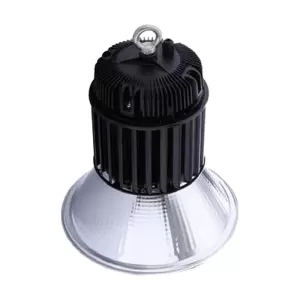
Unclassified, with ordinary high bays. Using our GKP40G heat-pipe high bay at 100 W and 130 lm/W, our lighting calculator gives:
| Result | Value |
|---|---|
| Room index | 1.15 |
| Fittings | 6 (3 × 2) |
| Spacing | 5.0 m × 5.0 m |
| Average illuminance | about 225 lux |
| Power density | 4.0 W/m² |
Classified as Zone 2, with explosion-proof fittings. Using the BED series at 100 W and a conservative 110 lm/W, the same calculation gives:
| Result | Value |
|---|---|
| Fittings | 9 (3 × 3) |
| Spacing | 5.0 m × 3.3 m |
| Average illuminance | about 286 lux |
| Power density | 6.0 W/m² |
Lower assumed efficacy pushes the count from 6 to 9, and each explosion-proof fitting costs several times an ordinary high bay, plus certified glands and installation to IEC 60079-14. Where a zone exists that cost is necessary. Where it does not, it is wasted.
A middle path is common: if only a small Zone 2 surrounds a gas train or booster, keep Ex fittings out of that zone altogether, and light the rest of the room with ordinary fittings. Our Zone 1 vs Zone 2 article explains what Zone 2 allows.
Heat: the factor that usually matters more
Hot boiler casings, flues and steam pipes heat the air under the roof. In summer, with boilers at full load, temperatures near the ceiling can exceed what an ordinary LED high bay is rated for. LED drivers age faster at high temperature, and many fittings dim or shut down to protect themselves.
| Fitting | Rated ambient |
|---|---|
| GKP40G heat-pipe high bay | −30 °C to +50 °C |
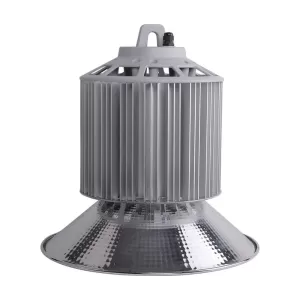
| BG-NGW high-temperature high bay | −30 °C to +65 °C |
Measure the temperature at the planned mounting height on a hot day with the plant at full load. If it is close to 50 °C, choose the high-temperature model or mount lower on the walls. The BG-NGW is rated at more than 110 lm/W, so its layout is close to the 9-fitting result above. Our guide to high-temperature LED high bay lights covers the effect of heat on LED life in more detail.
Where to put the fittings
- Over the operating aisle in front of the boilers, where staff read gauges and adjust burners.
- At water treatment panels, pumps and the control panel, with local lights if needed.
- Not directly above flue outlets, breechings or safety valve discharges.
- Clear of the space needed to lift burners or tube bundles.
Emergency lighting
Boiler rooms need emergency lighting so staff can shut down the plant and leave safely in a power failure. EN 1838 asks for higher levels at safety equipment and controls. Put an emergency fitting over the boiler emergency stop and at each exit; our emergency light installation guide covers layout.
Oil-fired and dual-fuel boilers
Heavy fuel oil and diesel have flash points above normal room temperatures and seldom create a classified area on their own, but heated oil, day tanks and pump sets need checking. Diesel generator rooms raise the same question, with the added issue of engine heat and vibration.
What to send us
- Room plan and roof height
- The area classification, or the gas pressure, gas type and ventilation details
- Measured or expected ceiling temperature
- Supply voltage and emergency lighting needs
We return a fitting choice and layout, ordinary or explosion-proof as the classification requires.
Sources
Frequently asked questions
Do boiler rooms need explosion-proof lights?
Usually not, if the boiler room is supplied with natural gas at low pressure, has the ventilation required by the gas code, and the area study shows no classified zone. High-pressure gas, boosters, LPG or poor ventilation can create a Zone 2, which then needs certified fittings.
What lux level should a boiler room have?
EN 12464-1 lists 200 lux for boiler houses and similar plant rooms. Gauges, burner controls and water treatment panels benefit from local light.
What temperature can an LED high bay handle in a boiler room?
Check the fitting's rated ambient range. Our GKP40G is rated for −30 °C to +50 °C, and the BG-NGW high-temperature high bay for up to +65 °C. Measure the temperature near the ceiling with the boilers at full load before choosing.
Where should lights go in a boiler room?
Over the operating aisles in front of the boilers, at burner controls and at gauges, not directly above flue outlets or hot breechings, where the temperature is highest and maintenance is hard.