
IP44 vs IP65: Which Rating Do You Need for Outdoor, Bathroom and Industrial Lights?
IP44 vs IP65 explained: what each digit means, how the tests differ, where IP44 is enough (bathrooms, sheltered outdoor walls) and where IP65 is needed, with the ratings of our own fittings.
Key points
- IP44 keeps out solid objects over 1 mm and resists splashing water from any direction; IP65 is dust-tight and resists low-pressure water jets.
- IP44 suits bathrooms outside the shower zone and outdoor walls under eaves or a porch; IP65 suits exposed outdoor positions, car washes and areas that are hosed down.
- The difference shows over time: dust and insects get into IP44 fittings, and rain driven by wind can reach areas a splash test does not cover.
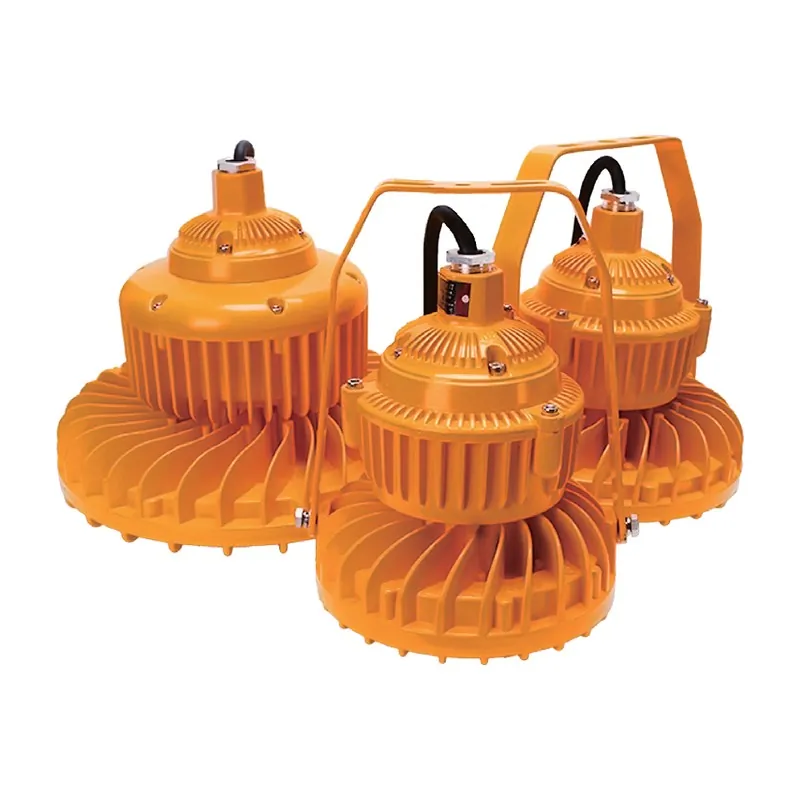
- Our own fittings range from IP40 (BG-XFYJ exit sign, dry indoor only) to IP65 (BED), IP66 (BDE507) and IP67 (ExF and LDM30C street light).
- An IP rating is only kept if the installation keeps it: correct cable glands, sealed junctions and the right mounting orientation.
IP44 and IP65 are the two ratings people compare most often when they choose a light for a bathroom, a garden wall or a workshop. Both sound waterproof, but they are tested very differently, and the gap shows within a year or two in the wrong location. This guide explains the IP code, compares the two ratings test by test and lists the ratings of our own fittings, so you can see which kinds of products carry which rating.
How to read an IP code
The IP code comes from IEC 60529. It has two digits:
| First digit (solids) | Meaning | Second digit (water) | Meaning |
|---|---|---|---|
| 0 | No protection | 0 | No protection |
| 4 | Objects > 1 mm (wires, small screws) | 4 | Splashing water from any direction |
| 5 | Dust-protected (some dust may enter, not enough to harm) | 5 | Water jets, 6.3 mm nozzle |
| 6 | Dust-tight | 6 | Powerful jets, 12.5 mm nozzle |
| — | — | 7 | Temporary immersion to 1 m for 30 minutes |
| — | — | 8 | Continuous immersion, conditions set by the maker |
An “X” in place of a digit means that property was not tested; IPX4, for example, says nothing about dust.
IP44 vs IP65, test by test
| IP44 | IP65 | |
|---|---|---|
| Solids | Probe of 1 mm must not enter | Dust chamber test: no dust inside |
| Water test | Oscillating tube or spray nozzle, splashing from all directions, for at least 5 minutes | Jet from a 6.3 mm nozzle, 12.5 L/min, from 2.5–3 m, at least 3 minutes |
| Insects and dust | Can enter over time | Kept out |
| Typical locations | Bathrooms outside the shower, sheltered outdoor walls | Exposed outdoor walls and poles, car parks, wash-down areas |
The jump from 4 to 6 in the first digit matters as much as the water digit. Dust and insects inside a fitting block heat sinks and diffusers, shortening LED life and dimming the light.
Where IP44 is enough
- Bathrooms outside the immediate shower area. Many codes, such as BS 7671 Section 701, require at least IPX4 in zones 1 and 2 around a bath or shower.
- Outdoor walls under a deep porch, eaves or canopy, where rain reaches the fitting only as splash.
- Covered walkways and carports that stay dry and clean.
- Indoor areas with occasional splashing, such as utility rooms.
Where you need IP65 or higher
- Exposed outdoor walls and poles, where wind drives rain at the fitting and dust and insects are constant.
- Areas cleaned with a hose, such as food plants, car washes and animal sheds.
- Industrial buildings with dust, such as woodworking shops, cement plants and grain stores.
- Street, area and flood lighting of any kind. Our IP65 vs IP66 vs IP67 article covers the steps above IP65.
- Kitchens with wash-down cleaning, as covered in our commercial kitchen lighting levels guide.
Our own fittings, by IP rating
To show how ratings follow use, here is the rating of a range of our products:
| Product | IP rating | Intended location |
|---|---|---|
| BG-XFYJ exit sign | IP40 | Dry indoor areas only |
| BED explosion-proof light | IP65 | Indoor and outdoor hazardous areas |
| BDE507 explosion-proof light | IP66 | Hazardous areas, including outdoor and wet positions |
| ExF explosion-proof light | IP67 | Hazardous areas with heavy water exposure |
| LDM30C street light | IP67 | Roads, exposed poles |
The exit sign is a good example of a rating that limits use: at IP40, it must not go into a wet or outdoor location, and our wet location emergency light guide explains what to use instead.
The rating is only as good as the installation
An IP65 fitting can let in water within weeks if:
- the cable gland is the wrong size for the cable, or a spare entry is left open;
- an outdoor junction is made with indoor connectors;
- the fitting is mounted upside down or at an angle the maker does not allow, so water collects at a seal;
- the gasket is damaged when the cover is reopened.
Our flood light wiring guide shows how to make an outdoor connection that keeps the fitting’s rating, including the junction box and gland choices.
Condensation: the problem neither rating solves
A sealed IP65 fitting that heats up by day and cools at night breathes through its seals. In humid climates, moisture can condense inside even though no rain got in. Signs are fogging behind the lens in the morning and water droplets at the lowest point of the housing. Remedies include:
- a breather valve (a membrane vent) that lets air move but keeps water out;
- mounting the fitting with cable entries facing down, so any water that does get in can drain rather than pool around terminals;
- avoiding positions where the fitting is cooled suddenly, for example by sprinklers or wash water on a hot housing.
An IP44 fitting has the opposite trade-off: air moves freely, so condensation clears quickly, but dust and insects come in with it. Neither rating is better in every case; the location decides.
IP and NEMA
In North America, enclosures are often rated by NEMA type rather than IP code. NEMA types include other tests, such as corrosion and ice, so they do not convert exactly. As a rough guide, NEMA 3R and IP24 to IP44 sit in the same region (rain protection), and NEMA 4 and 4X are often compared with IP65 or IP66.
Quick decision guide
- Will the fitting see direct rain, jets or dust? Choose IP65 or higher.
- Only splashing, under cover? IP44 is acceptable.
- Is it in a bathroom zone? Check the zone rules; IPX4 is the usual minimum near a bath or shower, IPX5 where jets are used.
- Could it be submerged? IP67 or IP68.
When you send an enquiry, tell us where each fitting will be mounted and how the area is cleaned. We will confirm the rating needed and which of our products match it.
Sources
Frequently asked questions
What is the difference between IP44 and IP65?
The first digit is protection against solids: 4 stops objects larger than 1 mm, 6 is completely dust-tight. The second digit is protection against water: 4 resists splashing from any direction, 5 resists water jets from a 6.3 mm nozzle. IP65 is better on both counts.
Is IP44 enough for outdoor lights?
Under a porch roof, eaves or a canopy, IP44 is usually enough. For a wall or pole fully exposed to rain, dust and insects, choose IP65 or higher.
Is IP44 enough for a bathroom?
In many wiring codes, IP44 (or IPX4) is the minimum for zones 1 and 2 around a bath or shower. Where water jets are used for cleaning, IPX5 is required. Inside the bath or shower itself (zone 0), IPX7 and extra-low voltage are needed.
Can an IP65 light be used underwater?
No. IP65 resists jets, not immersion. For temporary immersion choose IP67; for continuous immersion, IP68 with the depth and duration stated by the maker.
Products in this guide
-
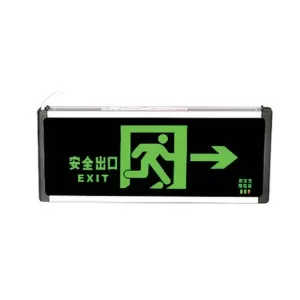 LED Emergency Exit Sign 3–5 W
BG-XFYJ Specifications and quote →
-
 Explosion-Proof LED Light 30–600 W, BED Series
BED Specifications and quote →
-
 Explosion-Proof Round LED Light 20–70 W, BDE507
BDE507 Specifications and quote →
-
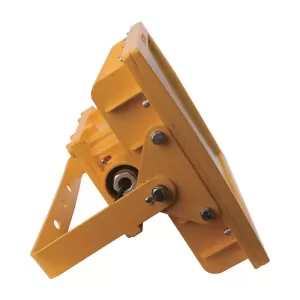 Explosion-Proof LED Flood & Street Light 50–150 W, ExF Series
ExF-1050B … ExF-1150B Specifications and quote →