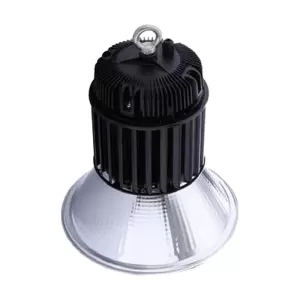
Compact Fluorescent (CFL) High Bays to LED: Wattage Match, Layout and Payback
Replacing compact fluorescent (CFL) high bays with LED: matching 4- to 8-lamp fittings, checking the layout, and payback from our retrofit calculator.
Key points
- A common CFL high bay holds six 42 W pin-based lamps and draws about 277 W with its ballast; a 100 W LED high bay at 130 lm/W delivers similar light on the floor.
- Replacing 40 such fittings, running 3,600 hours a year, saves about 25,500 kWh a year (64 %) by our retrofit calculator.
- CFL output falls in cold rooms and with age; LED high bays rated to −30 °C keep their output in unheated buildings.
- Old CFL lamps contain mercury and must go to a lamp recycler, not general waste.
Compact fluorescent high bays were a common upgrade from metal halide in the 2000s and early 2010s. They used several pin-based CFL lamps in one large reflector, typically four, six or eight lamps of 32 W, 42 W or 57 W. Many are still installed in warehouses, gyms, workshops and retail stores, usually with some lamps out and the rest dimmed by age. This guide explains how to replace them with LED and what to expect.
What a CFL high bay really draws
A typical six-lamp high bay with 42 W lamps:
- Lamp power: 6 × 42 W = 252 W
- Ballast loss: about 10 %, so about 277 W at the meter
- Initial lamp output: each 42 W triple-tube lamp gives in the region of 3,000–3,200 lumens, so about 18,000–19,000 lumens from six lamps
- Fitting efficiency: a large open reflector loses a significant share of that before it reaches the floor
Lamps also lose output over their life, and multi-lamp fittings often run with one or two lamps failed. The light in an old CFL installation is often well below what it was when new.
Matching LED wattage
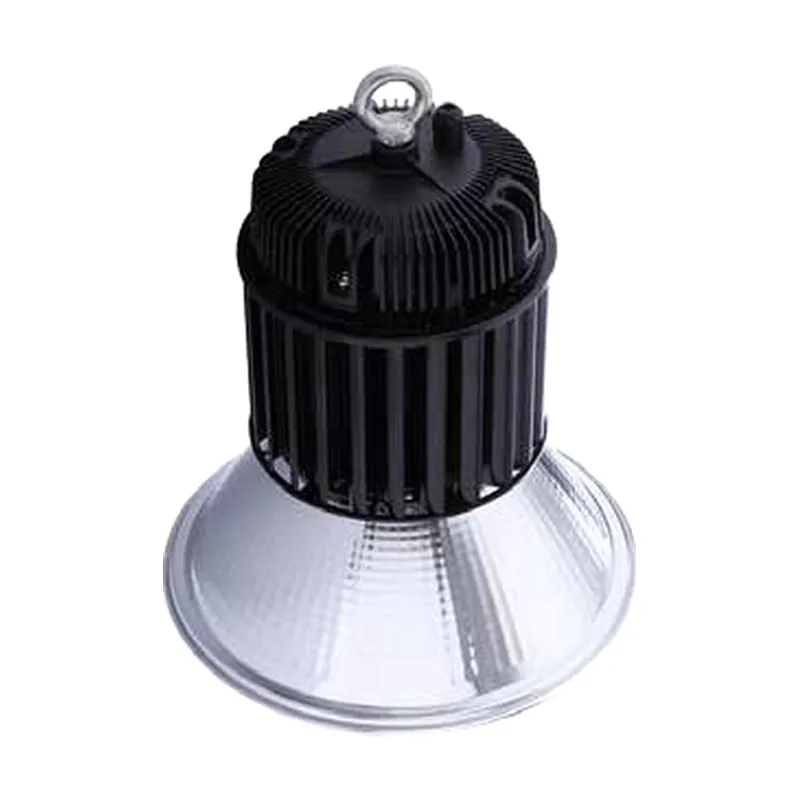
A modern LED high bay delivers its light directionally, with less loss in the fitting. A 100 W GKP40G heat-pipe high bay at more than 130 lm/W delivers about 13,000 lumens from the fitting. That is comparable to what a six-lamp CFL high bay delivers on the floor once reflector losses and lamp ageing are counted.
| CFL fitting | Approx. system watts | Typical LED replacement |
|---|---|---|
| 4 × 32 W | about 140 W | 60 W |
| 4 × 42 W | about 185 W | 60–80 W |
| 6 × 32 W | about 210 W | 80–100 W |
| 6 × 42 W | about 277 W | 100 W |
| 8 × 42 W | about 370 W | 120–150 W |
The table is a starting point. The right answer comes from a layout calculation for your space, because the old layout may have been over- or under-lit.
Check the layout, not just the swap
Take a warehouse of 40 × 25 m with fittings at 7 m and a target of 200 lux. Using the GKP40G at 100 W and 130 lm/W, our high bay lighting calculator gives:
| Result | Value |
|---|---|
| Room index | 2.48 |
| Utilisation factor | 0.70 |
| Fittings | 28 (7 × 4) |
| Spacing | 5.7 m × 6.25 m |
| Average illuminance | about 203 lux |
| Power density | 2.8 W/m² |
If the building has 40 CFL high bays today, a one-for-one swap with 100 W LED would give about 290 lux, well above the 200 lux target. Two choices then:
- Keep 40 positions and use 70–80 W fittings, which reuses all the existing supply points.
- Redesign to 28 positions with 100 W fittings, which saves 12 fittings but needs some rewiring.
Option 1 is usually cheaper for installation; option 2 lowers the fitting count. Our guide on high bay wattage by ceiling height helps check the choice. A similar decision for linear fluorescent fittings is covered in T5 high bays vs LED.
Payback
For the one-for-one case, with 40 fittings of six 42 W lamps (10 % ballast loss), replaced by 100 W LED, running 12 hours a day for 300 days at $0.15/kWh, our LED retrofit savings calculator gives:
| Result | Value |
|---|---|
| CFL energy | 39,917 kWh/year |
| LED energy | 14,400 kWh/year |
| Energy saving | 25,517 kWh/year (64 %) |
| Energy cost saving | about $3,830/year |
| Relamping saving | about $920/year |
| Total saving | about $4,750/year |
| Payback (at an assumed $120 per fitting + $30 install) | about 15 months |
| CO2 reduction | about 12.8 tonnes/year (0.5 kg/kWh) |
The relamping figure assumes $25 a year per fitting for CFL lamps and labour, against $2 for LED. With six lamps per fitting and frequent failures, many sites spend more. The electricity price and fitting cost are example inputs; enter your own.
Other gains
- Cold performance. CFL output falls in cold air, and lamps take minutes to reach full brightness. The GKP40G is rated from −30 °C to +50 °C and gives full output at once.
- Instant on and dimming. LED high bays work with occupancy sensors without the lamp-life penalty that frequent switching causes in CFL.
- Uniform colour. Old CFL lamps drift in colour; a hall with mixed replacement lamps looks patchy. LED stays consistent.
- Less maintenance at height. Fewer lifts, scaffolds and ladders.
Mercury and disposal
CFL lamps contain a small amount of mercury. Collect the old lamps intact, store them in boxes, and send them to a lamp recycler. In the EU, the WEEE Directive covers lamp recycling; other countries have similar schemes. Broken lamps need careful clean-up following local guidance. Never put them in a compactor or general waste.
Installation tips
- Check the old fixing: CFL high bays are often hung on hooks or chains; the LED fitting may be lighter and can use the same hook, but check the rating.
- Replace the supply cable if it has been heat-damaged by the old fixture.
- Consider adding occupancy sensors at the same time; see our high bay occupancy sensor guide.
What to send us
- Number of fittings, lamps per fitting and lamp wattage
- Building size and mounting height
- Operating hours and your electricity tariff
- Whether you want to keep the existing positions
We will calculate the replacement wattage, layout and payback, and quote on that basis.
Sources
Frequently asked questions
What LED wattage replaces a 6-lamp CFL high bay?
For six 42 W lamps (about 277 W with ballast), a 100 W LED high bay at 130 lm/W usually gives similar or better light on the floor. For 8-lamp fittings, 120–150 W LED is typical. Check with a layout calculation.
Can I put LED lamps into my CFL high bay?
Some pin-based LED replacement lamps exist, but they depend on ballast compatibility and the old reflector. A new LED high bay usually gives better light, lower energy and fewer failures than relamping an old CFL fixture.
Why do my CFL high bays look dim in winter?
Compact fluorescent lamps lose output at low temperatures, and they take time to warm up. In unheated warehouses this can be a large loss. LED high bays do not have this problem.
Is it worth replacing CFL high bays that still work?
Usually yes. In our example the payback is about 15 months with assumed fitting and installation costs, and relamping costs disappear.