T5 Fluorescent High Bays vs LED: Tube Swap, New Fittings, and What the Numbers Say
How 6-lamp T5HO fluorescent high bays compare with LED, when LED tubes make sense, and our calculation for 60 T5 fittings replaced by 150 W LED one-for-one or by a 45-fitting layout.
Key points
- A 6-lamp T5HO high bay with 54 W tubes draws about 350 W with its ballast (8% assumed). Its light output depends on temperature, peaking around 35 °C around the tube.
- By our retrofit calculator, replacing 60 such fittings one-for-one with 150 W LED at 100 lm/W saves about 57,600 kWh a year (57%) at 4,800 hours a year.
- Our high bay calculator shows the same 60 × 30 m hall at 9 m needs only 45 LED fittings for 200 lux, which raises the saving to about 68,400 kWh (68%).
- LED T5 tubes are a quick fix but keep the old housing, reflector and, for ballast-compatible types, the ballast; for high halls new fittings usually pay back better.
T5 high-output fluorescent high bays replaced metal halide in many warehouses and factories in the 2000s and 2010s. They were efficient for their time, switched on instantly and gave good colour. Now the tubes are getting harder to buy in some markets, ballasts are failing, and owners ask whether to fit LED tubes or replace the fittings. This guide compares the options and works out the savings with our calculators.
The T5 high bay in numbers
A typical T5 high bay holds four or six 54 W T5HO tubes in a polished reflector, with an electronic ballast. For a 6-lamp fitting:
- Lamp power: 6 × 54 W = 324 W
- Ballast loss: we assumed 8%, giving about 350 W per fitting; use the ballast data sheet if you have it
- Tube life: typically 20,000–30,000 hours, depending on switching and temperature
T5 tubes have a strong temperature dependence. They are designed for peak output at about 35 °C around the tube. In a cold warehouse, near loading doors or in a cold store, the tubes run cooler and give less light. In a hot roof space they also lose output. LED fittings are much less sensitive, which is one reason the switch often looks brighter than the watts suggest.
Option 1: LED T5 tubes
LED replacement tubes come in three types:
- Ballast-compatible (Type A): plug in and run on the existing ballast. Easiest, but the ballast still uses power and can fail.
- Direct wire (Type B): the ballast is removed and mains connected to the lamp holders. Saves more, but the fitting must be rewired and labelled.
- External driver (Type C): a new driver replaces the ballast. Best performance, highest labour.
Tubes keep the old housing and reflector, which were designed for the light pattern of a fluorescent tube. They cannot change the number or spacing of fittings. Our guide to LED fluorescent tube replacement explains the wiring of each type.
Option 2: new LED high bays, one for one
We ran a one-for-one replacement through our LED retrofit savings calculator:
- 60 T5 fittings, 324 W of lamps plus 8% ballast loss
- 16 hours a day, 300 days a year (4,800 hours)
- Electricity at 0.12 per kWh
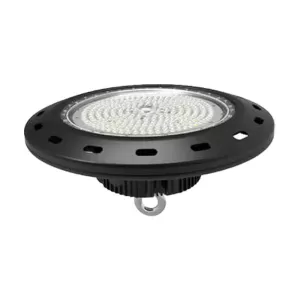
- New 150 W LED high bays at 100 lm/W, the minimum rated efficacy of our GKP40F UFO high bay
| Item | Result |
|---|---|
| T5 energy | 100,777 kWh a year |
| LED energy | 43,200 kWh a year |
| Saved | 57,577 kWh a year (57%) |
| Saving on electricity | about 6,900 a year |
| Fewer tube changes (12 vs 2 per fitting per year) | about 600 a year |
| CO₂ avoided (0.5 kg/kWh) | about 28.8 t a year |
The fitting price of 120 and installation of 30 are example inputs, not our price; with them the payback is about 14 months. Six tubes per fitting make relamping a real cost, which is why the maintenance line matters more here than for induction or metal halide.
Option 3: new LED high bays, redesigned layout
Suppose the 60 fittings light a 60 × 30 m hall at 9 m mounting height, and the target is 200 lux. Our high bay lighting calculator with the same 150 W LED and a medium beam gives:
- 45 fittings in a 9 × 5 grid, spacing 6.7 × 6.0 m
- about 209 lux average
- 3.75 W/m²
Forty-five LED fittings use 32,400 kWh a year, a saving of about 68,400 kWh (68%) against the T5 installation. The fitting count drops by a quarter, so the investment and future maintenance fall too.
Comparing the three options
| Option | Energy saving | Fittings changed | Notes |
|---|---|---|---|
| LED tubes (Type A) | Smallest | None | Ballast stays and can still fail |
| New fittings, one for one | 57% in our example | 60 | Quick to plan |
| New fittings, redesigned | 68% in our example | 45 | Needs a calculation, best result |
Other things that improve with LED
- Instant dimming and sensors. Aisles can drop to a low level when empty. See our guide on how to dim LED high bay lights.
- Beam choice. Narrow beams for racking aisles, wide for open floors. Our comparison of UFO and linear high bays helps choose the shape.
- No mercury. Old tubes must be collected and recycled as hazardous waste.
- Cold areas. LED output does not collapse near open doors or in chilled zones.
When to keep T5 for now
- The fittings are recent, tubes are still easy to buy, and the hall runs few hours.
- A wider refurbishment is planned within two years, and the layout will change anyway.
Even then, plan the change: buy spares while they are available and budget for the replacement.
Planning the change
- Record the hall dimensions, mounting height, number of fittings, operating hours and lux targets by area.
- Run the layout through the high bay calculator, not just a wattage swap.
- Decide on controls at the same time, because they change the wiring.
- Dispose of tubes and ballasts through a licensed recycler.
Our article on the warehouse LED lighting upgrade walks through a complete project.
What to send for a quotation
Send the hall size, mounting height, current fittings (number of tubes and wattage), operating hours and the light level you need. We will return a layout, the expected lux and the savings from both calculators.
Sources
Frequently asked questions
What LED wattage replaces a 6-lamp T5 high bay?
Usually 130–160 W of LED, depending on the fitting's efficacy, beam and the light level you need. In our example, 150 W at 100 lm/W gives about 209 lux in a 60 × 30 m hall at 9 m with 45 fittings.
Should I use LED T5 tubes or new LED high bays?
Tubes are cheaper up front and need no new fittings, but keep the old reflector and wiring and save less. In high halls, new fittings with the right beam often reduce the number of fittings too, which tubes cannot do.
Why do T5 fluorescent high bays get dimmer in winter?
T5 lamps are designed to give their peak output at about 35 °C around the tube. In cold warehouses or near open doors they run cooler and give noticeably less light.
Are T5 fluorescent lamps being phased out?
Several regions, including the European Union under its RoHS rules, have ended the general sale of many fluorescent lamps because of their mercury content. Check the rules in your market before stocking spares.