Textile Mill Lighting: Lint, Humidity, Stroboscopic Effect and a 60 × 30 m Weaving Hall
Spinning and weaving halls need high, even light, but lint, humidity and spinning machinery make fitting choice tricky. Zones for fibres, stroboscopic risk, and a weaving hall calculated.
Key points
- Cotton and other textile fibres are combustible flyings (group IIIA, or Class III in North America). Lint settles on fittings and is a fire risk more often than an explosion risk, so sealed, smooth fittings matter.
- Bale opening and blowroom areas are where lint is densest; some sites classify them, while weaving and spinning halls with good extraction are usually unclassified.
- For a 60 × 30 m weaving hall at 6 m and 500 lux, our calculator gives 120 GKP40G high bays at 100 W (about 537 lux) or 84 at 150 W (about 563 lux).
- Rotating spindles and shuttles make stroboscopic effect a real safety issue. Ask for the driver's flicker data rather than assuming every LED driver is flicker-free.
A textile mill is one of the most demanding indoor spaces for lighting. Workers watch thousands of moving threads, spot broken ends and check fabric for faults, so the light must be high and uniform. At the same time, the air is full of lint and is often deliberately humidified, and fast-spinning machinery can create a stroboscopic illusion under the wrong light. This guide goes through the mill by process and works through a weaving hall layout.
Lighting needs by process
| Area | Typical target | Main lighting issue |
|---|---|---|
| Bale store and bale opening (blowroom) | 200–300 lux | Heaviest lint; possible classification |
| Carding and drawing | 300 lux | Lint, moving parts |
| Spinning | 500 lux | Uniformity along long machine rows; stroboscopic risk |
| Weaving | 500 lux | Visibility of fine threads; humidity |
| Dyeing and finishing | 300–500 lux | Steam, chemicals, corrosion |
| Cloth inspection and colour matching | 750 lux and above | Colour rendering, colour temperature, glare-free |
| Warehouse | 150–200 lux | Racking, forklifts |
The values are common design targets; EN 12464-1 lists task-specific values for the textile industry, and the client’s own specification may set higher ones.
Fibres, lint and hazardous areas
Textile fibres such as cotton, flax, jute and synthetic staple are combustible flyings. IEC places them in group IIIA; the NEC calls the locations Class III. Class III Division 1 covers areas where ignitible fibres are handled, manufactured or used, and Division 2 covers areas where they are stored or handled other than in manufacturing.
In practice the hazard is usually fire, not explosion. Lint settles on warm surfaces, insulates them, and can smoulder. The bale opening area, where compressed bales are broken up and fibre fills the air, is where classification is most likely. Weaving and spinning halls with effective extraction and regular cleaning are commonly unclassified, but some specifications still ask for Class III-suitable fittings throughout. Our article on Class I vs Class II hazardous locations explains how the classes differ.
Where a dust-certified fitting is required, our BED explosion-proof LED light is marked Ex tb IIIC T130 °C Db. Group IIIC equipment is suitable for IIIA flyings.
Fitting choice for unclassified halls
Even where no Ex fitting is required, lint and humidity rule out open or poorly sealed fittings:
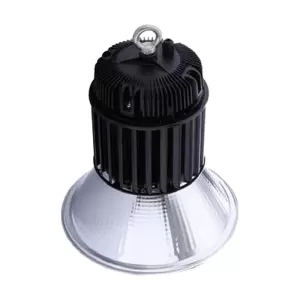
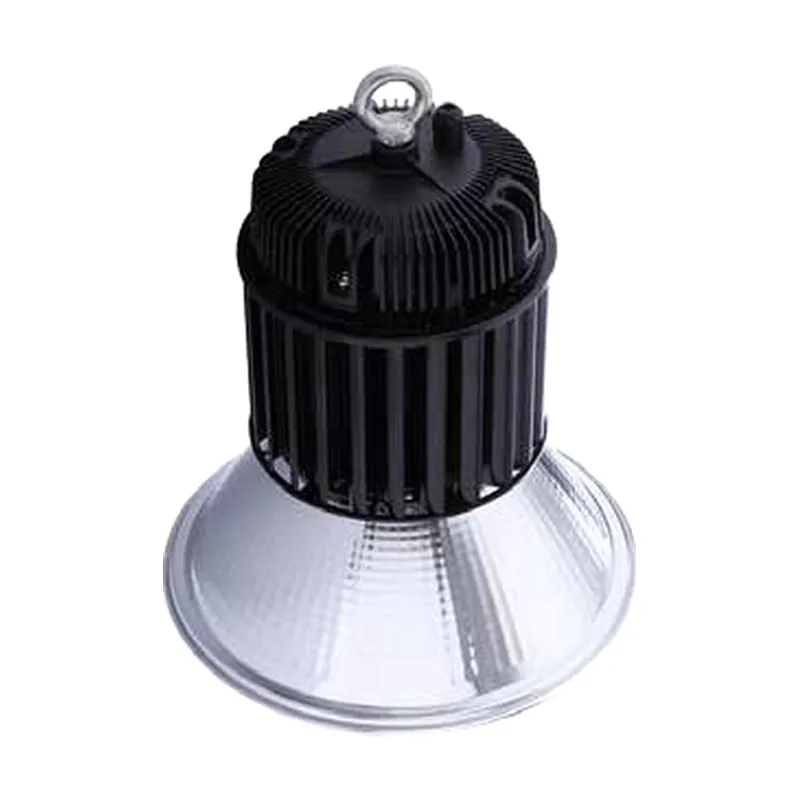
- Sealed housing. Lint inside a fitting traps heat around the driver and LEDs. Our GKP40G heat-pipe high bay is IP65, rated −30 °C to +50 °C, at more than 130 lm/W.
- Cleanable shape. Fins collect lint. Plan for blowing down or vacuuming fittings during regular cleaning, and choose fittings that can be reached.
- Humidity tolerance. Spinning and weaving halls are often humidified to reduce static and fibre breakage. Sealed drivers and corrosion-resistant finishes last longer.
- Wide beam at low heights. Weaving sheds are often 5–7 m high; a wide beam spreads light evenly across loom rows.
Calculating a weaving hall
Take a weaving hall of 60 × 30 m with 6 m to the roof, light-coloured walls and ceiling, and a target of 500 lux at loom height.
With the GKP40G at 100 W, 130 lm/W and a wide beam, our high bay lighting calculator gives:
| Result | 100 W fittings | 150 W fittings |
|---|---|---|
| Room index | 3.85 | 3.85 |
| Fittings | 120 (15 × 8) | 84 (12 × 7) |
| Spacing | 4.0 m × 3.75 m | 5.0 m × 4.3 m |
| Average illuminance | about 537 lux | about 563 lux |
| Power density | 6.7 W/m² | 7.0 W/m² |
The 150 W version needs 36 fewer fittings and less installation labour, at slightly higher total power. The 100 W layout puts fittings closer together, which gives more even light and softer shadows between loom rows. In a weaving shed, where workers look closely at threads along the full length of the loom, the more uniform layout is often worth the extra fittings. Align rows with the loom aisles rather than imposing a grid that ignores the machines.
Stroboscopic effect
Spinning frames, rollers and shuttles rotate or oscillate at steady speeds. If the light output pulses at a related frequency, moving parts can appear slowed or stationary. That is a known hazard with old magnetic-ballast fluorescent lighting, and it can also occur with LED drivers that have high current ripple.
Do not assume every LED is flicker-free. Ask the supplier for flicker metrics, such as percent flicker or the stroboscopic visibility measure (SVM), and compare them against IEEE 1789 recommendations. Our article on why LED lights flicker explains the causes and the measurements.
Inspection and colour matching
Cloth inspection frames need high light, often 750–1,000 lux or more on the fabric, plus light from behind for some fabrics. Colour matching is a separate task: it is done in a dedicated booth with a standard illuminant such as D65, not under the general hall lighting. For inspection areas, choose high CRI (Ra 90 versions are available in our high bay range) and a consistent colour temperature across all fittings so that shade differences are not caused by the lighting itself.
Dyeing and finishing
Dye houses are hot, steamy and use chemicals. Fittings must be sealed and corrosion resistant, and mounted away from direct steam from open machines. Where solvents are used in finishing or coating, check whether the area study has created a gas zone.
Retrofits
Many mills still run fluorescent or metal halide lighting. When replacing it, recount rather than swapping one for one, because modern LED high bays are far more efficient. Our how many LED high bay lights do I need guide explains the method, and our LED high bay specifications guide lists what to compare.
What to send us
- Hall layout, roof height and machine rows
- Lux targets for each process
- Any area classification for bale opening or finishing
- Humidity and temperature conditions
We return a layout aligned with your machine rows, and a fitting choice for each area.
Sources
Frequently asked questions
How much light does a textile mill need?
It depends on the process. Bale opening and carding can work at around 300 lux; spinning and weaving typically 500 lux; cloth inspection and colour matching 750 lux or more, with high colour rendering and controlled colour temperature.
Are textile mills hazardous locations?
Parts may be. Textile fibres are combustible flyings, Class III in the NEC and group IIIA under IEC. Areas where fibres are handled or processed in quantity, such as bale opening, may be classified. Many spinning and weaving halls with good extraction and cleaning are unclassified, but the decision belongs to the area study.
Why does flicker matter in a textile mill?
Light that pulses at the same frequency as rotating machinery can make spindles or rollers look stationary or slow. That stroboscopic effect is a safety hazard. Choose drivers with low current ripple and ask for flicker metrics.
What IP rating should textile mill lights have?
IP54 at minimum to keep lint out; IP65 is common because sealed fittings are easier to clean and also tolerate humidified air.