
Wet Location Emergency Lights: Surface-Mounted, IP65 and Outdoor Emergency Lighting
How to choose wet location and surface-mounted emergency lights: IP ratings, outdoor exit routes, car parks, washdown and cold areas, battery types, cold-weather performance, mounting and testing.
Key points
- Wet location emergency lights are sealed against water, typically IP65 or better, for outdoor routes, car parks, washdown areas and damp plant rooms.
- Surface-mounted units fix directly to walls or ceilings, so they suit concrete, block and exposed structures where recessing is not possible.
- Batteries lose capacity in cold; choose units rated for the lowest temperature of the space, sometimes with battery heaters.
- Hazardous areas need certified explosion-proof emergency lights, not just wet-rated ones.
Emergency lighting must work when the power fails, and in many buildings that means working in rain, spray, dust and cold. Standard indoor emergency lights fail quickly in these conditions. Wet location and surface-mounted emergency lights are designed for them.
Where wet location emergency lights are needed
- External escape routes: exit doors, external stairs, ramps and paths to assembly points
- Car parks: open and underground, often damp and dusty
- Plant rooms and boiler rooms
- Food processing and washdown areas
- Cold stores and freezers
- Loading docks and canopies
- Swimming pools and changing rooms
- Industrial sites, warehouses and farms
IP ratings
| Rating | Protection | Typical use |
|---|---|---|
| IP44 | Splashing | Damp indoor areas |
| IP65 | Dust-tight, water jets | Outdoor, car parks, plant rooms |
| IP66 | Powerful water jets | Washdown, exposed outdoor |
| IP67 | Temporary immersion | Rarely needed for emergency lights |
IP65 is the common choice for outdoor and damp areas. See IP65 vs IP66 vs IP67 for what the numbers mean.
Surface-mounted designs
Surface-mounted emergency lights fix directly to walls or ceilings. They suit:
- Concrete, block and steel structures where recessing is impossible
- Car parks and plant rooms with exposed services
- Retrofits without ceiling voids
Common types:
- Bulkhead emergency lights: robust, sealed, often polycarbonate with IK ratings
- Twin-spot units: two adjustable heads for wide areas
- Vapour-tight battens with emergency packs: combine normal and emergency lighting
- Exit signs in sealed housings
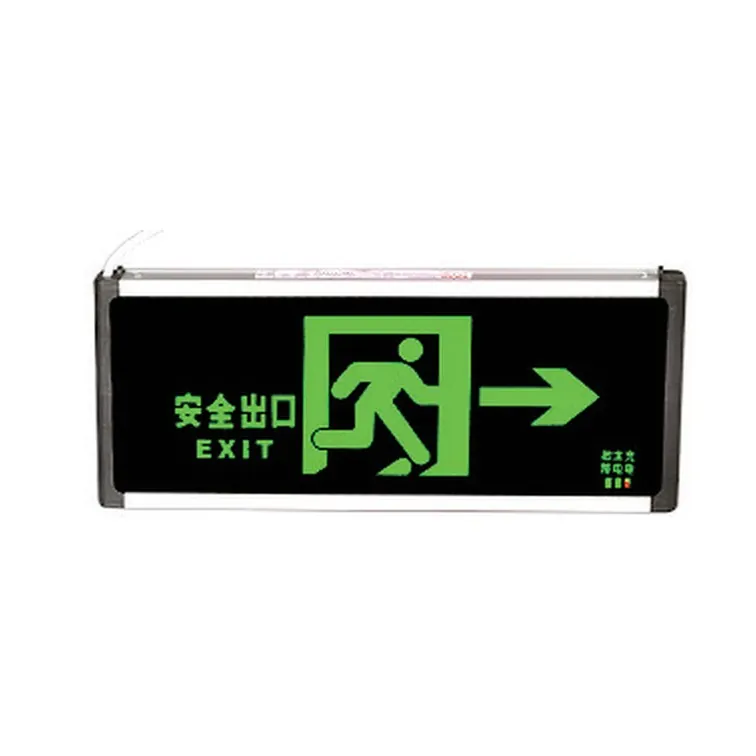
Our LED exit sign is a standard exit sign for indoor routes; ask us about sealed versions for damp areas.
Maintained and non-maintained
- Non-maintained: lights only when mains fails; common on escape routes
- Maintained: lights all the time and continues on battery when mains fails; used where lighting is needed continuously, such as car parks, theatres and some external routes
Batteries and temperature
Battery capacity falls as temperature drops. For unheated car parks, cold stores and outdoor areas:
- Check the unit’s rated operating temperature range
- Choose batteries suited to cold, or units with battery heaters
- LiFePO4 handles cold discharge better than many alternatives, but needs controlled charging below freezing
- In hot plant rooms, high temperatures shorten battery life; choose units rated for the ambient temperature
Impact resistance
Car parks and industrial areas need impact-resistant housings, IK08–IK10, and sometimes wire guards.
Hazardous areas
Wet rating is not the same as explosion protection. In zones with flammable gas, vapour or dust, emergency lights must be certified explosion-proof for the zone. Our explosion-proof emergency light is designed for such areas; a certificate is supplied with the quotation. See explosion-proof emergency exit lights.
Placement
Emergency lights must light escape routes to the required levels, marking:
- Exit doors and final exits
- Changes of direction and level
- Stairs
- Fire alarm call points and firefighting equipment
- First aid points
- Outside final exits, to a place of safety
For layout principles, see emergency light types and emergency light installation.
Mounting outdoors
- Mount above doors and along routes at the specified height
- Seal cable entries, with glands facing down where possible
- Use stainless or corrosion-resistant fixings
- Avoid positions where water pools on top of the fitting
- Keep units away from direct heat sources
Testing
Wet location emergency lights need the same testing as indoor ones: monthly short tests and annual full-duration tests, with records. Self-test units make this easier in large or hard-to-reach areas. See emergency light testing.
Common mistakes
- Using indoor emergency lights in damp car parks
- Ignoring low temperatures in unheated areas
- Forgetting external routes beyond the final exit
- Using wet-rated lights in hazardous zones
- Mounting units where they are easily damaged
Car parks: a common case
Underground and multi-storey car parks combine several challenges: damp air, exhaust fumes, dust, low temperatures in winter, vehicle impacts and long escape routes. Emergency lighting there usually combines maintained or non-maintained bulkheads along driving aisles and pedestrian routes, exit signs at stair cores and exits, and emergency packs in some of the general vapour-tight battens. Fittings should be IP65 with high impact resistance, mounted where vehicles cannot hit them, and tested regularly despite the difficulty of access. Self-test units with indicators visible from the ground save a great deal of time.
External routes
Building codes in many countries require emergency lighting outside final exits, so people can reach a place of safety after leaving the building. External bulkheads or wall lights with emergency packs, rated for wet locations and the coldest expected temperatures, should light paths, steps and changes of level up to the assembly point or public road. These are often forgotten in designs that stop at the door.
Food processing and washdown
In food factories, fittings must withstand high-pressure washdown and cleaning chemicals, and must not shed glass or brittle plastic into production areas. Choose sealed IP66 or IP69 fittings with shatter-resistant covers and materials approved for food areas, and check that emergency packs and batteries are rated for the room temperature, which may be low in chilled areas.
Documentation
Keep a record of the emergency lighting design, fitting types and locations, battery replacement dates and test results. Insurers and fire authorities often ask for these records, and they make maintenance planning easier.
Battery replacement
Emergency batteries in harsh locations age faster. Plan to replace them every three to five years, or when the annual duration test shows the unit falls short, and record the date on the fitting.
For projects
We supply emergency lights, exit signs and explosion-proof emergency lights for commercial, industrial and hazardous-area projects. Send us the areas, IP and temperature requirements and the applicable standard, and we will suggest suitable units.
Sources
Frequently asked questions
What is a wet location emergency light?
An emergency light built to resist rain, splashing or washdown, usually rated IP65 or higher, for use outdoors or in damp and wet indoor areas such as car parks, plant rooms and food processing.
Can emergency lights be used outdoors?
Yes, if they are rated for wet locations and the temperature range of the site. Outdoor exit routes, stairs and assembly points often need emergency lighting under building codes.
Do emergency light batteries work in cold weather?
Battery capacity falls in cold. Units for unheated or outdoor areas should be rated for the minimum temperature; some include battery heaters to maintain duration.