
LED Retrofit Pot Lights: Converting Recessed Cans and Choosing Square or Round Downlights
How to convert recessed pot lights to LED: retrofit trims vs LED bulbs vs new downlights, sizing 4 and 6 inch cans, square or round trims, colour temperature, dimming and fire-rated ceilings.
Key points
- Recessed pot lights can be converted to LED with a retrofit trim that screws into the old lamp socket, an LED bulb, or a new integrated downlight.
- Retrofit trims are the quickest option and look the cleanest; check the can diameter (usually 4, 5 or 6 inch) and depth.
- Square downlights suit modern interiors and grid ceilings; round suits most homes and offices.
- Check dimmer compatibility, IC rating for insulated ceilings and fire-rating where ceilings separate floors.
Recessed pot lights, also called can lights or downlights, were installed by the million with halogen and compact fluorescent lamps. Converting them to LED cuts energy by 70–85% and removes frequent lamp changes. There are three main ways to do it.
Option 1: LED retrofit trim
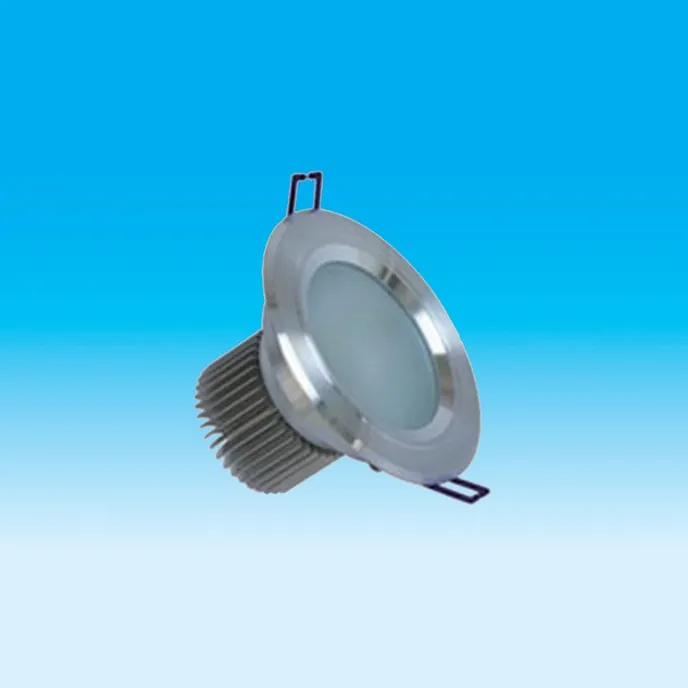
A retrofit trim is an LED light, driver and trim ring in one unit. It plugs into the existing lamp socket with an adapter, or connects with a quick connector, and fixes into the can with springs or torsion clips.
- Pros: quick, no ceiling work, clean look, good heat management, sealed opening reduces draughts
- Cons: depends on the existing can’s size and condition
This is the most popular option for homes, offices and shops with existing cans.
Option 2: LED bulb in the existing trim
Replace the old reflector lamp (BR30, PAR30, PAR38 or GU10) with an LED equivalent.
- Pros: cheapest, easiest, keeps existing trims
- Cons: enclosed cans trap heat and shorten LED life; old trims may look tired; light spread may not match
Choose LED lamps rated for enclosed fixtures.
Option 3: Replace with integrated LED downlights
Remove the old cans and fit new integrated downlights, often slim “wafer” or canless types that need little ceiling depth.
- Pros: best long-term solution, lower profile, can change size and layout
- Cons: more labour, ceiling patching, may need an electrician
Choose this when cans are damaged, the layout is poor, or you want a different look. Our recessed downlight installation guide explains the process.
Sizing to the can
Measure the inside diameter of the can:
| Can size | Typical replacement |
|---|---|
| 3 inch (about 75 mm) | Small retrofit trims, GU10 lamps |
| 4 inch (about 100 mm) | 4 inch retrofit, 8–10 W |
| 5–6 inch (about 125–150 mm) | 5/6 inch retrofit, 10–15 W |
| 8 inch and commercial cans | Commercial retrofit kits, 20–40 W |
Also check the depth of the can and the socket position, so the retrofit sits flush.
Square or round?
Round trims suit almost any space and match most existing cans.
Square downlights give a modern, architectural look and line up neatly with grid ceilings, square tiles and linear features. Square retrofits exist for round cans, but the ceiling opening must be fully covered by the square trim. In new projects, square cut-outs are common in hospitality and retail.
Brightness and wattage
| Old lamp | LED retrofit equivalent |
|---|---|
| 50 W halogen GU10 | 5–7 W LED |
| 65 W BR30 incandescent | 9–11 W LED (about 650–800 lm) |
| 26 W CFL downlight | 12–15 W LED |
| 2 × 26 W CFL commercial | 20–25 W LED |
See lumens to watts for more equivalents.
Colour temperature and CRI
For homes, 2700–3000 K; for offices and shops, 3000–4000 K. Choose CRI 90 for kitchens, bathrooms and retail. Some retrofits have a selectable colour temperature switch on the driver. See soft white vs daylight for help choosing.
Dimming
Most LED retrofits are dimmable on compatible dimmers. Older dimmers designed for incandescent loads may flicker or buzz with LEDs because the load is too low. Use an LED-rated dimmer and check the retrofit maker’s compatibility list. In commercial projects, 0–10 V or DALI dimming gives smoother control.
Insulated and fire-rated ceilings
- IC-rated cans and fittings can be in contact with insulation; non-IC cans need clearance
- Airtight fittings reduce heat loss and draughts into lofts
- Fire-rated downlights maintain the fire resistance of ceilings between floors, often required in apartments and offices
Check local building codes before changing fittings in fire-rated ceilings.
Wet locations
Bathrooms and outdoor soffits need fittings rated for damp or wet locations, typically IP44 or IP65 depending on the zone. Retrofits for showers must be rated for that zone.
Glare and visual comfort
Retrofitting is a chance to improve comfort as well as efficiency. Bare LED chips in shallow trims can glare, especially in low ceilings and when looking up from a sofa or bed. Look for retrofits with a recessed light source, a diffused lens or a deeper reflector, and a beam angle that suits the ceiling height. In offices and shops, a unified glare rating (UGR) below 19 is a common target for work areas. Spacing matters too: downlights spaced roughly equal to the ceiling height give even light, while widely spaced, very bright units leave pools of light and dark gaps. If the old layout was poor, replacing cans with a new layout may be worth the extra work.
Heat and lifetime
LEDs last longest when they run cool. Retrofit trims with an aluminium heat sink and an open back dissipate heat into the can and ceiling void. In insulated ceilings, check that the retrofit is approved for use in IC-rated housings, and do not cover non-IC cans with insulation.
Commercial projects
Offices, shops and hotels often have hundreds of downlights. Converting them all at once with matched trims gives a consistent look and the biggest savings. Our LED downlight BG-TDT and COB recessed spotlight are used in projects of this kind. The LED retrofit savings calculator estimates payback.
Checklist
- Measure can diameter, depth and socket type
- Choose retrofit trim, lamp or new downlight
- Pick round or square trim to suit the interior
- Match lumens to the space and colour temperature to the use
- Check dimmer compatibility
- Check IC, airtight and fire ratings where required
- Test a sample before ordering a whole building
Our LED retrofit kits guide covers other conversions, such as troffers and high bays. Send us your fitting list and we will suggest matching downlights.
Sources
Frequently asked questions
Can you put LED retrofits in old recessed lights?
Yes. LED retrofit trims screw into the existing lamp socket and clip into the can with springs or torsion clips. They replace the bulb and trim in one step, without changing the housing.
What size LED retrofit do I need for pot lights?
Measure the inside diameter of the can. Most are 4, 5 or 6 inch (about 100, 125 or 150 mm). Many retrofit trims are sold as 5/6 inch to fit both common sizes.
Are LED retrofits better than LED bulbs in recessed cans?
Usually. Retrofit trims seal the opening, spread light evenly, run cooler and look neater than a bulb inside an old trim. LED bulbs are cheaper but can overheat in enclosed cans.