
Soft White vs Warm White vs Daylight: A Light Bulb Colour Temperature Guide
What soft white, warm white, bright white and daylight mean in kelvin, how to pick a bulb colour for each room or space, CRI, and how the same names apply to LED fixtures and outdoor lights.
Key points
- Soft white is about 2700 K, warm white about 3000 K, bright or cool white about 3500–4100 K and daylight about 5000–6500 K.
- Names on packaging are not standardised; the kelvin value is the reliable figure.
- Use 2700–3000 K for living spaces and hospitality, 3500–4000 K for kitchens, offices and shops, and 5000 K+ for workshops and task areas.
- Outdoors, 2700–3000 K suits homes and gardens, 3000–4000 K roads in residential areas and 4000–5000 K industrial and sports sites.
The light bulb aisle offers “soft white”, “warm white”, “bright white”, “cool white” and “daylight”. The names sound clear but are used differently by different brands. The number that really matters is the colour temperature in kelvin. This guide explains each name, what it looks like and where to use it.
The colour temperature scale
Colour temperature, measured in kelvin (K), describes the colour of white light. Lower values look warm and yellow; higher values look cool and bluish.
| Name | Typical kelvin | Look |
|---|---|---|
| Extra warm / candle | 2200–2400 K | Amber, like candlelight |
| Soft white | 2700 K | Warm, yellowish, like an old incandescent bulb |
| Warm white | 3000 K | Warm but slightly crisper |
| Neutral / bright white | 3500–4000 K | Balanced, clean white |
| Cool white | 4000–4500 K | Crisp, slightly blue |
| Daylight | 5000–6500 K | Bright, bluish, like midday sky |
For photos of each, see our colour temperature chart.
Why the names are confusing
There is no legal definition of “soft white” or “bright white”. One brand sells 2700 K as soft white and 3000 K as warm white; another uses warm white for 2700 K. “Bright white” can mean 3500 K, 4000 K or even 5000 K. Always check the kelvin value printed on the pack or in the specification.
Soft white (2700 K)
Soft white recreates the familiar glow of incandescent bulbs. It makes skin tones, wood and fabrics look warm and inviting.
Best for:
- Living rooms, bedrooms and dining rooms
- Hotel rooms, restaurants and bars
- Porch and garden lights at homes
Warm white (3000 K)
Slightly whiter than soft white while still feeling warm. Popular for homes that want a cleaner look, and for hospitality and retail.
Best for:
- Kitchens and bathrooms at home
- Boutique shops and showrooms
- Landscape and facade lighting
- Residential street and path lighting
Neutral and bright white (3500–4000 K)
Clean and balanced, neither yellow nor blue. The standard in most offices, schools and shops.
Best for:
- Offices and classrooms
- Supermarkets and general retail
- Hospitals and clinics
- Garages and utility rooms at home
Daylight (5000–6500 K)
The coolest whites, closest to midday daylight. They look very bright and help alertness, but can feel harsh in living spaces at night.
Best for:
- Workshops, warehouses and factories
- Colour inspection and print work (with high CRI)
- Sports halls and floodlit pitches
- Security lighting
Colour rendering (CRI)
Colour temperature tells you the colour of the light; CRI tells you how naturally objects look under it. A soft white bulb with CRI 80 makes most things look fine; CRI 90+ is better for kitchens, retail, art and healthcare. Low-CRI light, even at a pleasant colour temperature, makes food and skin look dull.
Brightness is a separate choice
Colour temperature does not change the amount of light, which is set by lumens. A 2700 K bulb and a 5000 K bulb of 800 lumens give the same light output, though the cooler one may look a little brighter. See lumens to watts for brightness equivalents.
Mixing colour temperatures
Mixing soft white and daylight bulbs in one space looks untidy. Pick one colour temperature per room or area and stick to it. Where different areas meet, such as an open-plan kitchen and living room, a step of 300–500 K is less noticeable than a jump from 2700 K to 5000 K.
Tunable and dim-to-warm bulbs
Tunable white bulbs and fixtures let you change colour temperature, for example cooler during the day and warmer in the evening.
Dim-to-warm LEDs become warmer as they dim, from about 3000 K at full brightness to around 1800–2200 K when dimmed, imitating incandescent bulbs. They suit restaurants, hotels and homes.
Outdoor lighting
The same names apply outdoors:
- Homes, gardens and paths: 2700–3000 K, which is calmer and kinder to wildlife; see pathway lighting
- Residential streets: 3000 K is increasingly preferred
- Main roads: 3000–4000 K
- Industrial yards, ports and sports fields: 4000–5700 K
Many cities moved from 4000 K to 3000 K street lights after complaints about glare and blue light at night.
Commercial and industrial lighting
For offices and schools, 4000 K is a safe default; our LED classroom and office panels use it as standard. For warehouses, 5000 K is common. For hotels and restaurants, 2700–3000 K.
Colour temperature, sleep and wellbeing
Light affects the body clock. Cooler, bluer light in the morning and during the day helps alertness, while warmer light in the evening is more restful. This is one reason homes and hotels favour soft and warm white, and why some offices and schools now use tunable lighting that is cooler in the morning and warmer in the late afternoon. In bedrooms, using soft white of 2700 K or warmer, and dimming in the evening, is a simple step. For outdoor lighting, warmer colour temperatures also reduce the effect on insects, birds and other wildlife, which is why many parks, coastal areas and nature reserves now specify 2700–3000 K or even amber light.
Choosing quickly
- Is it a relaxing space? Choose soft or warm white (2700–3000 K)
- Is it a working space? Choose neutral white (3500–4000 K)
- Is it a task, inspection or industrial space? Choose daylight (5000 K+)
- Check the CRI: 80+ for general use, 90+ for colour-critical areas
- Keep one colour temperature per area
LED bulbs and fixtures from us
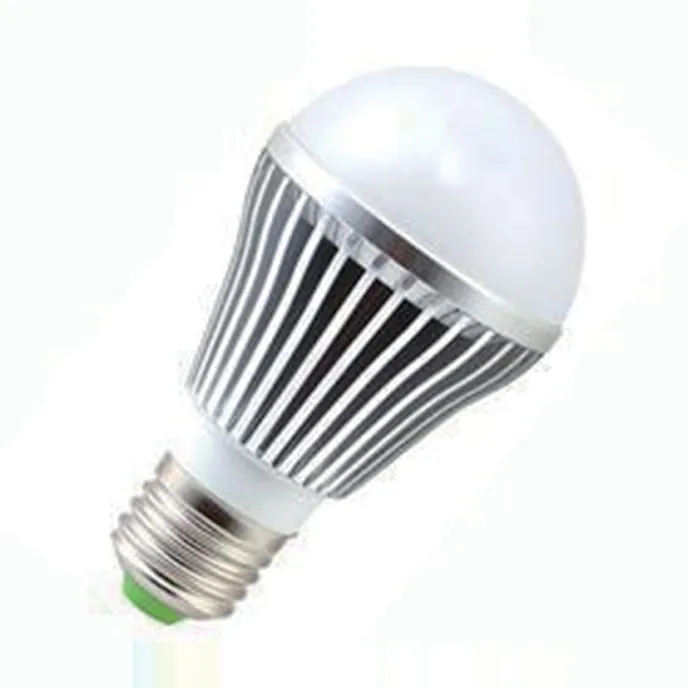
Our LED bulb BG-QPVAJ and our commercial fixtures are available in common colour temperatures for projects. Tell us the space and the look you want, and we will suggest the right colour temperature and CRI.
Sources
Frequently asked questions
What colour temperature is soft white?
Soft white is usually about 2700 K, the warm, slightly yellow light similar to an incandescent bulb. Some brands use soft white for anything from 2700 K to 3000 K.
Is soft white or daylight better?
Soft white is better for relaxing spaces like living rooms, bedrooms and restaurants. Daylight (5000–6500 K) is better for tasks that need alertness and colour accuracy, such as workshops, garages and some offices.
Is soft white the same as warm white?
They are close. Soft white is typically 2700 K and warm white 3000 K, but brands use the names differently. Check the kelvin value on the pack.