
Ceramic Metal Halide Lamps: How They Work, Where They Are Used and LED Replacements
Ceramic metal halide (CMH/CDM) lamps explained: how they differ from quartz metal halide, colour quality, efficacy and life, ballasts, common wattages and how to replace them with LED.
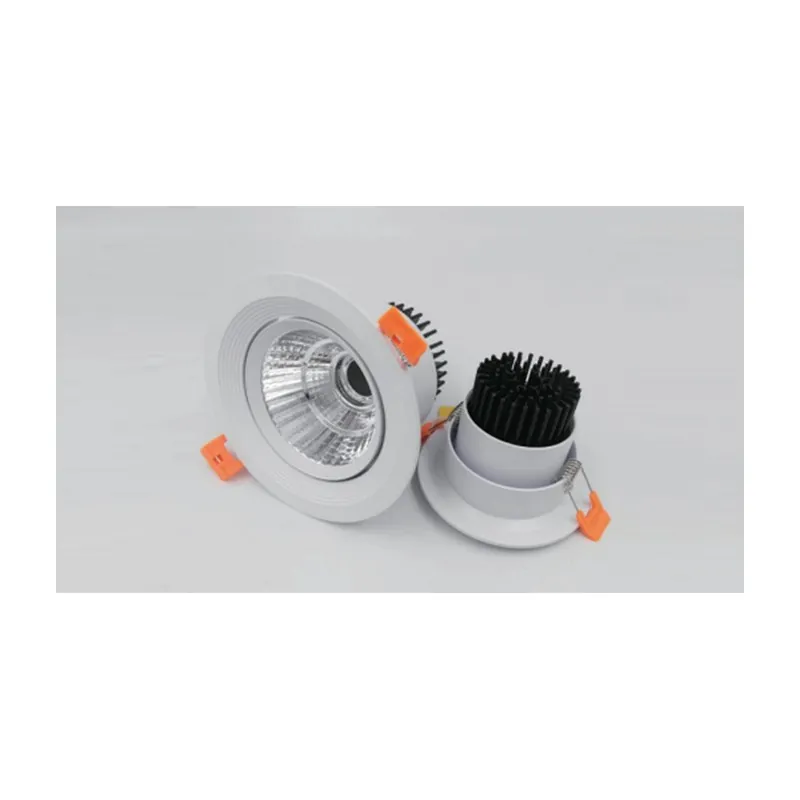
Key points
- Ceramic metal halide lamps use a ceramic arc tube instead of quartz, giving better colour rendering and more stable colour than older metal halide.
- Typical CMH lamps run at 80–100 lm/W with CRI 80–95 and life of about 12,000–20,000 hours.
- They need a matched ballast and ignitor, take minutes to warm up and cannot restrike instantly when hot.
- LED replacements typically use 40–60% less energy, start instantly, dim easily and last much longer.
Ceramic metal halide, often shortened to CMH or CDM (after a well-known product name), was the premium white light of the 2000s. Shops, galleries, hotels, streets and sports halls used it for its crisp, natural colour. LED has largely replaced it, but many CMH fittings are still in service. This guide explains the technology and how to replace it.
How a metal halide lamp works
A metal halide lamp is a high-intensity discharge (HID) lamp. An electric arc passes through a small arc tube filled with mercury vapour and metal halide salts. The salts emit light across the visible spectrum, giving white light. The lamp needs a ballast to control current and an ignitor to start the arc.
Why ceramic?
Older metal halide lamps used quartz arc tubes. Quartz limits the operating temperature and reacts with the salts over time, causing colour shift and falling output. Ceramic arc tubes, made of polycrystalline alumina, tolerate higher temperatures and resist chemical attack. The result:
- Better colour rendering: CRI 80–95 instead of 65–75
- Stable colour: less shift from lamp to lamp and over life
- Higher efficacy: often 80–100 lm/W
- Better lumen maintenance
Typical CMH lamps
| Wattage | Typical use |
|---|---|
| 20–39 W | Shop spotlights, display |
| 70 W | Retail, hotels, downlights, street lanterns |
| 100–150 W | Large retail, streets, facades |
| 250–400 W | Sports halls, industrial, floodlighting |
Common formats include single-ended G12 and G8.5 capsules, PAR lamps, double-ended RX7s and elliptical E27/E40 lamps.
Strengths and weaknesses
Strengths:
- Excellent colour for retail and display
- High light output from a compact source, good for tight beams
- Efficient compared with halogen
Weaknesses:
- Warm-up time of a few minutes to full brightness
- Hot restrike delay: after switching off, it can take several minutes to restart
- Not easily dimmable
- Needs a matched ballast; the wrong ballast shortens life
- Contains mercury, requiring safe disposal
- Lamp life of roughly 12,000–20,000 hours, shorter than LED
CMH in streets and outdoor lighting
Some towns used CMH in decorative street lanterns for its white light and good colour, replacing sodium. Today those lanterns are usually converted to LED, which gives similar or better colour with half the energy or less and far longer life. See lamp post street lights.
Replacing CMH with LED
Option 1: replace the fitting
Fit a new LED spotlight, downlight, floodlight or high bay. This gives the best efficiency, optics and controls, and removes the ballast. Most projects choose this route.
Option 2: LED replacement lamp
Some LED lamps are designed to replace CMH capsules or PAR lamps, either running on the existing ballast or with the ballast bypassed. They are quick to fit but heat, beam control and ballast compatibility can be limiting.
Option 3: LED retrofit module
An LED engine that fits inside the existing fitting’s housing, with its own driver. Useful for high-quality architectural fittings that are worth keeping.
Matching the light
| CMH lamp | Typical LED equivalent |
|---|---|
| 35 W retail spot | 15–25 W LED spot |
| 70 W downlight | 25–40 W LED downlight |
| 150 W floodlight | 60–90 W LED floodlight |
| 250 W high bay | 100–150 W LED high bay |
| 400 W high bay | 150–200 W LED high bay |
The exact LED wattage depends on optics and required light levels. Match beam angle and colour quality (CRI 90 for retail), not just lumens. Our metal halide to LED guide covers higher-wattage conversions in more detail, and the LED retrofit savings calculator estimates savings.
Colour temperature
CMH lamps were typically 3000 K (warm) or 4200 K (neutral). Choose LED at the same colour temperature for a consistent look, especially if converting part of a store. See the colour temperature chart.
Retail and display: colour matters
Retail was CMH’s stronghold because colour rendering sells products. Modern LED spotlights with CRI 90+ and high R9 (saturated red) values now match or exceed CMH, and specialised spectra are available for food, fashion and jewellery. Our COB recessed spotlight and LED track light are used in retail and display.
Sports halls and industry
In sports halls and factories, CMH high bays gave good colour for TV and inspection. LED high bays now give similar or better colour with instant start, which is important for halls that switch lights on and off. See gym lighting and how many LED high bay lights you need.
Why CMH colour was so prized
The ceramic arc tube allowed lamp makers to use salt mixtures that produced a fuller spectrum, especially in the reds, without the colour drifting as the lamp aged. For a fashion store, that meant fabrics looked the same in the shop as in daylight; for a supermarket, fresh food looked appetising; for a gallery, paintings kept their tones. Matching that quality was the last hurdle for LED in retail. Today, good LED spotlights achieve CRI 90–98 with strong saturated red values and consistent colour from fitting to fitting, which is why most retailers have switched. When comparing LED replacements, ask for the full colour rendering data, not only the headline CRI.
Disposal
CMH lamps contain mercury and must be recycled through approved routes, not thrown away. Ballasts may also need specialist disposal.
Is it worth replacing working CMH fittings?
Usually yes, if the lights run many hours a year. Energy savings of 40–60%, no lamp changes, instant start and dimming typically pay back within a few years in retail and commercial settings. Supplies of CMH lamps are also shrinking as manufacturers withdraw them, which will make replacements harder to find.
Planning the change
Survey the fittings: lamp types, wattages, beam angles, colour temperatures and hours of use. Group them into types, choose LED equivalents, and trial them in one area before converting the whole site. Send us the list and we will suggest LED replacements with photometric data.
Sources
Frequently asked questions
What is a ceramic metal halide lamp?
A high-intensity discharge lamp whose arc tube is made of ceramic (polycrystalline alumina) instead of quartz. The ceramic tolerates higher temperatures, which improves colour rendering, efficacy and colour stability.
Is ceramic metal halide better than LED?
Not today for most uses. CMH gives excellent colour, but LED matches or exceeds it with higher efficacy, instant start, dimming and much longer life. CMH survives mainly in older retail and display fittings.
What LED replaces a 70 W ceramic metal halide?
Typically a 25–40 W LED spotlight or downlight with similar beam angle and CRI 90, depending on the fitting and optics. Compare delivered lumens and beam, not lamp watts.