
Pathway Lighting: Spacing, Heights and Fixtures for Paths and Walkways
How to light paths and walkways: path lights vs bollards vs post-tops, spacing and height, low-voltage, mains or solar, light levels for public paths, and avoiding glare.
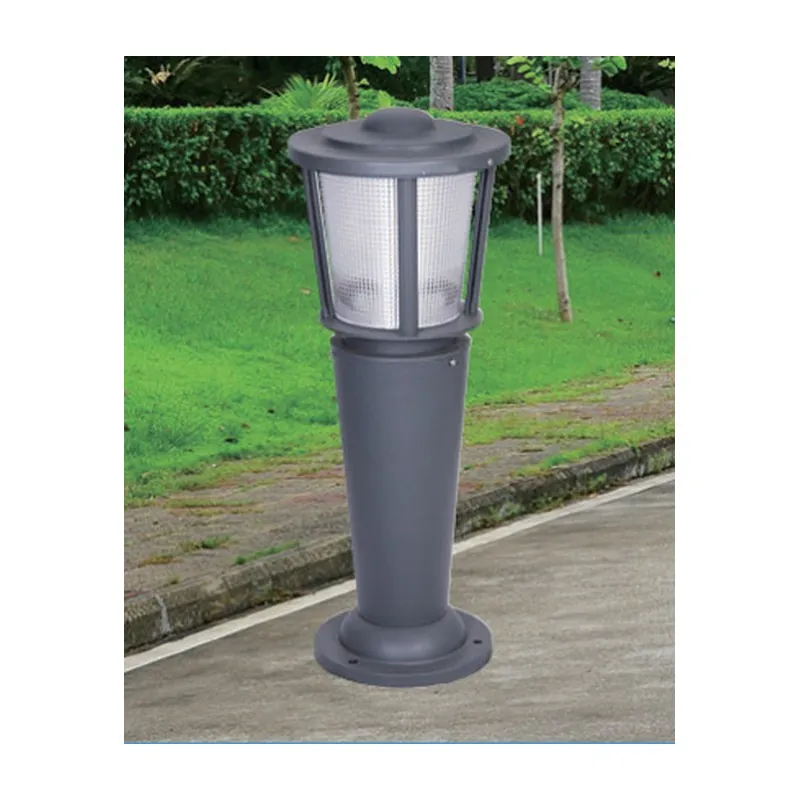
Key points
- Low path lights (0.3–0.6 m) mark a route; bollards (0.6–1.2 m) light the ground; post-tops (3–5 m) light faces as well as the ground.
- Typical spacing: low path lights every 2–3 m, bollards every 4–6 m, post-tops every 12–20 m.
- Stagger lights on alternate sides of wide paths instead of lining both edges, which looks like a runway.
- Public paths are usually lit to about 5–15 lux average; private garden paths need much less.
Path lighting has one job above all: show people where to walk so they do not trip, without dazzling them. Beyond that it shapes how a garden, campus or park feels at night. The choice between low path lights, bollards and post-top lights decides most of the result.
Three heights, three jobs
| Type | Height | What it does | Typical use |
|---|---|---|---|
| Low path light | 0.3–0.6 m | Marks edges, small pools on the ground | Garden paths, borders |
| Bollard | 0.6–1.2 m | Lights the ground and lower legs | Parks, campuses, hotel paths |
| Post-top | 3–5 m | Lights the ground and faces | Public paths, estates, car-park routes |
For safety and a feeling of security, people want to see faces of others coming towards them. Low path lights do not do that; post-tops and some bollards do.
Spacing
| Fixture | Typical spacing |
|---|---|
| Low path lights (50–200 lm) | 2–3 m |
| Bollards (300–1,500 lm) | 4–6 m |
| Post-tops (2,000–5,000 lm) | 12–20 m |
Stagger fixtures on alternate sides for paths wider than about 2 m. Lining both sides with lights at equal spacing creates a “runway” look and doubles the cost.
Our lawn and bollard lights come in 3–30 W at 0.6 m standard height, in modern, classical and European designs; garden post lights cover 2.5–5 m.
Light levels
| Path | Typical average |
|---|---|
| Private garden path | Low; marking only |
| Hotel and resort paths | 3–10 lux |
| Park and campus paths | 5–15 lux |
| Busy public walkways | 10–20 lux |
European P classes (EN 13201-2) range from P1 at 15 lux to P6 at 2 lux average for pedestrian areas, with minimum values for uniformity. See road lighting classes for how the classes are chosen.
Low voltage, mains or solar
| Low voltage (12 V) | Mains (100–240 V) | Solar | |
|---|---|---|---|
| Best for | Homes, small gardens | Parks, campuses, hotels | Remote paths, no cable |
| Run length | Limited by voltage drop | Long | No cable |
| Installation | Simple, shallow cable | Electrician, deeper cable | Ground spike or base |
| Light output | Low to moderate | Any | Limited by panel and battery |
| Control | Transformer timer, photocell | Timers, photocells, central control | Built-in sensor |
For low-voltage systems, size the transformer at about 80% of the connected load and check voltage at the last fixture. See our landscape lighting installation guide for cable depth, connections and testing.
For long paths far from power, solar bollards and post-tops avoid trenching. Compare solar models by real panel watts and battery watt-hours; the battery autonomy calculator shows how long a battery lasts.
Glare and the look of the path
- Shielded heads that send light down, not into eyes
- Warm white (2700–3000K) for gardens, hotels and residential paths
- Consistent colour temperature along the whole route
- Light the edges of steps and changes of level; they are where people fall
- Avoid uplights next to paths, which shine into faces
Fixtures for different settings
| Setting | Suggested approach |
|---|---|
| Villa garden | Low path lights at bends and steps, a few bollards near the house |
| Hotel or resort | Bollards along main paths, post-tops at junctions and entrances |
| Office campus | Post-tops on main routes, bollards near buildings |
| Public park | Post-tops at 12–20 m with dimming late at night |
| Waterfront | Bollards and handrail lights, IP66 and corrosion resistant |
Pathway lights in the ground
Recessed in-ground lights mark a path edge without anything sticking up, useful for lawns that are mown or plazas. They mark rather than light; combine with bollards if real light is needed. Check drainage under every buried fixture.
Durability
- IP65 for fixtures above ground, IP67 for in-ground lights
- Aluminium or stainless steel housings
- Impact resistance where bikes and mowers pass
- Anti-tamper screws in public places
- Powder coat in a colour that matches the site
Controls
- Photocell or astronomical timer for dusk switching
- Dimming after midnight on quiet park paths
- Motion sensors for rarely used routes
- Zones so decorative lighting switches off while path lighting stays on
Common mistakes
| Mistake | Better |
|---|---|
| Lights on both edges at equal spacing | Stagger on alternate sides |
| Very bright path lights | Lower output, closer spacing |
| Mixing warm and cool fixtures | One colour temperature |
| No light at steps | A fixture at each change of level |
| Fixtures too close to the path edge | Set back 0.3–0.5 m from mowers and feet |
Accessibility and safety
Paths used by older people, wheelchair users and people with poor eyesight need more even light and clear marking of edges, ramps and steps. Avoid deep shadows between fixtures and strong contrast at changes of level. Handrail-integrated lights on ramps and stairs give light exactly where hands and feet go. Near water, light the edge clearly and keep fittings out of reach of children where possible.
Maintenance
Clean lenses once or twice a year, trim plants that grow over low fixtures, and check that bollards hit by mowers or vehicles are still upright and sealed. Keep spare fixtures from the same batch so replacements match.
Ordering
Send the site plan with paths, steps and entrances, the type of site and whether there is power along the routes. We will propose bollards, post-tops or path lights, with spacing and mains or solar options.
Sources
Frequently asked questions
How far apart should pathway lights be?
Low path lights about 2–3 m (6–10 ft) apart, bollards about 4–6 m, and post-top lights about 12–20 m, depending on height, output and the look you want. Aim for pools of light that just touch.
Are low voltage pathway lights better?
For homes and small gardens, yes: 12 V systems are safe, easy to install and easy to change. For parks, campuses and long paths, mains-voltage bollards and post-tops are more practical because voltage drop limits low-voltage runs.
How bright should pathway lights be?
For garden paths, 50–200 lumens per low path light is usually enough. Public paths in parks and campuses are lit to around 5–15 lux average, which needs bollards or post-top lights rather than small path lights.