
Low Voltage vs Line Voltage Landscape Lighting for Projects
How 12 V low voltage and 120–240 V line voltage landscape lighting compare for hotels, parks and estates: transformers, cable and voltage drop, safety, fixture choice and maintenance.
Key points
- Low voltage (12 V) landscape lighting runs from a transformer and is common in private gardens; line voltage (120–240 V) fixtures connect straight to the mains and suit larger commercial sites.
- Load a 12 V transformer to no more than about 80% of its rating, and size the cable for voltage drop: long 12 V runs lose brightness at the far end.
- For long paths, large lawns, facades and trees lit from 20–50 m away, line voltage fixtures with higher wattage are usually simpler.
- Either way, choose IP65 or better above ground, IP67–IP68 for in-ground fittings, and keep cable joints out of standing water.
Landscape lighting comes in two electrical systems. Low voltage fixtures run at 12 V from a transformer; line voltage fixtures connect directly to 120 V or 230 V mains. Both work. The right choice depends on the size of the site, the distances, who installs it and how much light each fixture must produce.
How the two systems work
| Low voltage (12 V) | Line voltage (120–240 V) | |
|---|---|---|
| Supply | Transformer from the mains | Direct mains connection |
| Typical fixture power | 2–15 W LED | 5–200 W LED |
| Cable | Heavy low-voltage cable, often direct burial | Mains cable in conduit, to local code |
| Installer | Often landscapers | Licensed electricians |
| Long distances | Limited by voltage drop | Few limits |
| Typical use | Gardens, terraces, steps | Parks, hotels, facades, large trees, car parks |
Sizing a 12 V transformer
- Add up the fixture wattage. Ten LED path lights of 4 W and four 8 W uplights make 72 W.
- Allow headroom. Load the transformer to no more than about 80%: 72 W ÷ 0.8 = 90 W, so choose a 100 W or larger unit.
- Use more than one circuit for large gardens, so a fault does not darken everything.
- Add a timer or photocell on the transformer to switch at dusk.
LED made low voltage systems far more capable: the same transformer that once ran five 20 W halogen lamps now runs fifteen 6 W LEDs.
Voltage drop: the limit of low voltage
At 12 V, current is high for a given power, and cable resistance turns some voltage into heat. If the far fixtures receive 10 V instead of 12 V, many LED drivers still work, but some dim or flicker.
Practical rules:
- Keep runs short and loads light, or use heavier cable
- Feed long runs from the middle (a “T” layout) rather than one end
- Use multi-tap transformers (12/13/14/15 V outputs) to compensate on long runs
- Check the voltage at the last fixture with a meter after installation
For a park path of 200 m or a facade lit from 40 m away, these limits push the design towards line voltage.
When line voltage is the better choice
- Long distances: paths, driveways and boundaries hundreds of metres long
- High output: lighting a 15 m tree, a building facade or a monument needs 30–200 W floodlights
- Professional installation: electricians and conduit are already part of the project
- Integration: the lighting must connect to building controls, astronomical timers or DALI
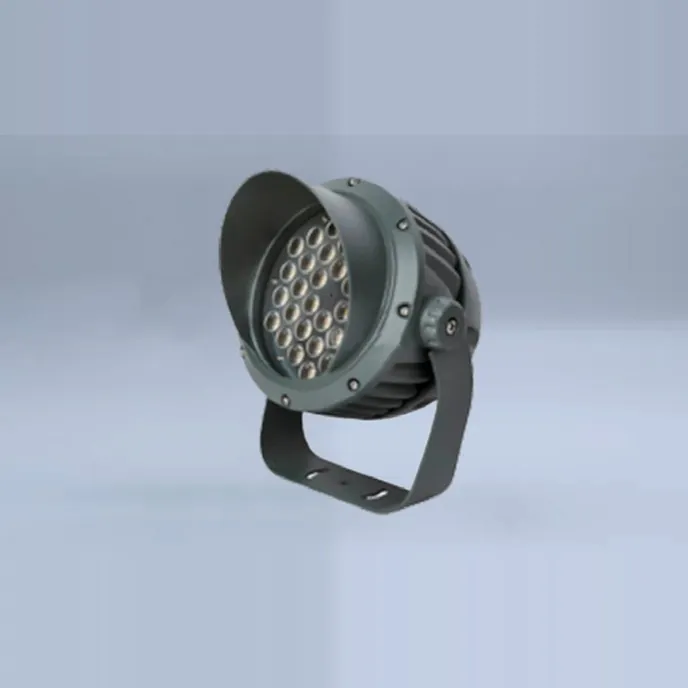
Our LED landscape spotlights and floodlights run on AC 100–240 V with 15°–120° beams, and our in-ground uplights range from 3 W to 36 W. For the floodlight sizes, see the LED flood light wattage guide.
When low voltage is the better choice
- Small gardens and terraces with short runs
- Places people touch: steps, seating, children’s areas
- DIY or landscaper installation where local rules allow
- Retrofits of existing 12 V halogen systems with LED lamps
Fixture choices for either system
| Job | Fixture | Typical beam |
|---|---|---|
| Path and step lighting | Bollards, path lights, step lights | Downward, wide |
| Tree uplighting | Spotlight or in-ground uplight | 15–40° for tall trees, 60° for wide crowns |
| Facades | Wall washer, floodlight | 30–120° |
| Water features | IP68 underwater light | Narrow to medium |
| Lawns | Low bollards or post tops | Symmetric |
Warm white (2700–3000K) is usual for gardens; it makes plants and stone look natural and limits blue light. Use asymmetric or shielded optics near windows and roads.
Protection and installation
- IP rating: IP65 or better above ground, IP67 or IP68 for in-ground and wet locations; see IP65 vs IP66 vs IP67
- Cable joints: use gel-filled or IP68 connectors, above standing water where possible
- In-ground lights: add a gravel drainage bed and check the glass surface temperature where people walk
- Corrosion: stainless or marine-grade aluminium near the sea and pools
Planning a layout step by step
- Walk the site at night and note what should be seen: entrances, steps, paths, trees, walls, signs.
- Choose the effect for each feature: uplighting for trees, grazing for textured walls, downlighting for paths and seating, silhouette for shaped plants.
- Group fixtures into runs of similar length so each run stays within its voltage-drop limit.
- Add the watts per run, then size the transformer at about 80% load.
- Plan switching: a photocell plus timer for decorative lights, so they switch off late at night while path lights stay on.
Keep colour temperature consistent across the whole garden, usually 2700K or 3000K; mixing warm and cool fixtures looks untidy even when each one is good.
Maintenance
LED fixtures need little: clean lenses once or twice a year, trim plants that grow over fixtures, check connectors and re-aim lights after storms. Keep a few spare fixtures from the same batch so colour stays consistent when one is replaced.
For parks and estates, we supply complete sets: lawn and bollard lights, uplights, spotlights and garden post lights. Send us a site plan with the features you want lit, and we will suggest fixtures, beams and circuits.
Sources
Frequently asked questions
What is low voltage landscape lighting?
Landscape lights that run at 12 V (sometimes 24 V) from a transformer plugged into or wired to the mains. The low voltage makes the cable safer to bury shallowly and to handle, which is why it is popular in private gardens.
How big a transformer do I need for low voltage landscape lighting?
Add up the wattage of all fixtures on it and choose a transformer rated at least 25% higher, so it runs at no more than about 80% load. Ten 6 W LED fixtures (60 W) need at least a 75 W transformer; most installers choose the next standard size up.
Is line voltage landscape lighting better for commercial projects?
Often, yes. Hotels, parks and campuses have long cable runs, higher-wattage floodlights and professional electricians, which favour line voltage fixtures. Low voltage remains a good choice for small gardens, terraces and places where people touch the fittings.