
RGB and Coloured Flood Lights: Red, Green, Blue and Colour-Changing LED Floods
How coloured and RGB LED flood lights work: fixed colours vs RGB and RGBW, brightness of coloured light, DMX and app control, facade and event uses, and outdoor requirements.
Key points
- Fixed-colour floods (red, green, blue, amber) are simplest and brightest for a single colour; RGB and RGBW floods mix colours and can change them.
- Coloured light looks dimmer than white for the same watts, so coloured facades need more power or closer fixtures.
- DMX512 is the standard for controlling many RGB floods together; small projects can use remote or app control.
- For outdoor colour projects, check IP rating, colour consistency between fixtures and the control system before ordering.
Coloured light turns buildings, bridges, fountains and events into landmarks. LED made it practical: a single floodlight can now show any colour and change it on command. Choosing the right type depends on whether you need one colour or many, and how the lights will be controlled.
Types of coloured flood
| Type | Colours | Best for |
|---|---|---|
| Fixed colour (red, green, blue, amber) | One | Signs, branding, permanent accent |
| RGB | Mixed colours, changeable | Facades, events, bridges |
| RGBW | RGB plus white | Pastels, cleaner white, flexible schemes |
| Tunable white | 2700–6500K | Architecture without saturated colour |
Fixed-colour floods are the most efficient for one colour, because all LEDs produce that colour.
Why coloured light needs more power
The human eye is most sensitive to green-yellow light and least sensitive to deep red and blue. For the same LED power:
- Green looks brightest
- Red and blue look noticeably dimmer
- Mixed RGB white is less efficient than true white LEDs
Coloured facades therefore need more fixtures or higher power than white designs of similar visual brightness.
Control options
| Control | Scale | Notes |
|---|---|---|
| Remote control | A few lights | Simple colour and mode selection |
| App (Bluetooth / Wi-Fi) | Homes, small venues | Scenes, timers |
| DMX512 | Facades, bridges, events | Standard for synchronised scenes |
| Networked systems (Art-Net, sACN) | Large architectural projects | Many universes, video mapping |
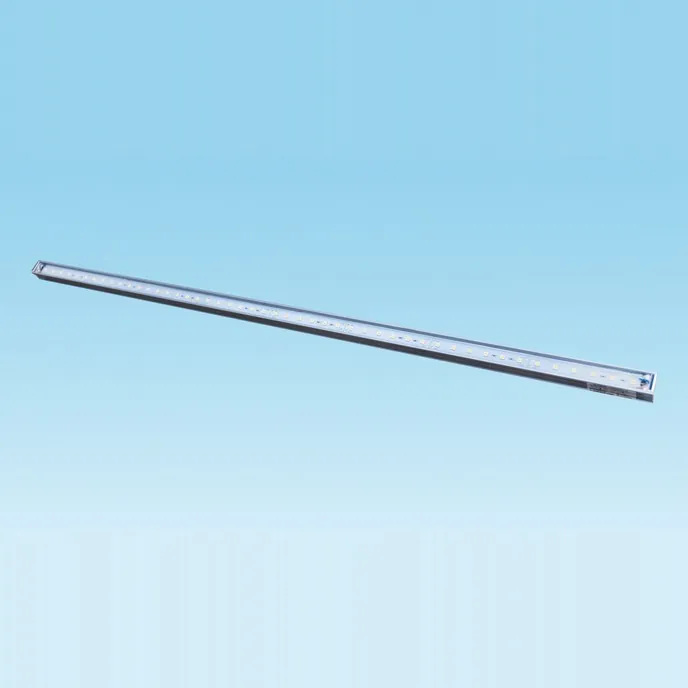
Our wall washers are available in RGB and RGBW with DMX512 control, and linear facade lights outline buildings in colour.
Typical uses
- Facades and landmarks: colour for holidays, campaigns, events
- Bridges and riverbanks: dynamic scenes reflected in water
- Fountains: underwater RGB lights rated IP68
- Stages and events: temporary RGB floods
- Retail and hospitality exteriors: brand colours
- Sports venues: team colours and light shows between periods
Red flood lights in particular
Red floods are used for branding, warning areas, some wildlife-sensitive sites and photography. Red light at low levels also preserves night vision. For wildlife-friendly lighting near turtle beaches or bat habitats, amber or red light is sometimes required by local rules.
Black and coloured housings
Black housings blend into dark facades, trees and night skies, so the light is seen rather than the fixture. Many projects choose black, grey or a colour matched to the building.
Colour consistency
On a facade with dozens of fixtures, small differences in LED bins show as patches. Ask for:
- Fixtures from the same production batch
- Colour calibration or binning information
- Spare fixtures from the same batch for future replacements
Outdoor requirements
- IP65 or IP66 for facades; IP68 for underwater
- UV-stable lenses and seals
- Surge protection for exposed sites
- Data cables and connectors rated for outdoor use
- Controllers in weatherproof enclosures
See waterproof outdoor LED flood lights for sealing details.
Light pollution and neighbours
Coloured lighting is decorative, so it should be controlled:
- Aim at the facade, not the sky
- Use timers to switch off late at night
- Keep brightness in proportion to surroundings
Planning a colour project
- Define what should be lit and how it should look in white and in colour
- Choose fixture types (floods, wall washers, linear, spots)
- Plan control: scenes, schedules, who operates it
- Mock up a section at night before ordering everything
- Plan maintenance access and spares
For lighting techniques that work with colour, see landscape lighting ideas.
Designing with colour
Colour lighting looks best when it is used with restraint. A building lit in white most nights and in colour for special occasions keeps the colour special. Strong saturated colours work well on plain surfaces; on detailed stone, softer tints or white show the detail better. Combine colour with white accents, for example white on columns and colour on wall panels, to keep architectural features readable.
Think about the surroundings, too. A red facade next to a road can confuse drivers near traffic signals, and very bright colours next to homes cause complaints. Test colours on site at night before finalising a scheme; colours look different on real materials than on a screen.
Temporary and event lighting
For events, battery or mains RGB floods on stands are moved from venue to venue. Robust housings, quick connectors and simple wireless control matter more than fine colour calibration. Rental companies often prefer RGBW fixtures because they can produce both strong colours and usable white.
Energy and running costs
LED colour floods use far less energy than old coloured filters on halogen or metal halide lamps, which wasted most of their light in the filter. Dimming and schedules cut costs further: many facades run full colour for a few hours after dusk and then switch to a low white or off.
Maintenance of colour systems
Colour systems have more parts than white floods: controllers, data cables, splitters and power supplies. Keep a diagram of the data addresses and wiring, store spare fixtures already addressed, and check connectors after storms. A fault in one data cable can stop a whole run of fixtures, so design the system so faults can be found quickly.
Fixed colours for branding
Companies that light their buildings in a brand colour every night often get better results from fixed-colour floods than RGB. A dedicated colour is brighter, more consistent and cheaper to run, and there is no controller to set up. RGB is worth it when the colour must change for events or seasons.
Ordering
Send photos or drawings of the facade or site, the effects you want, the control system you prefer and the power available. We will propose fixtures, beams and a control plan.
Sources
Frequently asked questions
What is an RGB flood light?
A floodlight with red, green and blue LEDs that can be mixed to make many colours, including white-ish light. RGBW versions add a white LED for cleaner whites and pastels.
Are red flood lights less bright?
Yes, they look dimmer than white light of the same power because the eye is less sensitive to deep red and blue. Coloured lighting designs use more power or closer spacing to compensate.
How do you control colour-changing flood lights?
Small installations use a remote control or app. Larger facades, bridges and events use DMX512 controllers or networked systems that can run programmed scenes and synchronise many fixtures.