Class/Division vs Zone: How Hazardous-Area Equipment Is Rated in Both Systems
Explosion-proof equipment is rated by class and division, or by zone, plus group and temperature code. A conversion table for both systems, and one real marking read both ways.

Key points
- Explosion-proof equipment is rated by classification (Class I, II or III) and by division (1 or 2), or in the zone system by zone (0, 1, 2 or 20, 21, 22), plus a group and a temperature code.
- Roughly, Zone 0 and Zone 1 together cover what Division 1 covers, and Zone 2 matches Division 2. Groups A and B correspond to IIC, C to IIB and D to IIA.
- The two systems overlap but are not interchangeable: equipment is only accepted where its marking and its listing or certificate match the system the site is classified in.
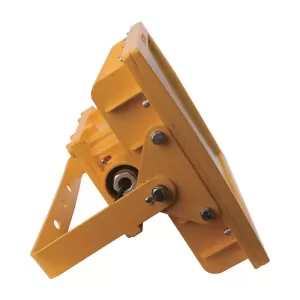
- Our BED series, marked Ex db eb mb IIC T4 Gb, is technically a Zone 1, gas group IIC, T4 light; its certificate is issued under China's GB 3836, not a North American listing.
A common exam and quiz line reads: “explosion-proof equipment is rated by both classification and …” The missing word is division. In North America a hazardous location is described by class, division, group and temperature code. Most of the rest of the world uses zones instead. Projects that buy equipment in one region and install it in another need to translate between the two. This guide gives the conversion, the limits of that conversion, and reads one real marking in both systems.
The two systems in one paragraph each
Class/Division (NEC Article 500, and the older parts of the Canadian Electrical Code). The class says what the hazard is: Class I gas or vapour, Class II combustible dust, Class III fibres and flyings. The division says how often it is present: Division 1 in normal operation, Division 2 only under abnormal conditions. The group narrows the substance, and the temperature code caps surface temperature.
Zone (IEC 60079 worldwide, ATEX in Europe, and NEC Articles 505 and 506 as an alternative in the USA). Gas areas are Zone 0, 1 or 2; dust areas Zone 20, 21 or 22. Equipment carries a gas or dust group, a temperature class, and an equipment protection level (EPL) that ties it to the zones it may enter.
Conversion table: area
| Zone system | Description | Class/Division equivalent |
|---|---|---|
| Zone 0 | Gas present continuously or for long periods | Class I, Division 1 (most severe part) |
| Zone 1 | Gas likely in normal operation | Class I, Division 1 |
| Zone 2 | Gas not likely; short duration if it occurs | Class I, Division 2 |
| Zone 20 | Dust cloud present continuously or often | Class II, Division 1 (most severe part) |
| Zone 21 | Dust cloud likely in normal operation | Class II, Division 1 |
| Zone 22 | Dust cloud not likely; short duration | Class II, Division 2 |
Two points matter. First, Division 1 is broader than Zone 1, because it also takes in what would be Zone 0. Second, the boundaries are drawn by different methods, so a plant reclassified from divisions to zones does not always get the same lines on the drawing. Our Zone 1 vs Zone 2 guide shows typical zone extents around pumps and vents.
Conversion table: groups
| Class/Division group | Typical substance | Zone system group |
|---|---|---|
| Group A | Acetylene | IIC |
| Group B | Hydrogen | IIC |
| Group C | Ethylene | IIB |
| Group D | Propane, petrol vapour | IIA |
| Group E | Metal dusts | IIIC (conductive dust) |
| Group F | Carbonaceous dusts (coal, carbon black) | IIIC or IIIB, depending on resistivity |
| Group G | Grain, flour, plastics, wood | IIIB (non-conductive dust) |
| Class III | Fibres and flyings | IIIA |
A IIC product covers groups A, B, C and D; a IIB product covers C and D only. Our article on IIB vs IIC gas groups explains why hydrogen and acetylene sit apart.
Conversion table: temperature and protection level
Temperature codes T1 to T6 carry the same limits in both systems (450, 300, 200, 135, 100 and 85 °C). The NEC also uses intermediate codes such as T2A, T3B and T4A, which give a finer cap. Dust equipment in the zone system is marked with an actual maximum surface temperature in °C instead of a T code. See T3 vs T4 for how to choose.
The EPL has no direct Division equivalent, but it maps cleanly onto zones:
| EPL | Gas zones allowed | EPL | Dust zones allowed |
|---|---|---|---|
| Ga | 0, 1, 2 | Da | 20, 21, 22 |
| Gb | 1, 2 | Db | 21, 22 |
| Gc | 2 | Dc | 22 |
Where the translation stops
The tables above tell you which equipment is technically comparable. They do not tell you what an inspector will accept. Acceptance follows the system the site is classified in, and the approval scheme that region recognises:
- In the USA, a light for a Division area should be listed for that Class, Division and Group. In an area classified under Article 505, it should be listed with an “AEx” zone marking, or be Division-listed equipment that the Code allows in the matching zone. Check the edition your authority having jurisdiction enforces.
- In Canada, new installations normally use zones under Section 18 of the CEC; equipment carries a CSA or other accepted certification.
- Under ATEX, equipment needs an EU-type examination or the relevant conformity route and the ATEX marking (for example II 2G Ex db IIC T4 Gb).
- Under IECEx, equipment needs an IECEx Certificate of Conformity.
- In China, equipment is certified under GB 3836.
So a Zone 1 light with an ATEX certificate is technically suitable for Class I Division 1 gas conditions, but is not a listed Division 1 product, and the reverse is equally true. Our Class 1 Division 2 lighting guide goes deeper on the Division 2 side.
One real marking, read in both systems
Our own explosion-proof certificate, ZJEx23.0914, covers the BED series, 30–600 W. Its markings are:
- Gas: Ex db eb mb IIC T4 Gb
- Dust: Ex tb IIIC T130 °C Db
Read in the zone system:
| Part | Meaning |
|---|---|
| db, eb, mb | Flameproof LED chamber, increased-safety terminal box, encapsulated driver |
| IIC | All gas groups, including hydrogen and acetylene |
| T4 | Surfaces at or below 135 °C |
| Gb | Zone 1 and Zone 2 |
| tb, IIIC, T130 °C, Db | Dust-protected enclosure for conductive and non-conductive dust, surface at or below 130 °C, Zone 21 and Zone 22 |
Translated into Class/Division terms, the technical scope corresponds to Class I, Division 1 and 2, Groups A to D, T4, plus Class II conditions for dusts up to Group E. But the certificate is issued under China’s GB 3836 standards, aligned with IEC 60079; it is not a UL, CSA, ATEX or IECEx approval. For a project that needs one of those, tell us at the inquiry stage so that the certification route is settled before the layout is. The same applies to the ExF series and the other models, whose certificates are supplied with the quotation.
A worked translation for a buyer’s specification
Suppose a US engineering contractor writes “Class I, Division 2, Group D, T3” for a pipe-rack light at a gas-processing plant abroad, where the local authority works in zones. The translation is:
- Division 2 → Zone 2. Equipment with EPL Gc, Gb or Ga is acceptable.
- Group D → IIA. Any IIA, IIB or IIC product qualifies.
- T3 → T3. Any product marked T3, T4, T5 or T6 qualifies.
A Gb, IIC, T4 light such as the BED exceeds each requirement and is therefore acceptable if the local authority accepts its certificate. Specifying more than needed is allowed; specifying less never is. The general reading rules are in our explosion-proof light ratings explained guide.
Common mistakes
- Treating Division 1 as Zone 1. A drawing marked Division 1 may include areas that would be Zone 0. Check whether any part needs Ga equipment.
- Forgetting the group translation for dust. Coal dust can fall in IIIC; a IIIB product is then not enough.
- Reading T130 °C as a T class. Dust markings give the actual surface temperature, which must be compared with the dust’s cloud and layer ignition temperatures.
- Assuming a certificate travels. The marking may be equivalent while the approval is not. Ask for the certificate type your inspector accepts before you order, and check the Class 1 Division 1 lighting requirements if the light goes into a Division 1 area.
What to send us
The area classification (zones or divisions), the gas or dust group and temperature class, the approval scheme your project requires, and the room or yard dimensions. We will reply with a fitting proposal, the certificate that applies to it, and a light count from our high bay and warehouse lighting calculator.
Sources
Frequently asked questions
Explosion-proof equipment is rated by both classification and what?
By division (Division 1 or 2) in the North American Class/Division system, together with a group (A to G) and a temperature code (T1 to T6). In the zone system the same information is given as zone, gas or dust group, equipment protection level and temperature class.
Is ATEX Zone 2 the same as Class 1 Division 2?
They describe a similar likelihood: a flammable atmosphere that is not expected in normal operation and lasts only a short time if it occurs. But the equipment approvals differ, so a Zone 2 ATEX product is not automatically accepted in a Class I Division 2 area, or the other way round.
Which zone corresponds to Division 1?
Division 1 covers both Zone 0 (continuous or long periods) and Zone 1 (likely in normal operation). Zone 0 is the most severe part of what the Division system calls Division 1.
Do the temperature codes mean the same in both systems?
Yes. T1 to T6 use the same limits: 450, 300, 200, 135, 100 and 85 °C. The NEC adds intermediate codes such as T2A or T3C that the IEC system does not use.
Can a light certified for Zone 1 be used in the USA?
Only if it is listed for the location under the NEC, for example marked Class I, Zone 1 AEx db IIC T4 under Article 505, or listed for the equivalent Division. A certificate from another scheme alone is not enough for a US inspector.