My Street Light Is Too Bright: Why New LED Lights Feel Harsh and What Can Be Done
Why a new LED street light can feel too bright outside a house: over-specified wattage, cold colour temperature, glare and spill. A calculator example shows a 150 W light where 40 W is enough.
Key points
- Most 'too bright' complaints come from four causes: too much wattage, a cold 5,000–6,000 K colour, glare from the light's angle, and light spilling sideways into homes.
- By our spacing calculator, a 7 m residential street with 8 m poles every 28 m needs about 35 W per pole for the 7.5 lux of class M5; a 150 W fitting gives about 32 lux, four times the target.
- Fixes, from cheapest to most involved: a house-side shield, tilting the head flat, dimming, swapping to a lower wattage, or a warmer 3,000 K luminaire.
- The street light belongs to the council or utility; residents report the problem, they do not modify the light themselves.
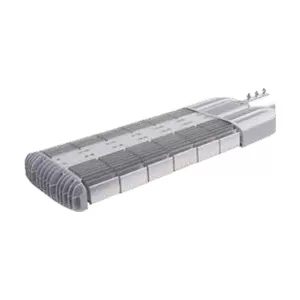
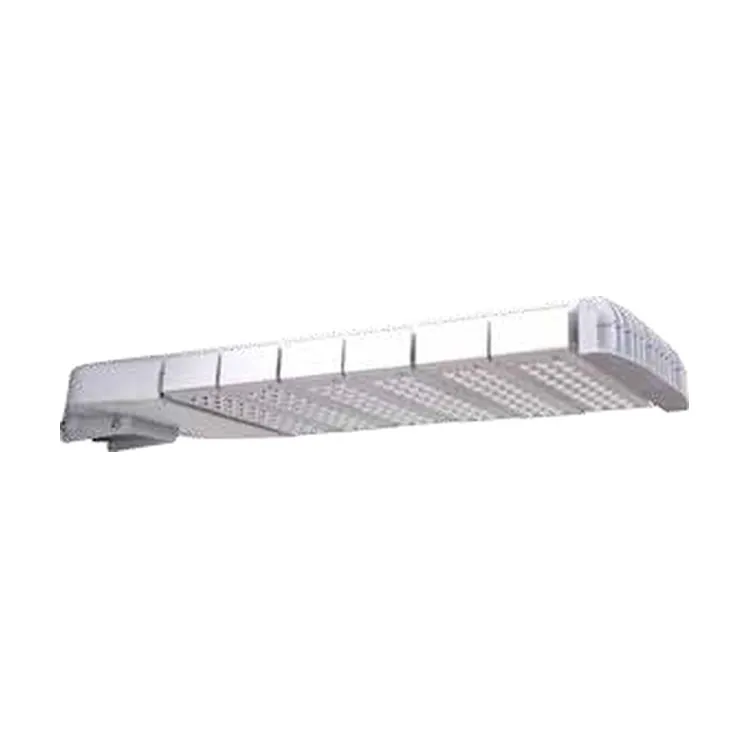
- Our LDM30C street light is offered in 3,000 K and in steps from 30 W, so the light can be matched to the road instead of overpowering it.
A new LED street light goes up outside your house, and suddenly your bedroom is lit like a stadium. It is one of the most common complaints councils receive after an LED conversion. Brighter light was rarely the aim; it usually comes from a few specification choices made for the whole network rather than for your street. This article explains the causes, uses our own calculator to show how far over target a light can be, and lists the fixes that councils and contractors can apply.
Four reasons a street light feels too bright
- Too much wattage for the road. A network contract may use one or two wattages everywhere, so a quiet residential street gets the same luminaire as a busy road.
- A cold colour temperature. LEDs of 5,000–6,000 K look much harsher than the 2,000 K orange of the sodium lamps they replace, even at the same light level. Our LED street light colour temperature article explains why.
- Glare from the viewing angle. An LED is a small, intense source. If the head is tilted up or has a clear lens, you look straight into the LEDs from a distance.
- Spill light toward houses. An optic designed for a wide road throws light across the pavement and into front gardens and windows.
How far over target can it be? A worked example
Take a typical residential street: 7 m wide, poles 8 m high on one side, spaced 28 m apart. A residential street is often lit to class M5 under EN 13201, which asks for about 7.5 lux average on the road.
Our pole height and spacing calculator gives these results for a luminaire at 110 lm/W:
| Luminaire | Average on the road | Versus the M5 target |
|---|---|---|
| 150 W (main-road size) | about 32 lux | about 4.3 times |
| 60 W | about 13 lux | about 1.7 times |
| About 35 W (minimum the calculator suggests) | about 7.5 lux | on target |
So on this street, the 150 W light is giving more than four times the light the street needs. A 40 W fitting, the nearest standard size above 35 W, would meet the target with a sensible margin and use about a quarter of the energy. Our street light pole distance calculation article explains the method the calculator uses.
What can be done, from cheapest to most involved
| Fix | What it does | Typical cost |
|---|---|---|
| House-side shield | Blocks light toward the house; road lighting barely changes | Low; fitted from a bucket truck |
| Flatten the tilt | Lowers glare and spill by aiming the head down | Low; adjustment at the bracket |
| Dim the driver | Lowers output to suit the street | Low if the driver or controller supports it |
| Lower-wattage luminaire | Matches output to the road class | Medium; luminaire swap |
| Warmer colour (3,000 K or lower) | Reduces perceived harshness and blue light | Medium; luminaire swap |
| Different optic | Puts light on the road, not the gardens | Medium; usually with a luminaire swap |
A shield is the quickest fix for a single bedroom window. Our house-side shield guide shows how they work, and our shielded street lights article covers full cut-off designs.
Dimming needs a dimmable driver and a controller, either a simple timer in the light or a central management system. Our LED street light dimming controls guide covers the options. Not every installed light can be dimmed, so check with the owner.
Who to contact
The light belongs to the council, highway authority or electricity utility, not to the resident. To get a change:
- Note the pole number, usually on a plate or sticker on the pole.
- Report the problem to the owner through its street lighting fault or request line, describing what you see (glare into a bedroom, light across the whole front of the house).
- Ask specifically for a house-side shield or for the output to be checked against the road’s lighting class.
Never cover, paint or disconnect a street light yourself. It is connected to the public network, and tampering is dangerous and usually illegal.
For councils and contractors: preventing complaints
The cheapest complaint is the one that never happens. When specifying an LED conversion:
- Set wattage by road class, not by network. Use a calculation per road type, as in the example above.
- Choose 3,000 K for residential streets. Many cities now do, following guidance such as the American Medical Association’s 2016 statement on community lighting.
- Use a road optic with low backlight on streets where houses sit close to the poles.
- Install at zero tilt where possible. Each degree of upward tilt adds glare.
- Plan dimming from the start, so output can be adjusted after complaints without changing the luminaire.
Our LDM30C modular street light is built in steps from 30 W to 350 W, with 3,000, 4,000, 5,000 and 6,000 K options and an adjustable mounting angle, so the same family can light a residential lane at 30–40 W and a main road at 150 W or more. Our LED residential street lights guide covers residential projects in more detail, and our types of street light bulbs article explains why the old sodium lamps looked so different.
Summary
Most “too bright” street lights are over-specified, too cold in colour or badly aimed. A shield or tilt adjustment often fixes a single complaint; a correct wattage and a warmer colour temperature prevent the problem across a whole network. If you are planning a conversion, send us the road widths, pole heights and spacings, and we will run the calculation per road type before you choose the wattages.
Sources
Frequently asked questions
Why is my new LED street light so bright?
The usual causes are a wattage chosen for a main road rather than a residential street, a cold white colour around 5,000 K that looks harsher than the old orange sodium light, and an optic or tilt that throws light sideways and up. Often it is all three together.
Can I ask the council to dim or shield a street light?
Yes. Report the pole number to the council, highway authority or utility that owns the light. Many can fit a house-side shield, reduce the tilt, or lower the output through the driver or a central control system.
Is it legal to cover or turn off a street light myself?
No. Street lights are public property, connected to the public electricity network. Tampering with one is dangerous and is an offence in most places. Ask the owner to make the change.
What colour temperature is best for residential streets?
Many cities now choose 3,000 K or lower for residential streets, following guidance such as the American Medical Association's 2016 statement. It looks warmer and produces less glare and blue light than 4,000–6,000 K.