AC/DC Solar Street Lights: How Grid Backup Works and When It Is Worth It
How an AC/DC (solar plus grid) street light switches between battery and mains, how much smaller its battery can be, a calculator comparison of 1 and 4 days of autonomy, and when hybrid makes sense.
Key points
- An AC/DC street light runs on solar and battery first and draws from the mains only when the battery is low, so the street stays lit through long cloudy spells.
- Because the grid covers bad weather, the battery can be sized for about one night instead of three to five.
- In our calculator example for a 40 W light, one day of autonomy needs about 351 Wh of LiFePO4; four days need about 1,402 Wh, four times as much.
- The trade-off: you still need a mains cable to every pole, which removes the main saving of standalone solar on new roads.
- Hybrid suits streets that already have a grid feed, places with long monsoon or winter cloud, and critical routes that may never go dark.
“AC/DC street light” and “solar street light with grid backup” mean the same idea: a light that runs on solar most of the time but can fall back on mains power when the battery runs low. Buyers ask about it for two reasons. Some have a solar project in a cloudy region and fear dark nights in the rainy season. Others have an existing grid-fed street and want to cut its electricity bill without risking outages. Both are fair reasons, but hybrid is not always the best answer. This guide explains how it works and runs the numbers.
How an AC/DC street light works
The heart of the system is a hybrid controller with three inputs and one output:
| Input or output | Role |
|---|---|
| Solar panel input | Charges the battery in daylight (PWM or MPPT) |
| Battery | Stores energy for the night |
| AC mains input | Backup: charges the battery or powers the lamp directly when the battery is low |
| LED output | Constant-current drive to the lamp, with dimming profile |
Normal night: the lamp runs from the solar-charged battery, exactly like a standalone solar light.
After cloudy days: when the battery voltage drops below a threshold, the controller switches to mains. Depending on the design, it either powers the LED directly from an AC driver or charges the battery from a mains charger while the lamp keeps running.
Next sunny day: the panel recharges the battery and the controller returns to solar operation.
Some designs do the opposite: they run on the grid by default and use solar only to reduce consumption. For street lighting, solar-first is the usual choice, because it maximises the energy saving.
The real benefit: a much smaller battery
A standalone solar street light must carry enough battery for several sunless nights, because nothing else will charge it. A hybrid light only needs to get through one night; the grid covers anything longer.
Here is the comparison from our solar street light calculator for a 40 W light running 5 hours at full power and 7 hours at 30 %, with a LiFePO4 battery and an MPPT controller:
| Item | Standalone, 4 days autonomy | Hybrid, 1 day autonomy |
|---|---|---|
| Daily energy | 316 Wh | 316 Wh |
| Battery (LiFePO4, 90 % depth of discharge) | 1,402 Wh (about 110 Ah at 12.8 V) | 351 Wh (about 27 Ah at 12.8 V) |
| Panel at 4.5 peak sun hours | 100 Wp | 100 Wp |
| Panel at 2.5 peak sun hours (cloudy season) | 180 Wp | 100 Wp is acceptable; grid covers the shortfall |
Open the example and change the autonomy days and sun hours to your site’s.
The battery is the most expensive and shortest-lived part of a solar street light. Cutting it to a quarter lowers the price of the light and the cost of every battery replacement over its life. In a cloudy season, the hybrid also does not need an oversized panel to recover the battery, because the grid fills the gap.
The catch: the mains cable
A hybrid light needs a mains supply at every pole. That means:
- Trenching, ducts and cable along the road, often the largest cost of a grid lighting project
- A feeder pillar, protection and possibly a metered connection
- Electrical design and inspection like any grid lighting circuit
The main selling point of standalone solar on a new road is that none of that is needed. If you are about to dig a trench for a hybrid system, compare it with a plain grid LED light and with a well-sized standalone solar light. Our solar vs grid cost calculator compares the installed and running costs over 10 years.
When hybrid makes sense
| Situation | Hybrid? | Why |
|---|---|---|
| Existing grid-fed street, want lower bills | Yes | Cable is already there; solar cuts consumption |
| New rural road, no grid nearby | Usually no | Trenching cost outweighs battery saving |
| Monsoon region with long cloudy spells | Often yes, if grid is near | Avoids a very large battery and panel |
| Critical route (hospital access, junction, tunnel portal) | Yes | Must never go dark |
| Site with unreliable grid | Depends | Solar-first still works during blackouts if the battery is charged |
| Remote site with wind resource | Consider wind-solar | Keeps the system off-grid |
For off-grid sites with a good wind resource, see our wind-solar hybrid street lights guide.
Questions to ask a supplier
- Solar-first or grid-first? For energy saving you want solar-first.
- At what battery level does it switch to mains, and does it switch back automatically?
- Does the mains charge the battery, or power the lamp directly? Direct drive keeps the battery from cycling on grid power.
- What protection and isolation is there between mains and the low-voltage DC side? Ask for the controller’s safety approvals.
- What dimming profile is used on grid power? Keeping the same profile keeps the grid consumption low.
- Can the controller log how many nights ran on mains? That tells you whether the panel or battery is undersized.
How this compares with our standard solar lights
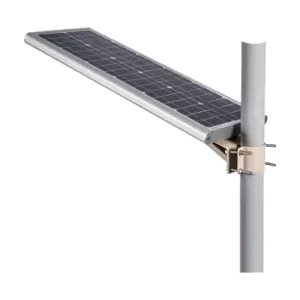
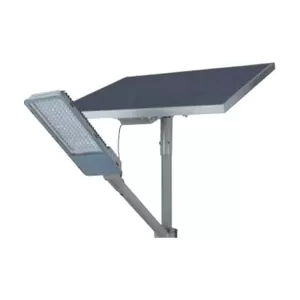
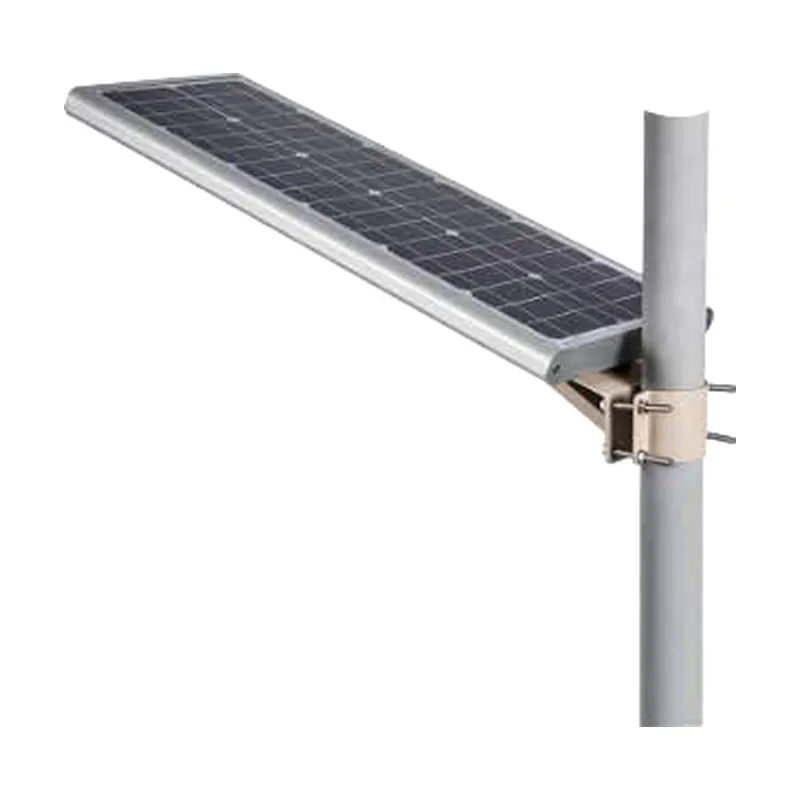
Our all-in-one solar street lights (15–60 W, lithium 12.8 V) and SL4830G split solar lights are standalone designs, sized for their rated autonomy without grid backup. If your project needs grid backup, tell us at the inquiry stage; we will confirm which controller configuration we can supply with the quotation, along with its approvals.
Before choosing hybrid because of cloud, check how many rainy days your site really sees. Our how many rainy days can a solar street light handle guide shows how to size for that with PVGIS data, and solar street light battery specifications explains the battery choices.
What to send us
Send the site location, the road layout, whether mains is available at the poles, and the hours of light you need. We will size both a standalone and a hybrid option and show the battery and panel difference side by side.
Sources
Frequently asked questions
What is an AC/DC solar street light?
It is a solar street light whose controller can also take power from the mains (AC). It runs on the solar-charged battery first and switches to the grid, or charges the battery from the grid, when the battery falls below a set level.
Does an AC/DC street light still save energy?
Yes. In most climates the solar panel supplies most nights. The grid only covers the cloudy periods, so annual mains consumption is a fraction of a grid-only light of the same wattage.
Can I connect a normal solar street light to the grid?
Not directly. It needs a controller or a mains charger designed for hybrid operation, with proper isolation and protection. Connecting mains to a standard solar controller will damage it.
What is the difference between an AC/DC street light and a wind-solar hybrid?
An AC/DC light uses the grid as its backup source. A wind-solar hybrid adds a small wind turbine and stays off-grid. Both aim to cover periods when the sun is weak.
Is an AC/DC street light more expensive than solar?
The light itself can cost less, because the battery is smaller. The installation usually costs more, because every pole needs a mains cable. Compare the full installed cost for your road.