How to Get an Accurate Street Lighting Quote: What to Send and What to Compare
What a manufacturer needs to quote street lighting accurately, how one missing detail can change the pole count by a third, and a checklist for comparing quotes line by line.
Key points
- A street lighting quote is only as accurate as the road data behind it: width, length, lighting class, pole height, supply and climate.
- In our calculator example for a 1.2 km, 7 m wide road, class M5 needs 44 poles of 40 W at 28 m spacing; class M4 needs 59 poles at 21 m. One missing detail changes the order by a third.
- Ask every supplier to quote the same lighting result (class, average lux, uniformity), not just the same wattage.
- Compare lumens per watt, the driver and surge protection, IP and IK ratings, warranty terms and which certificates cover the exact model.
- For solar, the quote must state battery Wh, panel Wp, autonomy and the dimming profile; wattage alone says nothing.
“Please send us your price for street lights.” We receive that sentence often, sometimes with a wattage and a quantity, sometimes with nothing else. We can answer it, but the price would not mean much: the right number of lights, their wattage and the poles all depend on the road. A good quote starts with good road data. This guide lists what to send, shows with a calculation how much one missing detail changes the order, and gives a checklist for comparing quotes as of 2026.
What to send for an accurate quote
| Item | Why it matters |
|---|---|
| Road width, number of lanes, length | Sets spacing, arrangement and quantity |
| Lighting class (for example EN 13201 M4, M5, P3) or target lux | Sets light level and therefore spacing |
| Pole height, or freedom to choose | Higher poles allow wider spacing |
| Arrangement: single side, staggered, opposite, central | Changes quantity and light distribution |
| Existing poles to reuse? Arm length and angle | Retrofit quotes need these |
| Grid supply voltage, or solar | Driver choice, or battery and panel size |
| Site location (city or coordinates) | Solar sizing, corrosion, temperature, wind |
| Required certificates and test reports | Some projects require specific approvals |
| Quantity, delivery port and Incoterm | Freight and packaging |
| Control: photocell, timer, dimming, smart system | Receptacle and driver choice |
A map link with the road marked, or a CAD drawing, is often the quickest way to give most of this.
Why the lighting class matters so much
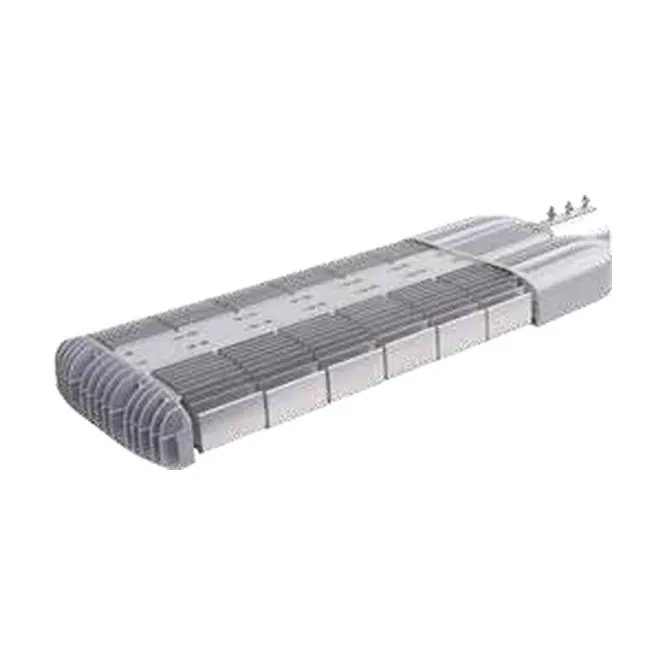
Take a 1.2 km road, 7 m wide, with 8 m poles on one side and our LDM30C street light at 110 lm/W. Our pole height and spacing calculator gives:
| Class M5 (7.5 lux) | Class M4 (11 lux) | |
|---|---|---|
| Luminaire | 40 W | 40 W |
| Spacing | 28 m | 21 m |
| Calculated average | 8.6 lux | 11.5 lux |
| Poles per km | 36 | 48 |
| Poles for 1.2 km | 44 | 59 |
| Connected load | 1.76 kW | 2.36 kW |
Open the example and switch the class to see the difference.
The same road, the same luminaire, and 15 more poles, simply because one quote assumed M5 and another M4. If the inquiry does not state the class, two honest suppliers can send prices a third apart, and neither is wrong. Our guide to street light design standards explains how the class is chosen from traffic speed, volume and conflict areas.
Ask for the same result, not the same wattage
“100 W street light” says how much power the fitting draws, not how much useful light reaches the road. A 100 W luminaire at 90 lm/W with a poor optic can light the road worse than an 80 W unit at 130 lm/W with a good one. When you compare quotes, ask each supplier for:
- The lighting class met, with the average illuminance or luminance and uniformity
- The spacing and pole height used in the calculation
- The maintenance factor assumed (lower is more conservative)
- The photometric file (IES or LDT) so your engineer can check
Our street light pole distance calculation guide shows how spacing is worked out by hand.
Quote comparison checklist
| Line | What to check |
|---|---|
| Luminaire model and wattage | Exact model, not a range |
| Luminous flux and efficacy | Lumens and lm/W of the complete fitting, not the LED chip |
| Driver | Brand or type, input voltage range, dimming, power factor |
| Surge protection | kV rating (and whether a separate SPD is included) |
| IP and IK rating | Water and impact protection for the site |
| Optic | Road distribution type; photometric file available |
| Colour temperature and CRI | As specified; many cities now ask for 3000 K or lower |
| Warranty | Years, what is covered, how claims work |
| Certificates | Which exact models each certificate covers |
| Poles and arms | Height, wall thickness, galvanising, anchor bolts, as separate lines |
| Price basis | Currency, Incoterm, validity date, payment terms |
| Lead time and packing | Production time, container loading |
On certificates, ask for the certificate itself, not just a logo. For example, our CQC product certificate CQC19010221751 covers the BGLDM30C series from 60 W to 300 W; a quote should make clear which models and power steps any certificate covers.
Solar street light quotes need more lines
For solar, the wattage tells you almost nothing about performance. A 40 W solar light can last one night or five, depending on the battery and panel. Our solar street light calculator for a 40 W light with 5 hours at full power and 7 hours at 30 %, 4.5 peak sun hours and 3 days of autonomy gives about 1,052 Wh of LiFePO4 (about 82 Ah at 12.8 V) and a 100 Wp panel.
A solar quote should state:
- Battery chemistry, voltage and Wh (not just Ah)
- Panel Wp and type
- Controller type (MPPT or PWM)
- The dimming profile the sizing assumes
- Autonomy in nights, and at what sun hours
- System design life and battery replacement interval
If one quote has a 40 W lamp with a 300 Wh battery and another a 40 W lamp with 1,000 Wh, they are not the same product. Our solar street light technical specification template gives a ready list.
Red flags in a quote
- Wattage far higher than any other quote for the same road (“200 W” where others offer 60 W), often a nameplate figure, not real consumption
- Lumens quoted for the LED chip rather than the complete fitting
- No calculation or photometric file offered
- Certificates for a different model or company name than the one quoted
- Very long warranty with no terms on what is covered
What to send us
Send the road data from the first table, or simply a map link with the road marked and the class or lux you need. We will return the calculation, the photometric file, the luminaire and pole list, and a quote with each item on its own line, for grid or solar or both.
Sources
Frequently asked questions
What information do I need for a street lighting quote?
Road width and length, number of lanes, the lighting class or target lux, pole height (or freedom to choose), pole arrangement, supply voltage or solar, the site location, and any certificates the project requires. A drawing or map link speeds things up.
Why do street lighting quotes differ so much?
Suppliers often assume different lighting classes, spacings, efficacies and maintenance factors. One may quote 44 poles, another 59, for the same road. Ask each to state the lighting class and calculated lux so the quotes are comparable.
Should a street light quote include poles?
It can. Ask for luminaires, poles, arms and anchor bolts as separate lines, so you can compare like with like and buy poles locally if that is cheaper.
How long is a street lighting quote valid?
Validity is set by each supplier and is often a few weeks, because component and freight costs move. Check the validity date, the Incoterm and the currency on every quote.
Can I get a quote for solar and grid street lights together?
Yes, and it is often worth it. Ask for both on the same road data, then compare total installed cost, including trenching and cabling for grid, over the life of the system.