
Solar Street Light Technical Specification: A Template for Tenders and Project Proposals
A ready-to-use technical specification for solar street lighting tenders and project proposals: luminaire, battery, solar panel, controller, autonomy, pole and foundation, documents, testing and warranty, with notes on what to write and why.
Key points
- Specify lumens and efficacy, not watts, and ask for the IES or LDT file.
- Specify the battery as usable energy in Wh at a stated depth of discharge, with a BMS and UN38.3.
- Size the panel for the worst month and the battery for the longest rainy spell.
- Require a sizing calculation, test reports, inspection and written battery warranty terms.
Many solar street light tenders specify little more than “60 W solar street light with pole”. Suppliers then compete on price with very different products, and the cheapest bid often fails in the first rainy season. A clear technical specification fixes that. Below is a template you can copy into a tender, a project proposal or a purchase order, with notes on why each line matters.
Fill in the values in brackets for your project. Use our solar street light calculator to size the battery and panel, and the battery autonomy calculator to check the rainy season.
1. Scope and site conditions
| Item | Specification |
|---|---|
| Quantity | [number] complete sets (luminaire, battery, panel, controller, pole, bracket, foundation bolts) |
| Site location | [city, country, GPS coordinates] |
| Design irradiation | Worst-month peak sun hours: [value] kWh/m²/day (source: PVGIS or Global Solar Atlas) |
| Autonomy | At least [3–5] nights at full schedule without sun |
| Ambient temperature | [min] to [max] °C |
| Design wind speed | [value] m/s (3-second gust) |
| Road / area | Width [m], lighting class or target [lux], pole spacing [m] |
2. Luminaire
| Item | Specification |
|---|---|
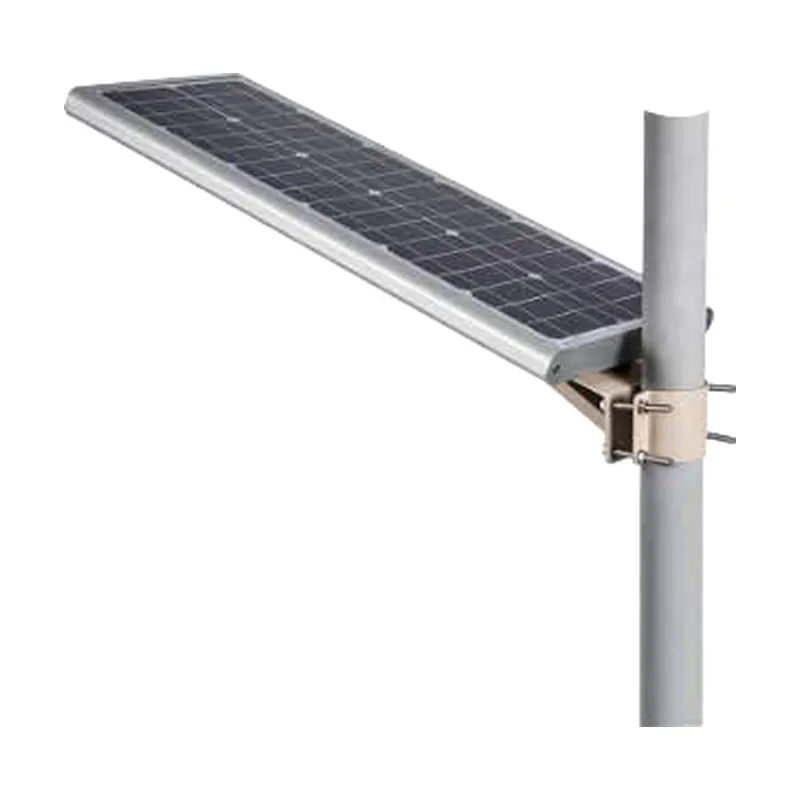
| Luminous flux (complete luminaire) | At least [value] lm |
| Luminaire efficacy | At least [130] lm/W |
| Optics | Road distribution Type [II/III]; photometric file (IES or LDT) to be submitted |
| Colour temperature / CRI | [3000/4000/5000] K, CRI ≥ 70 |
| Ingress / impact protection | IP65 minimum (IP66 preferred), IK08 minimum |
| Housing | Die-cast or extruded aluminium, powder coated or anodised |
| LED lifetime | L70 ≥ 50,000 h, supported by LM-80 data and a TM-21 projection |
3. Battery
| Item | Specification |
|---|---|
| Chemistry | LiFePO4 (lithium iron phosphate) |
| Nominal voltage | [12.8 / 25.6] V |
| Usable energy | At least [value] Wh at [90]% depth of discharge |
| Cycle life | At least [2,000] cycles to 80% capacity |
| Battery management | BMS with over-charge, over-discharge, over-current, short-circuit and temperature protection; cell balancing |
| Operating temperature | Charge 0–45 °C, discharge −20–60 °C (or as needed for site) |
| Transport | UN38.3 test report |
| Replaceability | Standard pack, replaceable on site |
4. Solar panel
| Item | Specification |
|---|---|
| Type | Monocrystalline silicon |
| Rated power | At least [value] Wp (STC) |
| Module efficiency | At least [20]% |
| Glass and frame | Tempered glass, anodised aluminium frame |
| Tilt and orientation | Adjustable, facing the equator at [latitude-based] tilt |
5. Controller and lighting schedule
| Item | Specification |
|---|---|
| Charging | MPPT controller, efficiency ≥ 95% |
| Switching | Automatic dusk-to-dawn by light sensing (and/or panel voltage) |
| Schedule | [100]% for [5] h, then [30]% until dawn; adjustable |
| Motion sensing | [Yes/No]; brightness on detection [100]% |
| Low-battery management | Automatic dimming before cut-off |
| Protection | Reverse polarity, over-charge, over-discharge, short-circuit |
6. Pole and foundation
| Item | Specification |
|---|---|
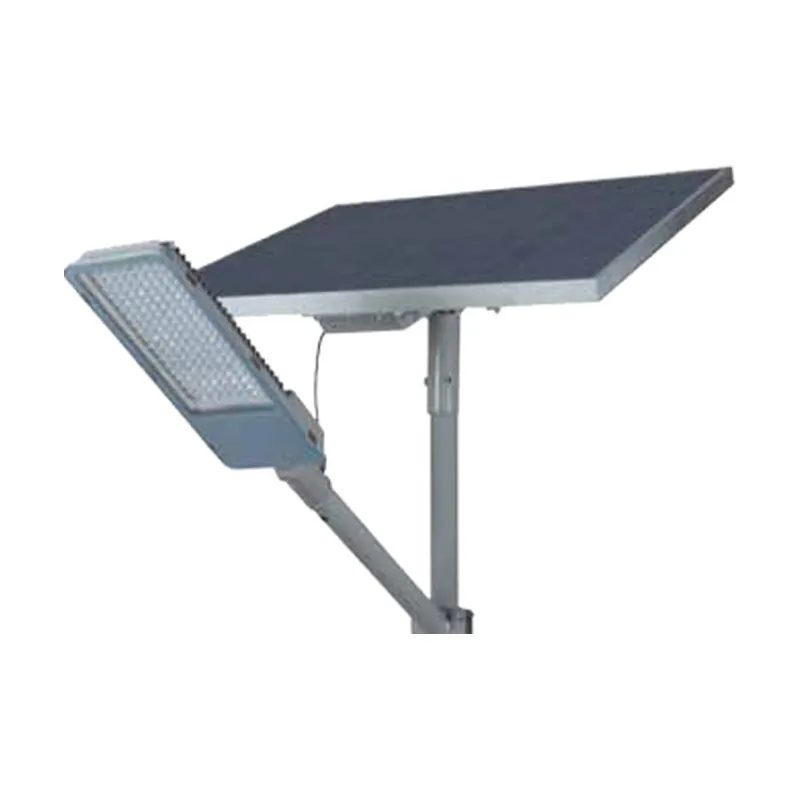
| Height | [6/8/10] m above ground |
| Material | Steel, hot-dip galvanised to ISO 1461 (or ASTM A123); optional polyester powder coat |
| Wind design | For the design wind speed with the panel and luminaire area included |
| Foundation | Concrete foundation with anchor bolt cage and template, design to be submitted |
| Anti-theft | Tamper-proof bolts; battery compartment lockable |
7. Documents with the bid
- Datasheets for the luminaire, battery, panel, controller and pole
- Photometric file (IES/LDT) and a lighting calculation for the specified road or area
- Sizing calculation showing daily energy, battery usable energy, panel output for the worst month and autonomy
- Test reports: luminaire safety and EMC, IP rating, LM-80 for the LEDs, battery cell data and UN38.3
- Factory information and a list of comparable projects
8. Inspection and acceptance
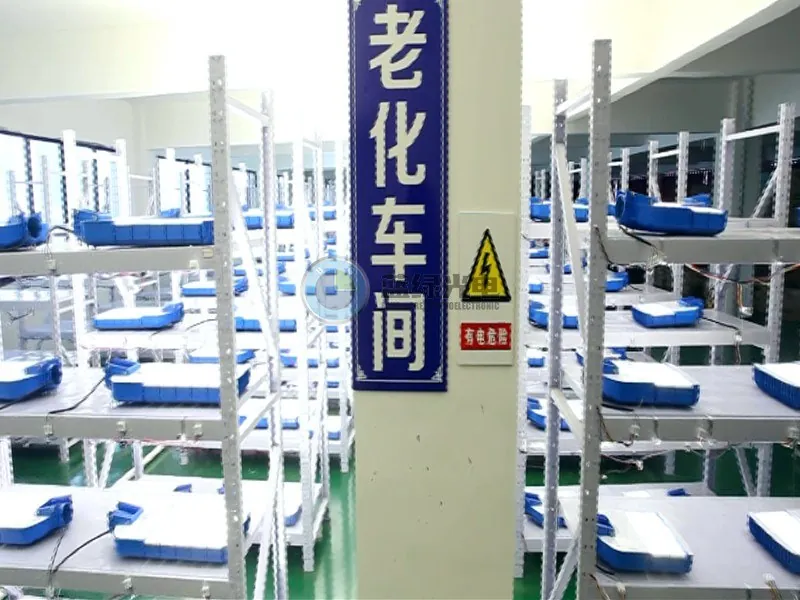
- Pre-shipment inspection of a sample from each lot (visual, dimensions, light output, battery capacity check)
- On-site test: lights switch on at dusk, schedule and dimming work as specified
- Autonomy check on a sample: [3] nights with the panel covered
9. Warranty and spares
- Luminaire, controller and panel: [5] years
- Battery: [3–5] years, capacity not below [70–80]% within the warranty period
- Spare parts: [2–5]% spare controllers and batteries with the order
A filled-in example
Here is the key part of the template completed for a typical estate road in a humid tropical city with a 3.4-hour worst month, such as Port Harcourt in July, sized with our calculators (see solar street lights in Nigeria for the full working):
| Item | Value | How it was derived |
|---|---|---|
| Luminaire | 40 W, at least 5,200 lm, Type II/III road optic | 6 m road, 6–8 m poles; class from the road owner |
| Schedule | 100% for 5 h, then 30% until dawn | About 316 Wh per night with a 90% efficient driver |
| Design irradiation | 3.4 kWh/m²/day (worst month) | PVGIS monthly data for the site |
| Panel | At least 200 Wp, monocrystalline | 150 Wp balances one average day; 200 Wp refills the battery after a rainy spell in about a week |
| Battery | LiFePO4 12.8 V, at least 120 Ah (1,536 Wh) | Covers a 5-day rainy spell at 15% rainy-day yield |
| Autonomy test | 4 nights with the panel covered, on schedule | Simple acceptance check on a sample |
Writing the derivation next to each value matters: it lets bidders propose equivalent alternatives (for example a 24 V system) without changing the result you need, and it lets evaluators see at once whether a bid meets the intent.
Evaluating the bids
Price alone picks the smallest battery. A simple two-stage evaluation works better:
- Pass/fail technical compliance: luminaire lumens and photometric calculation, battery usable Wh, panel Wp, autonomy and recovery calculation for the stated irradiation, required test reports. Bids that fail any item are excluded.
- Scoring the compliant bids, for example:
| Criterion | Example weight |
|---|---|
| 10-year cost (price plus battery replacements and maintenance) | 50% |
| Technical quality beyond the minimum (efficacy, battery cycle life, controller features) | 20% |
| Warranty terms, especially for the battery | 15% |
| Delivery time, local support and spare parts | 15% |
Adjust the weights to your organisation’s rules. The solar vs grid cost calculator can produce the 10-year cost line for each bid if you enter its price and battery replacement cost.
Common mistakes in solar street light tenders
- Specifying watts instead of lumens. It rewards low-efficacy luminaires.
- Specifying battery Ah without voltage or usable energy. “30 Ah” at 3.2 V is a quarter of “30 Ah” at 12.8 V.
- Using the annual average sun hours. Size for the worst month, or the lights fail in the rainy season.
- No photometric check. Without a calculation, nobody knows whether the road meets its lighting level.
- No battery warranty terms. The battery is the wear part, so it needs a clear warranty.
If you send us your draft specification or tender, we will check it and propose a compliant configuration from our solar street lights, with the sizing calculation and photometric layout.
Sources
Frequently asked questions
What should a solar street light specification include?
At minimum: luminaire output in lumens and efficacy, battery chemistry and usable energy in Wh, solar panel type and wattage, controller type and dimming profile, autonomy in nights for the site's worst month, pole height and galvanising, IP rating, test documents and warranty. Wattage alone is not a specification.
Why specify lumens instead of watts?
Because watts measure power drawn, not light delivered. Two 60 W lights can differ by a factor of two in light output. Specify the luminaire lumens and the minimum efficacy, and ask for the photometric (IES/LDT) file so the road lighting can be checked.
How do I specify the battery?
Specify chemistry (for example LiFePO4), nominal voltage, usable energy in Wh at the stated depth of discharge, cycle life, operating temperature range, a battery management system and transport certification (UN38.3 for lithium). Asking only for Ah lets suppliers fit smaller batteries at a higher voltage, or quote nominal rather than usable capacity.