Metal Halide Arc Tube: How It Works, Why It Ages, and What Replaces It
What is inside a metal halide arc tube, why it shifts colour and loses light as it ages, why some lamps need enclosed fixtures, and the savings from replacing 400 W lamps with LED.
Key points
- The arc tube is the small inner bulb of a metal halide lamp: quartz or ceramic, filled with argon, mercury and metal halide salts, with tungsten electrodes at each end. The arc runs at high pressure and temperature.
- As the tube ages, electrodes erode, the wall blackens and the salt mix changes, so the lamp loses light and its colour drifts; each lamp in a hall drifts differently.
- Arc tubes can rupture at end of life. Lamps not rated for open fixtures must be used in enclosed fittings, a rule the US National Electrical Code also sets.
- Replacing 100 lamps of 400 W metal halide (460 W with ballast) with 200 W LED high bays, 16 h a day, saves about 150,000 kWh a year in our retrofit calculator, with a payback of under a year at 0.12 per kWh.
The light from a metal halide lamp comes from a part smaller than your thumb: the arc tube. Understanding what happens inside it explains most of the lamp’s behaviour: the slow start, the colour drift, the light loss with age, the rare but serious end-of-life rupture, and why so many warehouses and sports halls have switched to LED.
Inside the arc tube
A metal halide lamp has two envelopes: the outer glass bulb you see, and the arc tube suspended inside it. The arc tube contains:
- Two tungsten electrodes, sealed through each end.
- A starting gas, usually argon, which ionises first when the igniter fires.
- Mercury, which vaporises as the tube heats and sets the electrical characteristics of the arc.
- Metal halide salts, typically iodides of sodium, scandium, thallium, indium or rare earths. These evaporate in the hot arc, dissociate, and emit light at their own wavelengths. The blend sets the colour temperature and colour rendering.
The tube runs hot, with its wall at several hundred degrees and the arc far hotter, and at a pressure of several atmospheres when operating. That is why the material matters:
| Type | Arc tube material | Characteristics |
|---|---|---|
| Quartz metal halide | Fused silica | Lower cost; colour drifts more with age |
| Ceramic metal halide (CMH) | Polycrystalline alumina | Higher wall temperature, more stable colour, better rendering |
Our ceramic metal halide article compares the two lamp families in more detail.
Start-up and restrike
At switch-on, the igniter strikes an arc in the argon. The mercury and salts then evaporate over several minutes; the colour shifts and the output climbs until it stabilises. After a power dip, the hot tube’s pressure is too high for the igniter to restrike, so the lamp stays dark until it has cooled for several minutes, then warms up again. In a warehouse, a short supply interruption can mean a quarter of an hour of darkness; in a sports hall, it stops a match.
Why the arc tube ages
Three processes work together over the lamp’s life:
- Electrode erosion. Tungsten evaporates from the electrodes and deposits on the tube wall, blackening it and blocking light.
- Salt chemistry changes. Sodium in particular migrates through or reacts with a quartz wall, so the halide mix in the arc changes. The light drifts in colour.
- Rising voltage. As the electrodes erode the arc lengthens and the lamp voltage rises, until the ballast can no longer sustain it and the lamp cycles on and off.
The practical result is that a hall of metal halide lamps loses a substantial share of its light well before the lamps fail, and lamps installed at different times no longer match in colour. Group relamping is the usual answer, at a cost in lamps and labour.
End of life: rupture and enclosed fixtures
Most metal halide lamps simply stop working. A small fraction fail violently: the arc tube ruptures and hot quartz fragments can break the outer bulb. To manage this:
- Lamps are classified by whether they may be used in open fixtures. Lamps not rated for open use must be used in enclosed fixtures with a lens that contains fragments.
- The US National Electrical Code (Article 410) requires metal halide lamps, other than thick-glass reflector types, to be in a fixture that contains the arc tube fragments or to be of a type rated for open fixtures.
- Turning lamps off once a week for a period, and relamping before the end of rated life, reduces the risk on continuously burning lamps.
This hazard disappears with LED, which has no pressurised tube and no glass envelope that can fail this way.
What the arc tube means for running costs
The ballast adds its own loss: a magnetic ballast on a 400 W lamp typically draws around 15 % extra, so the system uses about 460 W. Add the warm-up, the restrike delay, the light loss with age and the relamping, and the case for replacement is strong.
Worked retrofit: 100 lamps of 400 W
A warehouse with 100 metal halide high bays of 400 W, running 16 hours a day, 360 days a year, at 0.12 per kWh. We replace them with 200 W LED high bays and assume a lamp-and-labour maintenance cost of 25 a year per old fitting and 2 a year per LED. In our LED retrofit savings calculator (open the example):
| Item | Result |
|---|---|
| Old system power | 460 W per fitting |
| Energy before / after | about 265,000 / 115,000 kWh a year |
| Energy saved | about 150,000 kWh a year (57 %) |
| Saving in energy and maintenance | about 20,300 a year |
| Investment (150 fitting + 30 install, per point) | 18,000 |
| Payback | about 11 months |
| CO₂ avoided (0.5 kg/kWh) | about 75 tonnes a year |
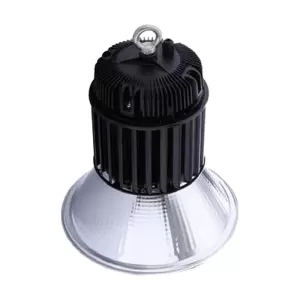
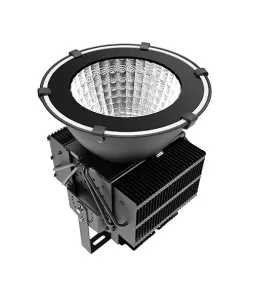
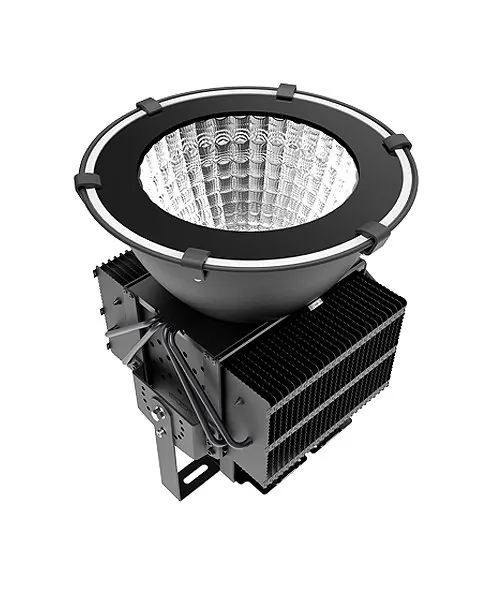
The LED fittings in this example are 200 W heat-pipe high bays at more than 130 lm/W. At mounting heights above 12 m, the high-power heat-pipe high bay carries more per point. For the general method, see metal halide to LED, and for lower wattages, the 100 watt metal halide guide.
When metal halide still appears
You will still find metal halide in older stadiums, some horticulture and film lighting, and in specialised applications. For general area, warehouse, sports and street lighting, LED has replaced it. Our comparison of metal halide vs high pressure sodium explains the colour differences, and our article on halogen bulb colour temperature covers the other quartz-envelope lamp people often confuse it with.
Common mistakes when replacing metal halide
- Matching watts instead of lumens. A 400 W metal halide system that has aged for years may deliver far less than its rated light; size the LED for the target lux, not the old wattage.
- Leaving the ballast in circuit. Direct-wired LED fittings need the ballast and igniter removed.
- Keeping the old spacing without checking. A narrower LED beam at the same spacing may leave dark bands; check with the high bay and warehouse lighting calculator.
Sources
Frequently asked questions
What is a metal halide arc tube?
The small, sealed inner tube of a metal halide lamp where the light is made. It contains a starting gas, mercury and metal halide salts, and an electric arc between two tungsten electrodes vaporises the salts to produce white light.
What is the arc tube made of?
Standard metal halide lamps use fused quartz. Ceramic metal halide (CMH) lamps use polycrystalline alumina, which tolerates higher temperatures and holds the salt chemistry more stably, giving better colour consistency.
Why does a metal halide lamp change colour?
As the lamp ages, the salts react with the tube wall and the electrodes erode, so the mix of metals in the arc changes. The light drifts, often towards green or pink, and lamps of the same age in one hall end up looking different.
Why does a metal halide lamp take minutes to restart?
Hot, the arc tube's internal pressure is too high for the igniter to strike the arc. The lamp must cool for several minutes before it restarts, then take several more minutes to reach full output.
What replaces a 400 W metal halide high bay?
Usually a 150–200 W LED high bay, depending on mounting height and beam. The LED reaches full output instantly and keeps its colour, and our calculator shows the energy saving for your hours.