100 Watt Metal Halide: Lumens, Ballast Kits and the LED That Replaces It
How many lumens a 100 W metal halide lamp gives, what a ballast kit contains and costs in energy, and our retrofit calculation for replacing 50 fittings with 60 W LEDs.
Key points
- Lamp catalogues typically list about 8,000–9,000 initial lumens for a 100 W metal halide lamp, but output falls through life and an open reflector loses a good share before the light reaches the floor.
- On a magnetic ballast the fitting draws more than 100 W: commonly about 120–130 W including ballast losses.
- In our retrofit calculator, 50 fittings at 125 W system power replaced by 60 W LEDs and run 12 hours a day save about 14,200 kWh a year (52%).
- A ballast kit (ballast, capacitor, and ignitor for pulse-start lamps) keeps an old fitting going, but buying one for a fitting that will soon be converted to LED rarely pays.
The 100 W metal halide lamp has been a workhorse for decades: in low-bay fittings in workshops, wall packs, canopy lights, small floodlights and shop lighting. Many are still in service, and buyers regularly search for their lumens, a replacement ballast kit, or the LED equivalent. This guide answers all three with figures, and works through the numbers for a typical replacement.
How many lumens: lamp, mean and delivered
Three figures matter, and they are often confused:
- Initial lamp lumens. Lamp catalogues typically list about 8,000–9,000 lumens for a 100 W metal halide lamp. Pulse-start lamps sit at the upper end; probe-start lamps and lamps burned horizontally sit lower.
- Mean lumens. Metal halide lamps lose output steadily through life. Catalogues usually quote a mean lumen figure (often measured at 40% of rated life), commonly around two-thirds to three-quarters of the initial value.
- Delivered lumens. The lamp radiates in all directions. The reflector and lens of the fitting redirect it, but some is absorbed. Older open reflectors also collect dirt.
So a fitting with a lamp rated at 8,500 lumens may, in mid-life, deliver well under 5,000 lumens to the area below it. That is the number an LED replacement has to match, not the 8,500 on the box.
What the fitting really draws
A metal halide lamp cannot run directly on the mains. A ballast limits the current, and for many lamps an ignitor gives the starting pulse. Magnetic (core-and-coil) ballasts consume power themselves. For a 100 W lamp the fitting commonly draws about 120–130 W from the supply, depending on ballast type and supply voltage. Electronic ballasts lose less, but most installed fittings still use magnetic gear.
The 100 W ballast kit
When a fitting stops working, the lamp is the first suspect and the ballast the second. A replacement ballast kit usually contains:
| Part | Function |
|---|---|
| Ballast (core and coil) | Limits lamp current; may be a simple reactor or a multi-tap autotransformer type |
| Capacitor | Corrects power factor and, in some circuits, is part of the regulation |
| Ignitor (pulse-start only) | Gives a high-voltage pulse to strike the lamp |
The most important rule: the ballast must match the lamp. Pulse-start and probe-start lamps of the same wattage need different ballasts, and the lamp’s ANSI or IEC code must match the code on the ballast. A mismatched combination may start but run hot, flicker, or cut the lamp’s life sharply. When fitting a kit, follow the wiring diagram printed on the new ballast label rather than copying the old connections, because tap arrangements differ between makers.
Before buying a kit, ask whether the fitting has a future. A new ballast and lamp keep it going, but the energy, the warm-up delay of several minutes and the lumen depreciation all remain.
Worked example: replacing 50 fittings with LED
We used our LED retrofit savings calculator for 50 fittings with 100 W metal halide lamps, taking 25% ballast loss (125 W system power), against 60 W LED fittings. Running 12 hours a day, every day, at an electricity price of 0.15 per kWh. The fitting and installation costs (60 and 20 per fitting) and maintenance costs (20 a year per metal halide fitting for lamps and labour, 2 for LED) are example inputs; replace them with your own quotations.
| Item | Metal halide | LED |
|---|---|---|
| System power per fitting | 125 W | 60 W |
| Annual energy (50 fittings, 4,380 h) | 27,375 kWh | 13,140 kWh |
| Energy saved | — | 14,235 kWh (52%) |
| Energy cost saved | — | about 2,135 a year |
| Maintenance saved | — | about 900 a year |
| Payback on the example costs | — | about 16 months |
The calculator also gives about 7.1 tonnes of CO₂ saved a year at 0.5 kg per kWh. The saving comes from three sources: the lower lamp wattage, the removal of ballast losses, and far fewer lamp changes.
Which LED wattage?
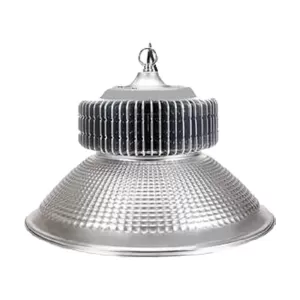
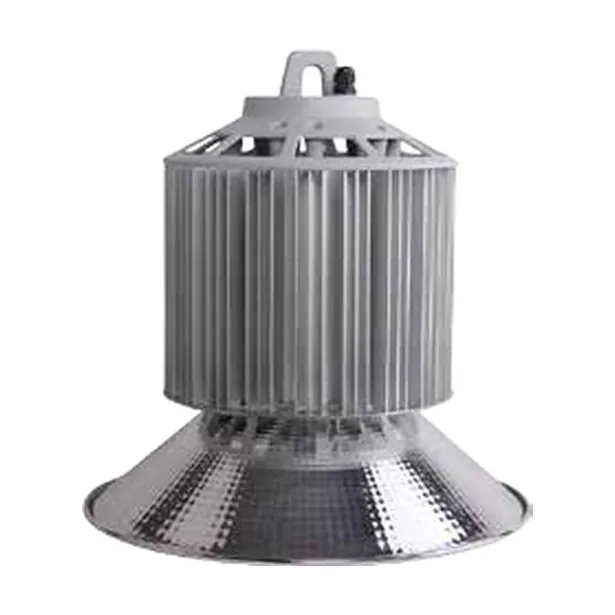
A 60 W LED at 110 lm/W, the minimum rated efficacy of our GKP40J high bay, produces about 6,600 lumens, nearly all directed downward. That comfortably exceeds the delivered light of a mid-life 100 W metal halide fitting in most rooms. In some cases 40–50 W is enough, particularly where the old fittings were already over-lighting the space. Where the layout is being redesigned, run the room through our high bay lighting calculator rather than replacing one for one. For outdoor wall and canopy positions, the same logic applies with a floodlight or wall pack of similar output.
| Old fitting | Typical LED replacement |
|---|---|
| 70 W metal halide | 30–40 W LED |
| 100 W metal halide | 40–60 W LED |
| 150 W metal halide | 60–80 W LED |
| 175 W metal halide | 80–100 W LED |
These are starting points; the room, mounting height and beam decide the final choice. Our HPS to LED conversion wattage chart covers sodium lamps and larger wattages.
Colour and colour shift
Metal halide gives white light, usually around 3,000–4,500 K, which is why it was chosen over sodium for shops and workshops. As lamps age, their colour drifts, and lamps of different ages in one room often look different: some pinkish, some greenish. LEDs keep a consistent colour temperature through life, and a whole room installed together stays uniform. Choose the colour temperature to match the use; see our colour temperature chart.
When to keep metal halide
There are a few cases where replacing the ballast still makes sense: a fitting that will be removed with the building within a year or two, special fittings where no LED version fits, or protected heritage fittings. In almost every other case, the money for a ballast kit and lamp is better put towards an LED fitting that removes the ballast loss altogether.
Summary
A 100 W metal halide fitting draws around 125 W, delivers far fewer lumens than the lamp rating suggests, and needs regular lamp changes. A ballast kit keeps it alive but changes none of that. A 40–60 W LED fitting delivers the same or more light, and in our 50-fitting example halves the energy use with a payback of under a year and a half on the example costs. For a broader view of the conversion, see our guide to metal halide to LED.
Sources
Frequently asked questions
How many lumens does a 100 watt metal halide bulb produce?
Lamp catalogues typically list about 8,000–9,000 initial lumens, depending on the lamp type and burning position. Mean lumens through life are lower, and the fitting's reflector loses more, so the light delivered to the floor is well below the lamp figure.
What LED replaces a 100 watt metal halide?
Usually a 40–60 W LED fitting. LEDs lose less light in the fitting and hold their output better, so the delivered light of a 60 W LED at 110 lm/W comfortably exceeds that of a 100 W metal halide fitting in most applications.
What is in a 100 watt metal halide ballast kit?
A core-and-coil ballast matched to the lamp, a capacitor for power factor correction and, for pulse-start lamps, an ignitor. The lamp's ANSI or IEC code must match the ballast, or the lamp will not start or will have a short life.
How much power does a 100 W metal halide fitting really use?
Commonly about 120–130 W on a magnetic ballast, because the ballast itself consumes power. Electronic ballasts lose less. The ballast loss is part of the saving when the fitting is replaced by LED.