
LED Street Light Models: Types, Wattages and How to Read a Model Number
A guide to LED street light models: cobra head, modular, slim, compact and decorative designs, wattage ranges, optics, what model numbers usually encode and how to compare models.
Key points
- Most LED street light models fall into five families: compact, cobra head, modular, slim and decorative post-top.
- Model numbers usually encode the family, wattage or module count and sometimes the optic, CCT and driver; there is no industry standard.
- Compare models on system lumens, optic type, driver brand and protection, surge rating, IP and IK ratings and heat sink design, not wattage alone.
- Ask for an IES file and test report for the exact model and wattage you are buying.
Every street light catalogue is full of model numbers. Behind them, most LED street lights fall into a few families, and once you know them it is much easier to compare offers from different suppliers. This guide explains the main types, typical wattages and what to check when comparing models.
The main families of LED street light
Compact street lights
Small, light fittings of about 20–80 W for residential streets, estate roads, car parks and paths on 4–8 m poles. They are cheap to ship and quick to install. Our compact LED street light LDZ30J is an example.
Cobra head
The classic shape that replaced high pressure sodium lanterns, with the driver and LED board in one housing. Common from 40 W to 200 W. Many cities buy cobra heads because they match existing arms and look familiar.
Modular
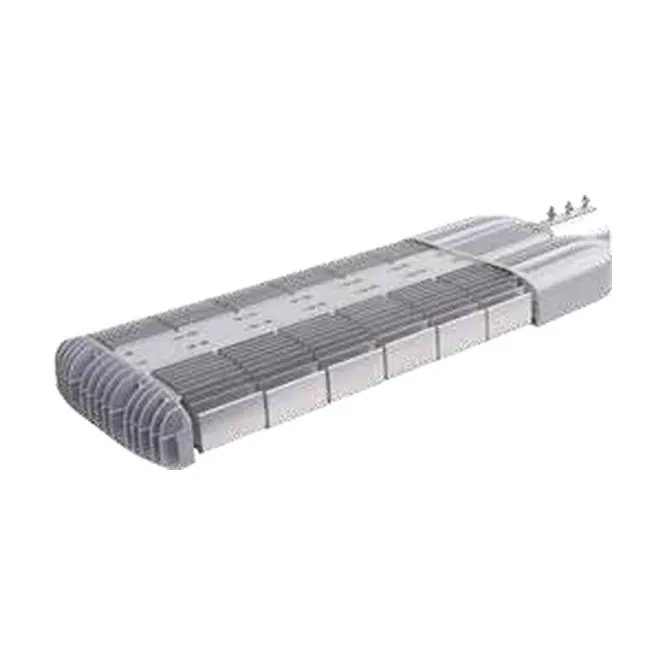
A die-cast body carrying one or more separate LED modules, each with its own heat sink and lens. Wattage scales by adding modules, often from 50 W to 300 W. Modular lights spread heat well and suit main roads and highways. See our modular LED street light LDM30C and BGLDM30G.
Slim
Low-profile lights with a flat, thin body, popular for their modern look and low wind area. Our slim modular LED street light BGLDM30J combines a slim body with modules.
Decorative and post-top
Lanterns, globes and heritage designs for town centres, parks and residential areas, usually 20–80 W on 3–5 m poles. They trade some efficiency for appearance. Our guide to lamp post street lights covers them.
Solar models
All-in-one and split solar street lights are a separate family with their own panel and battery sizing. See all-in-one vs split solar street lights.
Typical wattage ranges by road
| Road type | Typical pole height | Typical LED wattage |
|---|---|---|
| Path, residential lane | 4–6 m | 20–40 W |
| Residential street | 6–8 m | 30–60 W |
| Collector road | 8–10 m | 60–120 W |
| Main road | 10–12 m | 100–180 W |
| Highway, wide junction | 12–15 m | 150–250 W |
These are starting points only. The LED street light wattage guide explains how to work out wattage from road class and pole spacing.
How model numbers are usually built
There is no standard for street light model numbers. Each factory uses its own code, but most combine some of these elements:
- Series code: letters for the family, such as a code for modular or compact
- Wattage or module count: for example a number showing 100 W or three modules
- Optic code: the lens type, such as a road distribution type
- Colour temperature: often 30, 40 or 50 for 3000 K, 4000 K and 5000 K
- Driver or control option: dimming, photocell socket, Zhaga socket or smart node
- Mounting: side entry or post top, spigot diameter
When comparing offers, ask each supplier to break down their model number. Two lights with similar codes from different factories can be quite different inside.
What to compare between models
System lumens and efficacy. Compare total lumens from the fitting, not the LED chip rating. System efficacy of around 130–160 lm/W is common for good road lights today.
Optic. Road lights use asymmetric lenses that throw light along the road. The right optic matters more than wattage. Ask for the IES file and run it against your road width and spacing.
Driver. Check the brand, rated life, surge protection and dimming options. The driver is the most common failure point.
Surge protection. Look for at least 10 kV/10 kA for roads, and an additional surge protective device in lightning-prone regions. Ask for the surge rating of both the driver and any separate protective device.
Heat management. A large, open heat sink keeps the LEDs cool and makes them last longer. Ask for LM-80 data on the LEDs and TM-21 lifetime projections at the real operating temperature.
IP and IK rating. IP66 for the optical compartment and IK08 or higher for the lens are typical for road lighting.
Mounting and wind area. Check the spigot size against your arms and the projected area against your pole design.
Controls. A photocell socket or Zhaga socket makes future smart control simpler. See LED street light dimming controls.
Inside a street light
For a part-by-part explanation of LED boards, lenses, drivers, surge devices, housings and gaskets, read our guide to LED streetlight components. Knowing the parts helps you ask the right questions about any model.
Choosing a model for your project
- Define the road class, width, pole height and spacing
- Shortlist models with suitable optics and wattage range
- Request IES files and run a lighting calculation
- Compare driver, surge protection, heat sink and warranty
- Ask for samples and test reports for the exact model
- Check spare parts and replacement module availability
Why the same wattage gives different results
Two 100 W lights can light a road quite differently. One may have higher efficacy, a better-matched optic or less light wasted behind the pole. In a real road design, a well-chosen 80 W light can meet the same standard as a poorly matched 120 W one, which saves energy for the life of the installation. This is why lighting calculations, not wattage tables, should decide the model.
Retrofitting existing roads
When replacing sodium lanterns, match the new model’s spigot to the existing arm and check that the light distribution suits the existing spacing. Our HPS to LED conversion chart gives typical equivalents.
Our street light range
We manufacture compact, modular and slim LED street lights from about 30 W to 300 W, with a choice of optics, colour temperatures and control options. Send us your road details and we will suggest models and send IES files for your design.
Sources
Frequently asked questions
What are the different types of LED street lights?
The main types are compact street lights for residential roads, cobra head designs that replace sodium lanterns, modular lights built from LED modules for main roads, slim low-profile lights, and decorative post-top lanterns for town centres and parks.
What does an LED street light model number mean?
Each manufacturer has its own system. Model numbers usually include a series code, the wattage or number of modules, and sometimes the optic, colour temperature and driver option. Always ask the supplier to explain their code.
Which LED street light model is best?
The best model is the one whose light distribution, lumen output and construction fit your road. Check the IES file against your road class and pole spacing, and compare driver, surge protection and heat sink quality.