
Fiberglass Street Light Poles: Strength, Corrosion Resistance and When to Choose FRP
Fiberglass (FRP) street light poles: how they are made, weight and strength, corrosion and electrical insulation, base types, heights, UV protection and comparison with steel.
Key points
- Fiberglass (FRP) poles are made of glass fibres in a resin matrix; they are light, do not rust and do not conduct electricity.
- They suit coastal, salty and wet sites, residential streets, parks and car parks, typically up to about 10–12 m.
- They are easy to handle and install, often direct-buried, and some designs give way safely when hit by vehicles.
- UV-resistant surface layers or coatings are essential, and fixture weight and wind area must be within the pole's rating.
Most street light poles are galvanised steel or aluminium. Fiberglass, also called FRP (fibre-reinforced polymer) or GRP (glass-reinforced plastic), is a third option that has been used for decades in the US, Europe and coastal regions. It is not right for every road, but in the right places it outlasts metal with little maintenance.
How fiberglass poles are made
Most fiberglass poles are made by filament winding or centrifugal casting: continuous glass fibres are wound around a mandrel or spun in a mould and bonded with polyester, vinyl ester or polyurethane resin. The result is a tapered, hollow tube. A UV-resistant outer layer, gel coat or paint protects the surface. Fittings such as tenons, handholes and base flanges are bonded or bolted on.
Advantages
No corrosion. FRP does not rust or rot. Salt spray, de-icing salts, wet soils and industrial atmospheres that destroy steel at the ground line have little effect.
Light weight. A fiberglass pole may weigh a third or less of a steel pole of the same height. Two people can handle a residential pole; small trucks can deliver and install it without heavy cranes.
Electrical insulation. FRP does not conduct, so a damaged cable inside does not make the pole live. Earthing arrangements still follow local codes for fixtures.
Impact behaviour. Some FRP designs fracture or yield in a controlled way when hit, which can reduce injury compared with rigid poles. Breakaway certification depends on the design and local road rules.
Low maintenance. No painting or galvanising repairs; occasional cleaning and inspection of the surface.
Limitations
Height and load. FRP is less stiff than steel. Poles above about 10–12 m, or with heavy fixtures and large wind areas, become thick and expensive. Steel or aluminium is usually used for highways and high masts.
UV ageing. Without a good UV layer, the resin surface weathers, exposing fibres (“fibre bloom”). Quality poles have UV-stabilised surfaces; older ones can be recoated.
Fixture mounting. Heavy brackets need properly designed reinforcement. Drilling holes on site should follow the maker’s instructions.
Fire. FRP can burn or char in a fire, unlike steel.
Typical uses
- Residential streets and estate roads
- Coastal promenades and seafront roads
- Parks, paths and campuses
- Car parks and marinas
- Industrial sites with corrosive atmospheres
- Rural roads where direct burial is quick
Heights and fixtures
| Height | Typical use | Typical fixture |
|---|---|---|
| 3–5 m | Paths, parks | 20–40 W post-top or bollard |
| 5–8 m | Residential streets, car parks | 30–80 W LED street light |
| 8–12 m | Collector roads | 60–150 W LED street light |
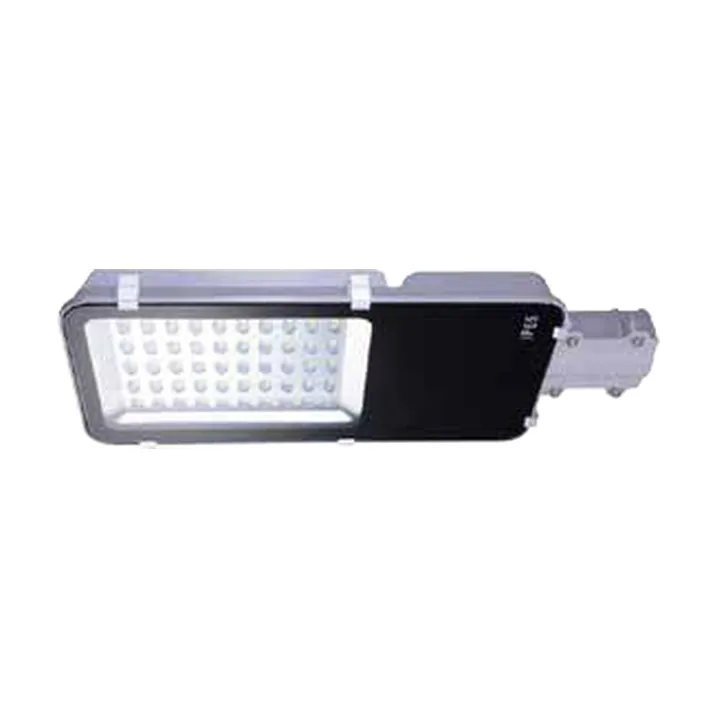
Check the pole’s rated fixture weight and projected area at your design wind speed. LED street lights are lighter and smaller than old sodium lanterns, which suits FRP well. Our compact LED street light LDZ30J is a typical fixture for residential FRP poles.
Base types
Embedded (direct burial): the most common for FRP. The lower section is set in the ground and backfilled, quick and cheap because there are no anchor bolts. See direct burial light poles.
Anchor base: a bonded base flange bolted to a concrete foundation, used where poles may need replacing or where codes require it.
Fiberglass vs steel vs aluminium
| Fiberglass | Galvanised steel | Aluminium | |
|---|---|---|---|
| Weight | Lightest | Heaviest | Light |
| Corrosion | None | Needs galvanising, ground-line protection | Good, but can corrode in some soils |
| Conductive | No | Yes | Yes |
| Height range | Up to about 10–12 m | Any | Up to about 12–15 m |
| Maintenance | Low | Repaint, inspect | Low |
| Typical cost | Medium | Low to medium | Medium to high |
For a wider overview of pole types, see our street light pole guide and how tall street lights are.
Solar lights on fiberglass poles
Solar street lights are heavier and have larger wind areas than grid LED fixtures because of the panel. Check the FRP pole’s rating for the panel area and weight, or choose an all-in-one design with a compact panel. See solar light poles.
Installation tips
- Handle with slings, not chains, to avoid surface damage
- Do not drag poles on the ground
- Follow embedment depth from the maker’s design
- Use the supplied handhole and cable entry; avoid drilling new holes without approval
- Fit the fixture with the specified tenon and torque
Inspection
Check FRP poles every few years for surface weathering, cracks at the base or tenon, and impact damage. Recoat UV-weathered surfaces before fibres are exposed widely.
Cost over the life of the pole
Fiberglass poles can cost a little more than steel poles of the same height to buy, but often cost less to install because they are light and usually direct-buried, and much less to maintain in corrosive environments. On a seafront or a road treated heavily with de-icing salt, steel poles may need recoating or replacement within 15–20 years, while fiberglass poles typically need only cleaning and an occasional surface inspection. When comparing quotes, look at the cost over 30 years, including installation, maintenance and replacement, rather than the purchase price alone. Our pole height and spacing calculator helps work out how many poles a road needs, which is the starting point for that comparison.
Our role
We supply LED street lights and solar lights for projects that use steel, aluminium or fiberglass poles, and can match fixtures to your poles’ tenon sizes and load ratings. Send us the pole type, height and design wind speed, and we will suggest fixtures that suit.
Sources
Frequently asked questions
Are fiberglass light poles any good?
Yes, for the right uses. They resist corrosion, are light to install and insulate electrically. They are widely used on residential streets, coastal roads, parks and car parks. Tall, heavily loaded or high-wind poles are usually steel.
How long do fiberglass light poles last?
Well-made poles with UV protection often last 30 years or more. Poor UV protection can lead to fibre bloom, where fibres appear at the surface, which needs recoating.
Are fiberglass poles safer than steel?
They do not conduct electricity, which reduces shock risk if a cable fault occurs, and some are designed to fracture or yield on impact, which can reduce injury in vehicle collisions. Check the design and certification for the intended use.