
Buying Street Light Poles: Types, Specifications and What Drives the Price
How to buy street light poles: steel, aluminium and fibreglass, heights and shapes, arms and base plates, galvanising, wind load, what affects the price, shipping and what to send for a quotation.
Key points
- Most street light poles are hot-dip galvanised steel, round or octagonal and tapered, from 4 to 15 m.
- Price depends mostly on steel weight (height, wall thickness, base size), galvanising and coating, arms and freight.
- Specify wind speed, pole height, arm length and the luminaire's weight and area, so the supplier can design the right wall thickness.
- Shipping poles is bulky: nesting tapered poles and full container loads reduce freight cost.
Poles are often the most expensive part of a street lighting project after civil works, and they outlast several generations of lights. Buying the right pole, at a fair price, comes down to a clear specification and an understanding of what the supplier is pricing.
Types of pole
| Type | Typical height | Notes |
|---|---|---|
| Round tapered steel | 4–12 m | Most common for roads and estates |
| Octagonal tapered steel | 6–15 m | Main roads, higher loads |
| Stepped / tubular steel | 3–8 m | Economical, paths and residential |
| Decorative cast or extruded | 3–6 m | Heritage areas, parks |
| Aluminium | 3–10 m | Light, coastal, decorative |
| Fibreglass | 3–8 m | Residential, coastal, non-conductive |
| High mast | 15–40 m | Junctions, ports; see high mast lighting |
For choosing heights and spacing, see our street light pole guide and how tall street lights are.
Key specifications
| Item | Example |
|---|---|
| Height above ground | 8 m |
| Shape | Round taper, octagonal |
| Top / bottom diameter | 70 / 160 mm |
| Wall thickness | 3.5 mm |
| Base plate | 300 × 300 × 16 mm |
| Anchor bolts | 4 × M20 × 700 mm |
| Arm | Single, 1.5 m, 10° rise |
| Spigot | 60 mm for the luminaire |
| Door | Lockable, with earth stud |
| Galvanising | Hot-dip, to ISO 1461 or equivalent |
| Coating | Polyester powder coat, colour |
| Design wind speed | For example 36 m/s |
What drives the price
| Factor | Effect |
|---|---|
| Steel weight | The largest driver: height, diameter, wall thickness |
| Shape | Octagonal and decorative cost more to form |
| Arms | Double arms, long arms, decorative arms add cost |
| Galvanising | Weight of zinc; thicker for coastal sites |
| Powder coating | Extra process and colour |
| Base plate and bolts | Thicker plates and longer bolts for high winds |
| Quantity | Tooling and set-up spread over more poles |
| Freight | Volume; full containers are cheapest per pole |
When comparing quotes, ask each supplier to state the pole weight in kilograms and the wall thickness. A cheap offer often has a thinner wall.
Wind load design
A pole must carry its luminaire, arm and any extras (signs, cameras, solar panels) in the design wind. Give the supplier:
- Design wind speed from the local code
- Luminaire weight and projected area
- Any solar panel area and position
- Any extras planned now or later
Solar poles need more strength because of the panel; see solar light poles.
Galvanising and coating
- Hot-dip galvanising protects inside and outside; specify the standard and minimum coating thickness
- Powder coat on top adds colour and extra protection
- Coastal and industrial sites need heavier zinc and marine-grade coatings
- Inspect for uncoated spots, drips and damage on arrival
Base and foundation
Poles normally sit on a base plate with anchor bolts cast into a concrete foundation. Suppliers provide bolt templates and drawings; the foundation is designed locally for soil and wind. Direct-burial poles are used in some markets, especially for fibreglass and small poles.
Shipping
- Tapered poles can be nested to save space
- Arms and accessories ship separately
- Protective wrapping prevents coating damage
- Plan unloading equipment on site; long poles need cranes or forklifts with extensions
- Order a few spare poles for accident replacements
Packages with luminaires
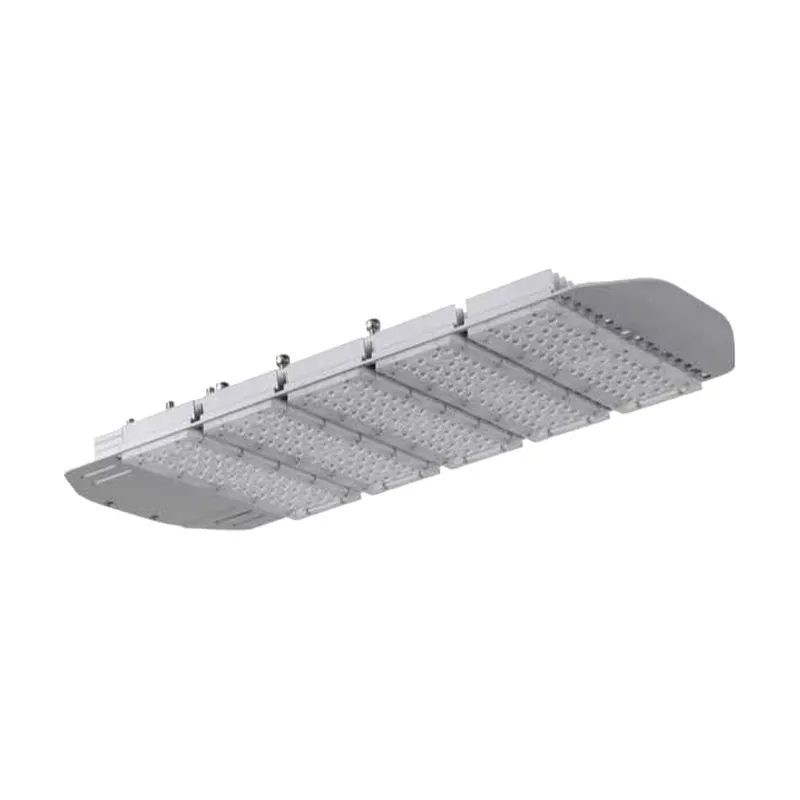
Buying poles and luminaires from one supplier simplifies matching spigot sizes, arm angles and wind loads. We supply poles with our LED street lights such as the slim modular LED street light and with solar street lights, with drawings for foundations.
Common buying mistakes
- No wind speed in the specification
- Comparing prices without pole weights
- Forgetting arms, bolts and doors in the quote
- Spigot size not matching the luminaire
- Too thin galvanising for coastal sites
Quality checks
| Check | How |
|---|---|
| Wall thickness | Measure with calipers or ultrasonic gauge |
| Height and straightness | Measure on arrival |
| Welds | Visual; no cracks or porosity |
| Zinc thickness | Coating thickness gauge |
| Coating | No peeling, uniform colour |
| Door and fittings | Fit and lock correctly |
Lead times and production
Steel poles are made from cut and bent plate, welded, straightened, galvanised and coated. Each step adds time, and galvanising capacity can be the bottleneck in busy seasons. For large projects, agree a delivery schedule that matches installation, rather than receiving all poles at once and storing them on site.
Installation considerations
- Cranes or boom trucks for poles above about 6 m
- Torque values for anchor bolt nuts
- Levelling nuts and grout under base plates as specified
- Protecting coatings during handling; touch up any damage with zinc-rich paint
- Earthing each pole
Matching poles to luminaires
The pole, arm and spigot must suit the luminaire: spigot diameter (often 60 mm), arm angle, and the luminaire’s weight and wind area. Solar luminaires and panels add load and need brackets designed for them. Confirm these details before production; changing arms after delivery is expensive.
Spare parts and accessories
Order spare doors, door screws, base covers and a few extra arms. These small parts are often lost during installation or damaged by vehicles, and matching them later can take weeks. Keep them with the project records so maintenance teams can find them.
What to send for a quotation
Pole height, shape, arm type and length, luminaire model or weight and area, wind speed, coating and colour, quantity and destination port. We will quote with weights and drawings, and can include luminaires and anchor bolts.
Sources
Frequently asked questions
How much does a street light pole cost?
It depends on height, wall thickness, shape, arms, galvanising, painting, quantity and freight. Steel weight is the main driver, so a 10 m pole with a 4 mm wall costs much more than a 6 m pole with 3 mm. Ask suppliers to quote with the pole weight stated so offers can be compared.
What material is best for street light poles?
Hot-dip galvanised steel is the most common for strength and cost. Aluminium is lighter and resists corrosion, good near the sea and for decorative poles up to about 10 m. Fibreglass is light and non-conductive, used for residential and coastal sites.
What should I check when buying street light poles?
Height, shape, wall thickness, base plate and anchor bolts, arm type and length, galvanising thickness, coating, wind load design, door and cable entry, and whether the pole suits the luminaire or solar panel to be mounted.