
Driveway Lamp Posts and Patio Light Poles: Heights, Power and Placement
How to light a driveway or patio with lamp posts: heights, spacing, mains, low-voltage or solar posts, poles for string lights, bases, and styles for homes and hotels.
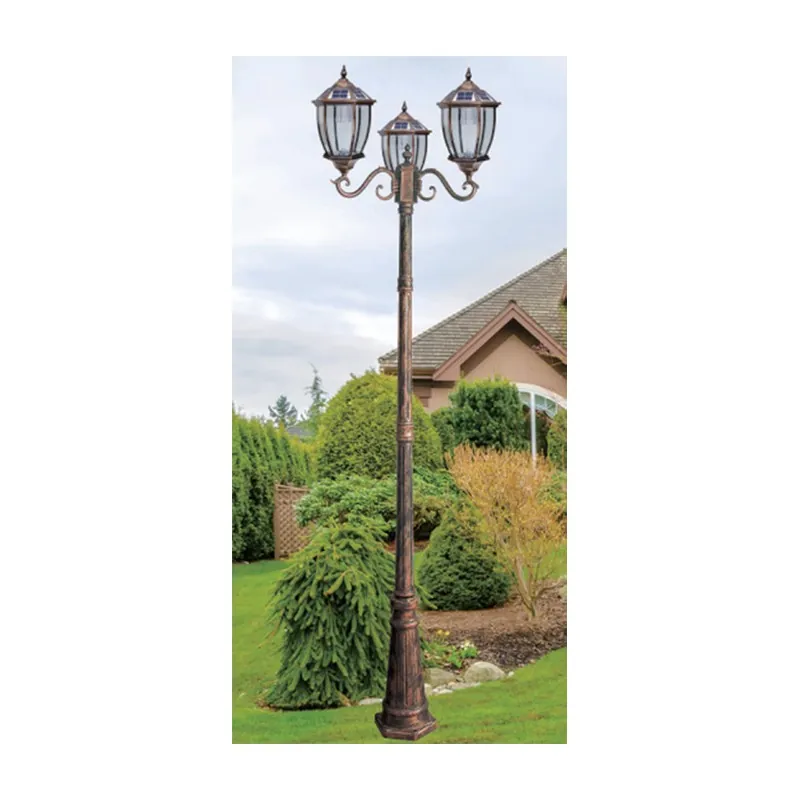
Key points
- Driveway lamp posts are usually 1.8–3 m for homes and 3–4 m for villas, hotels and estate entrances.
- Along a drive, posts every 8–15 m on one side, plus one at each end and at bends, give safe guidance without over-lighting.
- Mains posts give the most light; low-voltage posts suit homes with a garden system; solar posts avoid trenching across finished drives.
- Poles for string lights must be sized for the pull of the catenary, not just the weight of the bulbs.
A lamp post at the end of a drive does three things: it shows visitors where to turn in, it lights the way to the door, and it sets the character of the house or hotel from the road. A few well-placed posts usually do this better than many small lights.
Heights
| Setting | Typical height | Notes |
|---|---|---|
| Home driveway entrance | 1.8–2.5 m | Classic lantern on a post |
| Long home driveway | 2.5–3 m | Spaced along one side |
| Villa, hotel, estate entrance | 3–4 m | Larger lanterns, wider drives |
| Hotel or estate roads | 4–5 m | Light both drive and footpath |
Taller posts light more area each but look out of scale next to small houses.
Spacing along a drive
- Entrance: one post on each side, or one on the side of approach
- Along the drive: every 8–15 m on one side for lamp posts; low bollards every 3–5 m if you prefer low light
- Bends and junctions: a light at each change of direction
- Parking area and door: brighter light where people get out and walk
Avoid lining both sides of a short drive with posts; it looks like a runway and causes glare.
Mains, low voltage or solar?
| Mains | Low voltage (12 V) | Solar | |
|---|---|---|---|
| Light | Most | Moderate | Depends on panel and battery |
| Installation | Trench, electrician | Trench, simpler | No trench |
| Running cost | Electricity | Electricity | None |
| Best for | Hotels, estates, long drives | Homes with garden lighting | Finished drives, remote gates |
For homes with an existing low-voltage garden system, low-voltage posts can share the same transformer. For hotels and estates, mains posts on a dedicated circuit with RCD protection are standard.
Our BG-TYO45 garden post lights come on 2.5–5 m poles, 20–80 W, in modern, classical and European styles, with mains or solar versions. For lower lighting along the edges, lawn and bollard lights at 0.6 m are often combined with posts at the entrance.
Brightness
- Home entrance post: 5–15 W LED (about 500–1,500 lm) is plenty
- Villa and hotel drives: 20–40 W on 3–4 m posts
- Estate roads: 30–60 W on 4–5 m posts
Use warm white (2700–3000K) for homes and hotels. Shielded lanterns put light on the ground instead of in drivers’ eyes.
Poles for string lights
Patios and terraces often use poles to hang festoon or string lights. Unlike a lamp post, these poles must resist the sideways pull of a tensioned cable:
- Use steel poles of at least 50–75 mm diameter for spans over about 6 m
- Use a catenary wire to carry the load; the string lights hang from it
- Set poles in concrete or in heavy planters designed for the load
- Lean poles slightly away from the pull, or add guy wires
- Keep spans to about 6–10 m between supports
- Check height: at least 2.5–3 m clear above walking areas
Solar lamp posts with built-in planters are popular for terraces and rented spaces, where digging is not allowed. The planter’s weight acts as the base; check it is heavy enough when filled.
Bases and foundations
| Post | Typical base |
|---|---|
| Home lantern post 1.8–2.5 m | Concrete footing about 0.3 m square, 0.5–0.6 m deep, or a ground anchor |
| 3–4 m post | Bolted base on a concrete footing about 0.4 m square, 0.8 m deep |
| 4–5 m post | Bolted base on a footing about 0.5 m square, 1.0 m deep |
These are guides for normal soil; check local codes and conditions. Run the cable in conduit through the footing, and include an earth connection for mains posts.
Styles
- Classic lanterns suit traditional houses and heritage hotels
- Modern cylinders and cubes suit contemporary homes and offices
- European lanterns in dark finishes suit villas and resorts
- Solar posts with integrated panels suit gates and long drives
Choose one style and colour temperature for the whole approach so the entrance looks planned.
Weather and materials
- IP65 or better for the lantern; see our IP ratings guide
- Galvanised steel or aluminium posts with powder coat
- Stainless steel fixings
- Tempered glass or UV-stable diffusers
Coastal homes and resorts need extra corrosion protection.
Controls
- Photocell for dusk-to-dawn operation
- Timer to dim or switch off decorative posts late at night
- Motion sensors on lights by garages and side entrances
Dark-sky and neighbours
Aim light down, use warm colour temperatures, and avoid globes that throw light into windows across the street. Dimming after midnight keeps the entrance visible without lighting the whole neighbourhood.
Common mistakes
- Posts so bright that drivers are dazzled as they turn in
- Lanterns with clear glass and bare LEDs that glare instead of glowing
- Posts set too close to the drive edge, where cars and mowers hit them
- No conduit under the drive, so adding a light later means cutting the paving
- Mixing old warm lamps with new cool-white LEDs
Set posts at least 0.5 m back from the drive edge, and lay spare conduit under any new paving even if you do not need it yet.
Projects
For hotels, residential developments and estates, send the site plan with drives and entrances, the style you want and the power available. We will propose post heights, spacing and wattage, in mains or solar versions.
Sources
Frequently asked questions
How tall should a driveway lamp post be?
For homes, about 1.8–2.5 m (6–8 ft) to the top of the lantern. For villas, hotels and estate entrances, 3–4 m posts suit the scale and light a wider drive.
How far apart should driveway lights be?
Low path or bollard lights about 3–5 m apart; lamp posts about 8–15 m apart on one side of the drive, with extra lights at the entrance, bends and the parking area.
Can I use a solar lamp post for my driveway?
Yes, if the panel gets several hours of direct sun. Solar posts avoid cutting a trench across a finished drive. Choose a model with a real panel and battery size listed, and a mode that dims late at night.