
Inside an LED Streetlight: LED PCB, Driver, Optics, Housing and Surge Protection
What is inside an LED streetlight and why each part matters: LED chips and the aluminium PCB, drivers, lenses and road optics, housings and heat sinks, surge protection, seals and controls.
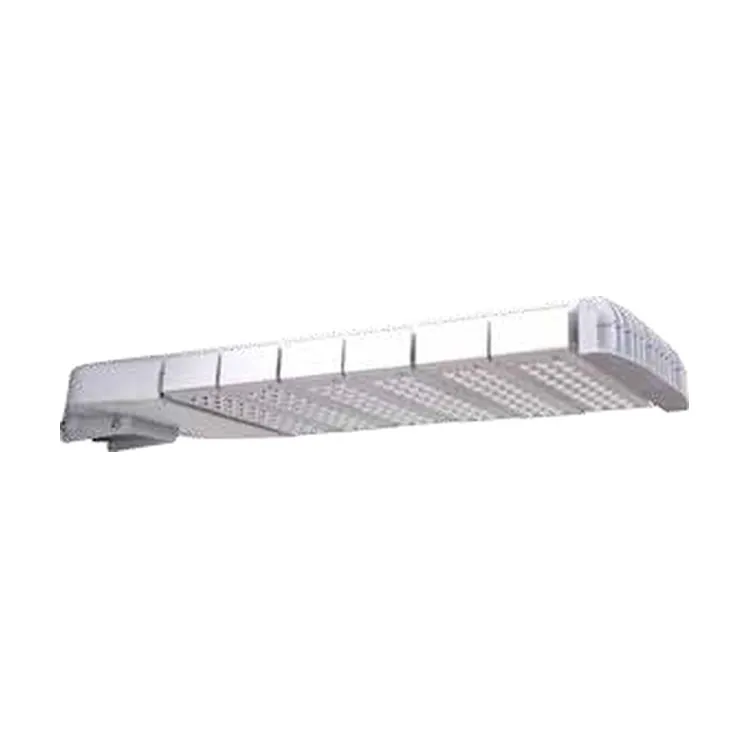
Key points
- An LED streetlight is a system: LED chips on an aluminium PCB, a driver, lenses, a die-cast housing that is also the heat sink, surge protection, seals and a control interface.
- Most failures come from the driver and surge damage, not the LEDs; driver quality and surge rating matter more than chip brand.
- LED life depends on junction temperature, so heat sink design and the PCB's thermal path decide how long light output holds up.
- Road optics shape the light into a rectangle along the road; the wrong optic wastes a third or more of the light.
LED streetlights look simple from the ground, but inside each one is a set of parts that must work together for twenty years in rain, heat and lightning storms. Buyers who understand these parts can read datasheets better, ask the right questions and avoid lights that fail after two seasons.
The main parts
| Part | Job | What to check |
|---|---|---|
| LED chips | Make light | Efficacy, LM-80 data, colour rendering |
| Metal-core PCB | Carry LEDs, move heat | Aluminium thickness, thermal path |
| Optics (lens) | Shape light onto the road | Distribution type, material, UV resistance |
| Housing / heat sink | Protect and cool | Die-cast quality, fin area, coating |
| Driver | Convert and control power | Brand, efficiency, PF, surge rating, life |
| Surge protection device | Absorb spikes | kV rating, replaceable |
| Seals and glands | Keep water and dust out | IP rating, breather valve |
| Control interface | Dimming, photocell, smart node | NEMA or Zhaga socket, 0–10 V or DALI |
LED chips and the PCB
Street lights use mid-power SMD LEDs (such as 3030 or 5050 packages) or high-power chips, mounted on an aluminium PCB. What matters:
- Efficacy of the whole fixture: today 130–160 lm/W is common for good street lights
- LM-80 data for the LED package, and a TM-21 projection of lumen maintenance
- Binning so all lights on a street have the same colour
- PCB thermal path: thicker aluminium and good thermal interface material keep LEDs cooler
An LED running 10 °C cooler keeps its output noticeably longer.
Optics
The lens turns many small light sources into a shaped beam:
| Optic | Shape | Use |
|---|---|---|
| Type II | Narrow, long | Narrow roads, paths |
| Type III | Wider throw across the road | Most roads with poles at the edge |
| Type IV | Forward throw | Car parks, wide roads from one side |
| Type V | Round | Centre of car parks, squares |
Lenses are usually PMMA (acrylic) or PC; PMMA resists yellowing better in sun. Our modular LED street lights use PMMA lenses with a 140° × 80° road distribution and an adjustable mounting angle.
Housing and heat sink
The housing is usually die-cast aluminium (such as ADC12) with an extruded or cast heat sink. Good designs:
- Have enough fin area for the wattage, without trapping dust and bird droppings
- Separate the driver from the LED heat
- Use a powder coat rated for UV and salt spray
- Have a tool-free or easy-open driver compartment
Modular designs split the LEDs into separate modules, each with its own heat sink, so one design covers 30–350 W by changing the number of modules.
The driver
The driver converts AC mains to constant DC current for the LEDs. It is the part that fails most often. Look for:
- Efficiency above 90%
- Power factor above 0.95 and low harmonic distortion
- Wide input voltage for unstable grids (for example 100–277 V or 185–264 V)
- Built-in surge protection
- Rated life at the expected temperature
- Dimming interface (0–10 V, DALI, or programmable schedules)
- Protection against open circuit, short circuit and over-temperature
Surge protection
Overhead networks and long cable runs pick up spikes from lightning and switching. A driver’s internal protection is often 4–6 kV; an extra surge protection device (SPD) rated 10 kV or more inside the light protects the driver and is cheap to replace. See how many watts an LED street light needs for sizing, and specify surge levels in every tender.
Seals and IP rating
- IP66 or IP67 for the optical compartment
- Silicone gaskets and cable glands sized to the cable
- A breather valve to prevent condensation
- Potting or sealed connections in the driver box
For the difference between IP ratings, see our IP65 vs IP66 vs IP67 guide.
Controls and sockets
- Photocell socket (NEMA 3-pin) for dusk-to-dawn switching
- NEMA 7-pin or Zhaga for smart controllers and dimming
- Programmable drivers with midnight dimming
Our guide to LED street light dimming controls covers these in detail; smart streetlights explains networks.
How parts affect life
| Part | Typical design life | Notes |
|---|---|---|
| LEDs | 50,000–100,000 h to L70 or L80 | Depends on temperature |
| Driver | 50,000–100,000 h at rated temperature | Shorter if hot |
| Lens | Many years if PMMA and UV-stable | PC may yellow |
| Seals | 10+ years with silicone | Cheap rubber hardens |
| Coating | 10–20 years | Coastal sites need more |
Replaceable drivers and modules let a light be repaired instead of discarded.
Reading a datasheet
| Item | Good sign |
|---|---|
| System efficacy | Stated for the complete fixture, with a test report |
| Driver | Named brand, surge rating stated |
| IP / IK | IP66/IP67, IK08 or higher |
| LM-80 / TM-21 | Data available |
| Operating temperature | −30 °C to +50 °C or wider |
| Certificates | Copies available for the model offered |
Our LDM30C modular street light, for example, carries CQC product certification for the 60–300 W range; certificate details are on its product page.
Testing on arrival
For large orders, test a few lights from each batch on arrival: measure input power, check the driver label against the datasheet, open one fixture to check seals and wiring, and run lights for 24–48 hours before installation. Problems found in the yard cost far less than problems found on poles.
Ordering
Send the road widths, pole heights and spacing, existing lamp wattage and any control or certificate requirements. We will propose fixtures with the right optics, drivers and surge protection.
Sources
Frequently asked questions
What is an LED street light PCB?
The printed circuit board that carries the LED chips. In street lights it is usually a metal-core (aluminium) PCB, which moves heat from the LEDs to the housing. Its thermal performance directly affects LED temperature and life.
What part of an LED street light fails most often?
The driver, which converts mains power to the current the LEDs need. Surges from lightning and switching are the most common cause. A good driver with built-in surge protection, plus an extra surge protection device, prevents most failures.
How long do LED street lights last?
Good LED street lights are rated for 50,000–100,000 hours, which is 12–25 years at about 4,000 hours a year. The LEDs slowly lose output; the driver typically has a shorter life than the LEDs and may need replacing once.