
High Bay Light Lifts, Winches and Lowering Systems: Maintenance at Height
How to reach high bay lights for cleaning and replacement: scissor lifts, boom lifts, lowering winches and chain hangers, with fixture weights and a 60 × 30 m hall worked example.
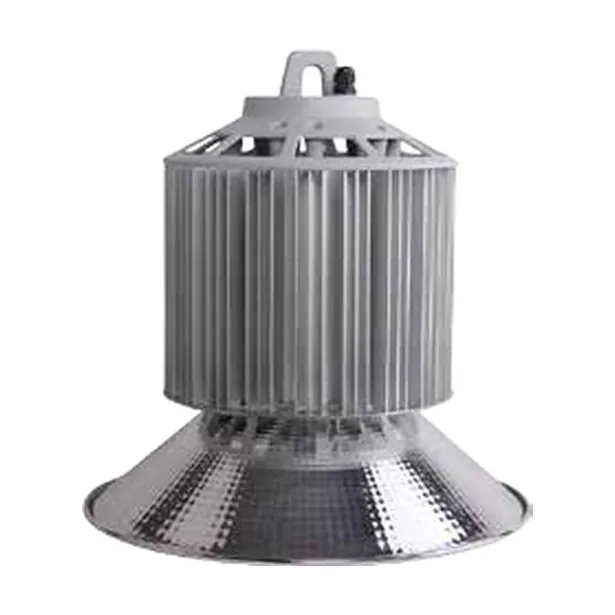
Key points
- Most warehouses maintain high bays from a mobile elevating work platform; lowering winches pay off where floors are blocked by racking, machines or pools.
- Our 100–300 W round high bays weigh 3.05–8.85 kg; high-power 800–1500 W fittings weigh 28–42 kg, which changes the hanging hardware and the lifting plan.
- Fewer, larger fittings mean fewer lifts: a 60 × 30 m hall at 12 m needs 28 × 200 W or 24 × 300 W high bays for 200 lux in our calculator.
- With LED, the main maintenance work is cleaning and the occasional driver; plan access once for the whole life of the installation.
Changing a metal halide lamp every year or two made access to high bays a routine job. LED high bays last much longer, so access is now an occasional task, and it is easy to forget it during design. Then, years later, someone discovers the racking was installed under every fitting. This guide covers the main ways to reach high bay lights, what the fixture weights mean for each method, and how the layout itself changes the maintenance effort.
Four ways to reach a high bay
| Method | Best for | Limits |
|---|---|---|
| Scissor lift | Open floors, aisles wide enough for the platform | Needs a level, clear floor under the fitting |
| Boom lift (articulating or telescopic) | Reaching over obstacles such as machines or low racking | Large footprint, floor loading |
| Lowering winch or hoist | Pools, food lines, tall racking, atriums | Cost per fitting, regular inspection of cable and latch |
| Fixed catwalk or crane walkway | Steel mills, hangars, plants with overhead cranes | Must be planned with the building |
Mobile platforms are the default for warehouses and workshops. The operator needs training and the platform needs inspection and maintenance under standards such as ISO 18893 or the local equivalent.
Fixture weights
The weight of the light affects the hanging hardware, the effort of handling it at height and the capacity of any lowering device. From our data sheets:
| Series | Power | Weight |
|---|---|---|
| GKP40C heat pipe | 60–300 W | 3.05–8.85 kg |
| GKP40G heat pipe | 60–250 W | 2.6–7.05 kg |
| GKP40S fin | 100–200 W | 3.45–5.5 kg |
| GKP40H high-power | 200–1500 W | 10.5–41.8 kg |
A 3–9 kg round high bay can be handled by one person on a platform. A 28–42 kg high-power fitting cannot: it needs two people, a lifting aid or a hoist, and its bracket must be fixed to steel rated for the load. For lowering winches, choose a device rated well above the fitting weight and include the weight of any cable and bracket.
Hanging methods
- Hook and chain: quick to install and level, common in warehouses. Use rated chain and a safety wire.
- Pendant tube: rigid, looks tidy in shops and showrooms; see high bay pendant lighting.
- Surface or bracket mount: for low roofs or where swinging must be avoided.
Whatever the method, add an independent safety cable on fittings over walkways and work areas.
Worked example: fewer fittings, fewer lifts
A 60 × 30 m distribution hall, 12 m mounting height, 200 lux target, medium beam, 130 lm/W. Our high bay lighting calculator gives:
| Fitting | Count (grid) | Spacing | Average lux | Example |
|---|---|---|---|---|
| 200 W | 28 (7 × 4) | 8.6 × 7.5 m | 205 | open |
| 300 W | 24 (6 × 4) | 10.0 × 7.5 m | 264 | open |
The 300 W option has four fewer fittings to clean or inspect, but it uses more power in total (7.2 kW against 5.6 kW) and gives more light than needed. The calculator says 227 W per fitting would be enough with 24 fittings, so the better answer here is usually the 200 W layout. For heights and wattages in general, see high bay wattage by ceiling height.
What matters for maintenance is where those 28 positions end up. Before fixing the grid, overlay it on the racking plan and move fittings into the aisles so a scissor lift can reach each one. The spacing limit for a medium beam at this height is 13.4 m, so there is room to shift rows to align with aisles.
Planning access at the design stage
- Overlay lights on the racking or machine layout. Put fittings over aisles wherever possible.
- Check floor loading for the platform you will use.
- Choose lowering devices only where needed: over pools, process lines or racking that blocks aisles.
- Group circuits so one area can be isolated without darkening the whole building.
- Record positions and models so replacements match.
Maintenance tasks with LED
- Cleaning: the main task. Dust on the lens or reflector can cut output noticeably in dusty plants; clean every one to three years depending on the building.
- Driver replacement: drivers are the most common failure. Separate-driver designs allow replacement without changing the whole fitting.
- Inspection: check chains, safety wires, brackets and cable glands on each visit.
Our warehouse lighting lux levels guide helps you decide when a measured drop justifies cleaning. For temporary lighting during works, see temporary high bay work lights.
Safety during the work
Isolate and lock off the circuit before touching a fitting, even for cleaning, and test that it is dead at the fitting. Barrier off the floor under the platform so forklifts and pedestrians keep clear. Carry tools on lanyards. When replacing a fitting, lower the old one with a line rather than by hand from height if it is above about 10 kg, and never stand on the platform guardrail to gain reach: reposition the platform instead.
What to send us
The building plan with racking or machines, mounting height, target lux and how you plan to reach the fittings. We will run the layout in our calculator and adjust the grid to fit your access routes.
Sources
Frequently asked questions
How do you change a high bay light at 12 m?
Usually from a scissor lift or boom lift positioned under the fitting, with the circuit isolated. Where a lift cannot reach, for example over a swimming pool or machinery, a lowering winch brings the fitting down to floor level.
What is a high bay light lifter?
The term is used for two things: a mobile work platform used to reach the lights, and a lowering device (winch or motorised hoist) that lowers the fitting on a cable. Both are common; the choice depends on floor access.
How much does an LED high bay weigh?
Our 100 W round high bays weigh 3.2–3.75 kg and our 200 W models 5.4–5.65 kg. High-power heat-pipe fittings range from 10.5 kg at 200 W to 41.8 kg at 1500 W.
How often do LED high bays need maintenance?
Far less than metal halide. Typical tasks are cleaning the lens or reflector every one to three years in dusty buildings and replacing a failed driver occasionally. Clean before you conclude a fitting has lost output.
Products in this guide
-
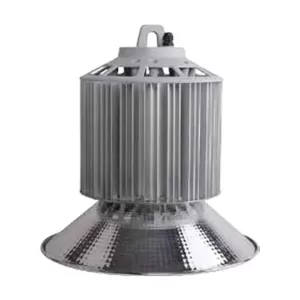 Heat-Pipe LED High Bay 60–300 W, IP66
GKP40C Specifications and quote →
-
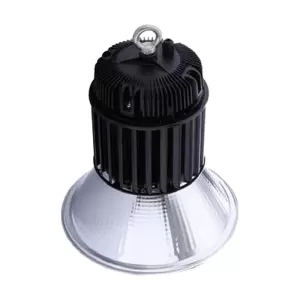 Compact Heat-Pipe LED High Bay 60–250 W, IP65
GKP40G Specifications and quote →
-
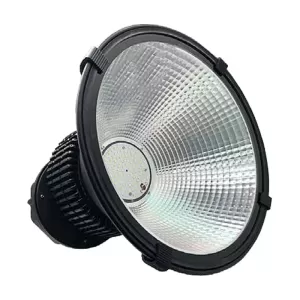 Fin Heat-Sink LED High Bay 100–200 W, IP65
GKP40S Specifications and quote →
-
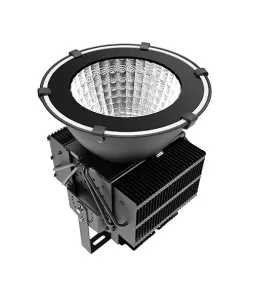 High-Power Heat-Pipe High Bay & Flood Light 200–1500 W
GKP40H Specifications and quote →