Warehouse Lighting Maintenance: Cleaning Intervals, Maintenance Factor and a Yearly Plan
How to plan warehouse lighting maintenance for LED high bays: what causes light loss, how the maintenance factor changes the fitting count, cleaning intervals, checks and records.
Key points
- LED high bays rarely fail suddenly; warehouse light levels fall slowly through dirt on lenses, LED ageing and dirty room surfaces.
- The maintenance factor in the design sets how much loss you can accept: in our calculator a 60 × 30 m warehouse at 10 m needs 40 fittings at 0.8, 45 at 0.7 and 50 at 0.6 for 200 lux.
- Cleaning on a fixed interval is cheaper than buying extra fittings to cover heavy dirt: plan cleaning every 1–3 years depending on the dust.
- Combine cleaning, inspection and a light-level check in one visit with the lift, and keep records per fitting.
Warehouse lighting used to mean relamping: metal halide lamps faded, changed colour and failed, so a contractor came round with a lift and a box of lamps. LED high bays changed the rhythm. Failures are rare, so many sites stop maintaining their lights altogether, and a few years later the aisles are noticeably darker without anyone being able to say why. This guide explains where the light goes, how much loss the design can absorb, and how to build a simple yearly plan. For fault-finding when something has actually stopped working, see warehouse lighting repair.
Where warehouse light goes
Four things reduce the light on the floor over time:
- Dirt on the lens or diffuser. Dust, exhaust from diesel or LPG trucks and insects settle on top of and inside the optics. This is usually the biggest loss and the easiest to fix.
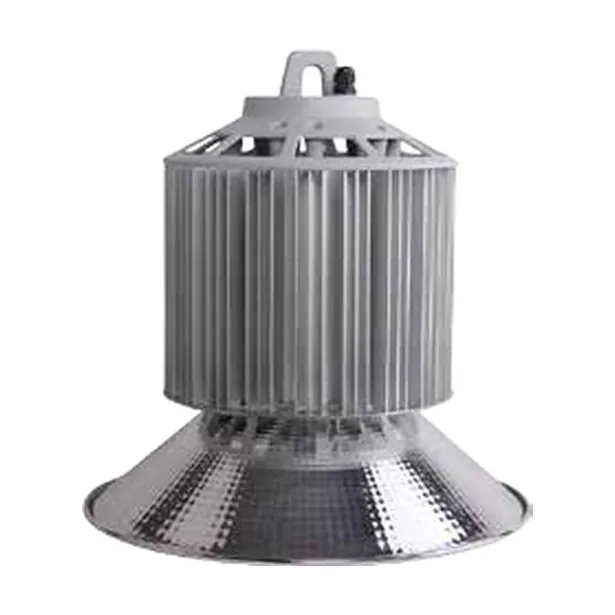
- Dirt on the heat sink. A dusty heat sink runs hotter, which slightly reduces LED output and shortens driver life.
- LED lumen depreciation. The LEDs themselves lose output slowly. Manufacturers project it from LM-80 test data using TM-21.
- Room surfaces. Walls, racking and the roof get darker, so less light is reflected back into the aisles.
A failed fitting is the most visible problem, but on a well-installed LED system it is the least common one.
How the maintenance factor changes the design
The maintenance factor (MF) is the design’s allowance for all of the losses above. It multiplies the initial light output: an MF of 0.8 means the designer accepts that the installation will drop to 80 % of its new level before maintenance restores it.
To show the effect, we ran the same warehouse through our high bay lighting calculator: 60 × 30 m, fittings at 10 m, 200 lux target, using our GKP40C heat-pipe high bay at 150 W and 130 lm/W with a medium beam.
| Maintenance factor | Typical situation | Fittings | Initial average | W per m² |
|---|---|---|---|---|
| 0.8 | Clean store, cleaning every 2 years | 40 (8 × 5) | ≈ 234 lux | 3.3 |
| 0.7 | Normal warehouse, cleaning every 3 years | 45 (9 × 5) | ≈ 230 lux | 3.75 |
| 0.6 | Dusty store, little cleaning | 50 (10 × 5) | ≈ 219 lux | 4.2 |
Open the examples: MF 0.8, MF 0.7, MF 0.6.
The “initial average” is what the calculator reports after the maintenance factor, so it is the level you expect at the end of the cycle, not on day one. Going from 0.8 to 0.6 adds ten fittings, 1.5 kW of load and the energy that goes with it every year, only to cover dirt that a cleaning visit would remove. That is the core argument for planned maintenance: it is cheaper to clean than to over-install.
The table also shows the opposite risk. If a warehouse was designed at MF 0.8 and nobody cleans it, it will drift below the design level within a few years.
Cleaning intervals
There is no single rule, but these intervals are a practical starting point, in line with the approach in CIE 97:
| Environment | Examples | Clean every |
|---|---|---|
| Clean | Air-conditioned stores, pharma, electronics | 3 years |
| Normal | General warehouses, distribution centres | 2 years |
| Dirty | Timber, cement, grain, foundries, recycling | 1 year or less |
Cleaning means switching off and isolating, wiping or washing the lens with a mild detergent (no solvents on polycarbonate), and blowing or brushing dust off the heat sink fins. Check the IP rating before using water.
A yearly maintenance plan
One lift visit a year can cover everything. Hiring the lift is often the biggest cost, so do as much as possible from it. Our high bay light lifts guide covers access options.
Every visit
- Walk the floor with the lights on and note any fitting that is out, flickering or visibly dimmer.
- Measure illuminance at fixed points (for example the same aisle centres each year) and compare with last year.
- Check emergency fittings and battery-backup high bays.
- Check sensors and controls still respond as set; see high bay occupancy sensors.
On cleaning years
- Clean lenses and heat sinks.
- Check mounting hooks, chains and safety wires.
- Check cable glands and that no cable rests on a hot heat sink.
Records
Number every fitting on a plan, and record its model, date installed and any faults or replacements. When a run of failures appears in one area, the record shows whether it is the fittings, the supply or the environment.
When measurements fall short
If light levels have dropped below the design even after cleaning:
- Check the supply voltage and the control settings; a dimming profile left at 70 % looks like ageing.
- Check the room. New high racking or dark stock can absorb more light than the design assumed. Our warehouse lux levels guide gives targets by task.
- Check the age. Most LED high bays are rated for many tens of thousands of hours to L70. A warehouse running 24/7 reaches 50,000 hours in under six years.
- Then decide between adding fittings in the dark zones and a group replacement.
From our own projects
At Hunan Nantong Group, 600 of our 150 W high bays light production halls at 13 m; the project was accepted in November 2024. In April 2026 the client asked us to service and replace fittings in one hall, and our team did the work from an aerial work platform at 9 m. See the factory high bay project. Visits like this are where a fitting plan and records pay off: the crew knows which fittings to reach before the platform arrives.
Spare parts
Keep a small stock: about 1–2 % of the installed fittings and a few spare drivers, of the same model and colour temperature. Mixed colour temperatures in one hall are noticeable from the floor.
What to send us
Hall size, mounting height, current fittings and light readings if you have them. We will check your layout against the right maintenance factor in our calculator and suggest a cleaning and spares plan.
Sources
Frequently asked questions
How often should warehouse lights be cleaned?
In a clean, air-conditioned store, every 3 years is often enough. In a normal warehouse with forklifts and open doors, every 2 years. In dusty plants, timber or cement stores, every year or more often.
What is a maintenance factor in lighting?
The ratio of the light level at the end of the maintenance cycle to the light level when the installation is new. A factor of 0.8 means the design accepts 20 % loss before cleaning or replacement.
Do LED high bays need maintenance?
Less than metal halide, but not none. Lenses and heat sinks collect dust, which cuts output and raises driver temperature. A yearly visual check and periodic cleaning keep the design light level.
Should I replace LED high bays one by one or all at once?
Replace failures as they happen during the warranty and early life. Plan a group replacement only when measurements show the whole installation has fallen below the design level and cleaning does not restore it.