Warehouse Lighting Controls: Aisle Zoning, Sensors, Daylight Dimming and What They Save
Planning warehouse lighting controls: aisle zoning, sensor per fitting or networked system, daylight dimming at docks, and savings for a 100-fitting warehouse.
Key points
- Switching to LED gives the big saving; controls take a second, smaller bite out of what is left. In our example, 400 W metal halide to 150 W LED saves 67 % before any controls.
- Aisle-by-aisle occupancy dimming suits racked warehouses best, because most aisles are empty most of the time.
- With aisles occupied 40 % of the time and dimmed to 20 % when empty, a 100 × 150 W LED installation running 24/7 uses about 48 % less energy than the same LEDs at full power.
- Design the zones first, then choose between standalone sensors and a networked system; the zoning decides most of the saving.
A warehouse is lit for the forklift that might arrive, not for the one that is there. Most aisles are empty most of the time, docks receive daylight through open doors, and some zones stand idle for whole shifts. Controls let the lighting follow the actual use. This guide shows how to plan them and what they save once the fittings are already LED.
Start with the LED saving
Controls are often sold as if they were the main saving. They are not. Replacing high-intensity discharge lamps with LED is the larger step. Take 100 metal halide high bays of 400 W, with 15 % ballast loss, replaced by 150 W LED high bays in a warehouse running 24 hours a day. Our LED retrofit savings calculator gives:
| Result | Value |
|---|---|
| Metal halide energy | 402,960 kWh/year |
| LED energy | 131,400 kWh/year |
| Saving | 271,560 kWh/year (67 %) |
| Saving at $0.15/kWh | about $40,700 a year in energy |
The electricity price of $0.15/kWh is an example value; enter your own tariff. Controls then work on the remaining 131,400 kWh. That is why the order matters: LED first, then controls.
Zone the building before choosing products
The saving from controls depends on how finely the lighting follows the activity. Map the building into zones that are used differently:
| Zone | Typical use pattern | Control approach |
|---|---|---|
| Narrow racked aisles | Visited occasionally by forklifts or pickers | Occupancy dimming per aisle |
| Wide transport aisles | Busy during shifts | Time schedule, dimmed at night |
| Bulk storage blocks | Long idle periods | Occupancy dimming per block |
| Loading docks | Busy in bursts, daylight from doors | Daylight dimming plus occupancy |
| Picking and packing areas | Constantly occupied during shifts | Schedule, task tuning |
| Offices and mezzanines | Office hours | Standard office controls |
A one-switch warehouse saves nothing. A warehouse zoned by aisle can save almost half of the LED energy, as the example below shows.
Aisle occupancy dimming
In racked storage, the best control is one that knows which aisle is in use:
- Sensor on every fitting. Each high bay has its own sensor and dims when its area is empty. Simple and reliable, with no wiring between fittings.
- Sensors at the aisle ends. A sensor at each end of the aisle switches all fittings in that aisle to full output when a truck enters. Fittings respond as a group, so the driver sees the whole aisle lit ahead.
- Wireless grouping. Fittings with built-in sensors share their detection by radio, combining both advantages.
Mounting height and sensor coverage are covered in detail in our guide to high bay occupancy sensors. In narrow aisles, use sensors with a long, narrow detection pattern aligned with the aisle, so traffic in the cross aisle does not trigger every aisle at once.
How much aisle dimming saves
Take the same 100 × 150 W LED installation, running 24/7. Suppose aisles are occupied 40 % of the time and dimmed to 20 % output when empty. Then:
- Average power factor: 0.4 × 100 % + 0.6 × 20 % = 52 % of full power
- Energy: 131,400 × 0.52 = 68,328 kWh/year
- Saving: 63,072 kWh/year, about 48 % of the LED energy
- At $0.15/kWh: about $9,460 a year
The 40 % occupancy and 20 % dim level are assumptions for the example, not measurements. Logging data from a pilot zone of five to ten fittings for two weeks gives real values and is worth doing before committing to a large control system.
Daylight dimming at docks and skylights
Docks with open doors and warehouses with roof lights receive real daylight for much of the day. A daylight sensor measures the light at floor level and dims the fittings to keep the target level. Suppose 20 of the 100 fittings are near doors and skylights and can dim by 50 % for 10 hours a day:
- 20 × 0.15 kW × 10 h × 365 × 0.5 = 5,475 kWh/year
This saving overlaps with occupancy dimming in the same fittings, so do not simply add the two. The true combined saving is lower than the sum; it is better to calculate per zone with the control that dominates.
Task tuning and constant light output
Two other strategies are easy to add with dimmable LED drivers:
- Task tuning: setting each zone’s maximum output to the level actually needed. A new installation designed with margin often delivers 15–20 % more light than the target. Trimming it back saves energy immediately.
- Constant light output: starting the fittings at reduced output and raising it gradually as the LEDs age, so the light level stays constant.
Our guide to warehouse lighting lux levels gives target values by area type. Our article on how to dim LED high bay lights explains the dimming interfaces.
Standalone or networked?
| Approach | Strengths | Limits |
|---|---|---|
| Fittings with built-in sensors | Low cost, no commissioning network, easy retrofit | No central reporting; settings changed fitting by fitting |
| Wired DALI or 0–10 V with central controller | Precise grouping, schedules, energy data | More wiring and commissioning |
| Wireless mesh | Grouping and data without new control wiring | Requires network set-up and long-term support |
Our commercial lighting control systems guide compares the interfaces in more depth. For a single warehouse with stable use, fittings with sensors are usually enough. For a distribution centre with changing layouts, a networked system pays back through flexibility.
Fittings that suit controls
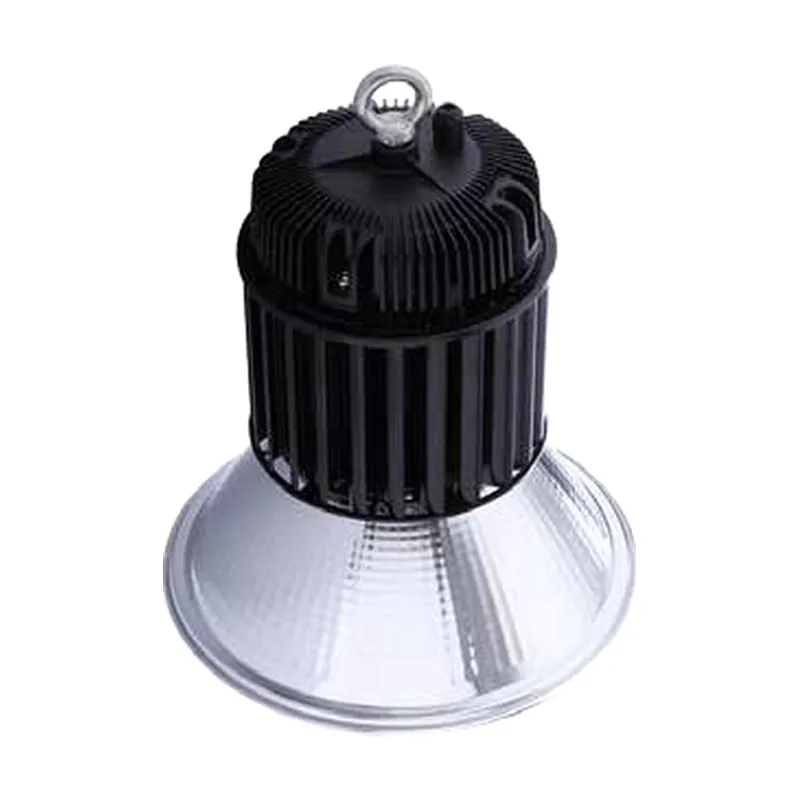
The GKP40G heat-pipe high bay (60–250 W, more than 130 lm/W, IP65, −30 °C to +50 °C) runs cooler than most high bays because of its copper heat pipes, which helps the driver in frequent dimming cycles. Specify the dimming interface (1–10 V, DALI or built-in sensor) when ordering, as it is fixed in production.
Safety points
- Never switch an occupied aisle off; dim instead, with a minimum level agreed with the safety officer.
- Keep emergency and escape lighting outside the control system or ensure it overrides.
- Set a hold time long enough that a picker standing still does not end up in the dark.
- Test detection at the end of each aisle with a real forklift, not by walking.
What to send us
- Layout with racking, aisles and dock doors
- Operating hours and shift pattern
- Current fittings and wattages
- Preferred control approach, if any
We will return a fitting count, zoning proposal and a savings estimate using our calculators and your tariff.
Sources
Frequently asked questions
What is the best lighting control for a warehouse?
For racked storage, occupancy dimming by aisle, with sensors at each end of the aisle or on each fitting. For open bulk storage and docks, larger zones with daylight dimming near skylights and doors. Most warehouses use both.
Should warehouse lights switch off or dim when nobody is there?
Dimming to 10–20 % is usually better than switching off. Forklift drivers see the aisle lit before they enter, and LED drivers handle frequent dimming well.
How much do lighting controls save in a warehouse?
It depends on how often areas are empty. In our worked example, aisle occupancy dimming saves about 48 % of the LED energy in a 24/7 warehouse. In a busy single-shift building the saving is smaller.
Do I need DALI in a warehouse?
Not always. Fittings with built-in sensors work well alone. DALI or a wireless network adds central scheduling, grouping and energy reporting, which matter more in large or multi-site operations.