
Warehouse Lighting Repair: Troubleshooting High Bays, Sensors and Circuits
How to troubleshoot warehouse lighting: high bays that flicker, cycle, stay dark or dim, sensors that misbehave, tripping circuits, and when to repair, retrofit or replace with LED.
Key points
- Old metal halide high bays usually fail in the lamp, ignitor or ballast; LED high bays usually fail in the driver or through surge damage.
- Check the pattern first: one fixture, a row, or a whole circuit points to different causes.
- Occupancy sensors cause many 'faults' that are really settings: sensitivity, time delay or coverage.
- When repairs need a lift for each fixture, replacing old HID high bays with LED in the same visit is usually cheaper over five years.
Warehouse lights are high up, run long hours and are often only noticed when a picker cannot read a label. Repairs mean lifts, aisle closures and lost time, so it pays to diagnose before climbing. This guide covers the common faults in both old HID and newer LED installations.
Start with the pattern
| What you see | Likely area |
|---|---|
| One fixture out | Lamp, driver, ballast or connection in that fixture |
| A row or zone out | Breaker, contactor, control module, sensor |
| Whole building out | Main supply, lighting panel, central controls |
| Fixture cycles on and off | End-of-life HID lamp, LED driver overheating, sensor delay |
| Fixture flickers | Failing driver, loose connection, incompatible dimmer |
| Dim or pinkish light | Old metal halide lamp near end of life |
| Lights on when nobody is there | Sensor sensitivity, sensor seeing a nearby aisle |
| Lights off while people work | Sensor coverage gap or time delay too short |
Old HID high bays
| Part | Symptom | Fix |
|---|---|---|
| Lamp | Cycling, dim, colour shift | Replace lamp, or upgrade |
| Ignitor | No start, no glow | Replace ignitor |
| Ballast | Hum, overheating, no start | Replace ballast |
| Capacitor | Low output, slow start | Replace capacitor |
| Lens or reflector | Dark spots, dirty light | Clean or replace |
Metal halide lamps lose 30–40% of output before failing, so a warehouse can be badly under-lit without any lamp being “out”. See the HPS and metal halide to LED conversion chart for replacement sizes.
LED high bays
| Part | Symptom | Fix |
|---|---|---|
| Driver | Off, flicker, cycling | Replace driver |
| Surge protector | Off after storm | Replace SPD and check driver |
| LED module | Part of the fixture dark | Replace module or fixture |
| Connector | Intermittent | Re-terminate, check for corrosion |
| Overheating | Turns off after a while, then on | Check ambient temperature, airflow, mounting near roof |
High temperatures near the roof shorten driver life. In hot roofs, choose fixtures rated for the ambient temperature; see high temperature LED high bay lights.
Sensors and controls
Many complaints are about control settings, not failures:
- Time delay too short: lights go off while people work in an aisle
- Sensitivity too high: a forklift in the next aisle switches lights on
- Sensor mounted too high for its range
- Dimming level too low: background level of 10% may be too dark for safety
- Daylight sensor dimming too much near skylights
Check the sensor manual for adjustments before replacing hardware.
Circuits
- Breaker trips: check for a shorted fixture or damaged cable, especially where forklifts hit conduit
- Contactors: check coils and contacts; listen for chatter
- Neutral faults: can cause flicker across a whole circuit
- Voltage: low voltage at the end of long runs affects older fixtures
Safety
- Isolate and lock off circuits before work
- Use lifts suited to the height and floor; close the aisle
- Use fall protection as required
- Treat HID lamps as hazardous waste (mercury)
Repair, retrofit or replace
| Situation | Usually best |
|---|---|
| New LED system, one driver failed | Warranty or driver replacement |
| HID system, frequent lamp and ballast failures | Replace with LED high bays |
| Fluorescent T5HO high bays, sound housings | LED tubes or retrofit kits |
| Many fixtures out after storms | Add surge protection; check earthing |
| Under-lit warehouse after rack changes | Re-design layout with new fixtures |
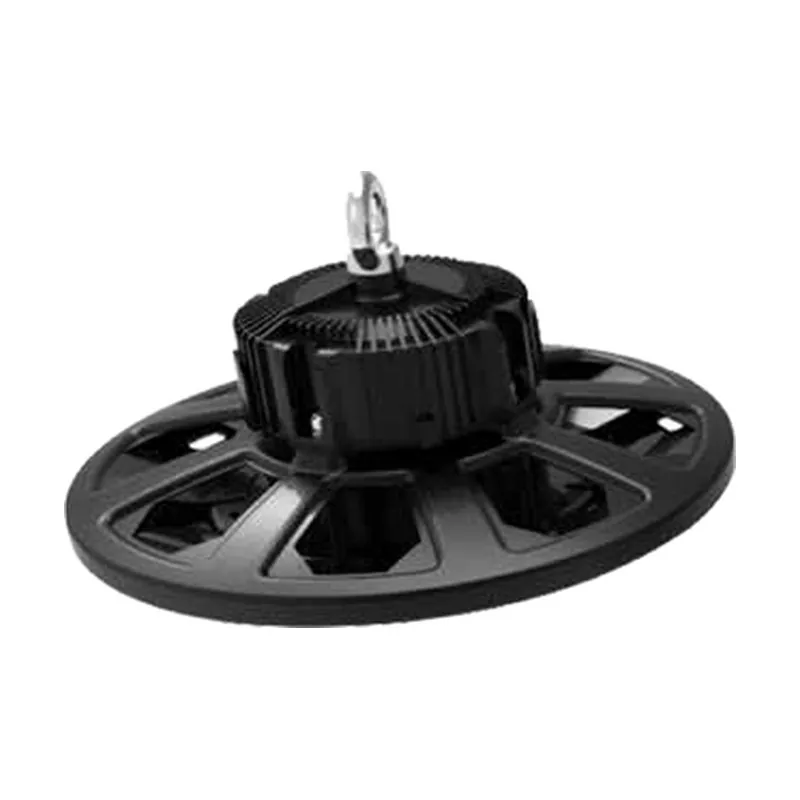
For replacement, our UFO LED high bays suit most warehouses; check layouts with the high bay calculator and savings with the LED retrofit savings calculator.
Cost of a repair visit
The largest cost is often access: lift hire, labour and aisle downtime. Grouping repairs and doing an upgrade at the same time spreads that cost. When several HID fixtures in a row fail, replacing the whole row with LED usually avoids repeated visits.
Preventive maintenance
- Walk the warehouse monthly with lights on and note outages
- Clean fixtures yearly in dusty warehouses
- Test sensors and emergency lighting
- Keep spare drivers and a few spare fixtures
- Record repairs per fixture to spot repeat failures
Diagnosing from the floor
Before hiring a lift, gather information from the ground:
- Note fixture numbers, rows and circuits affected
- Check whether failures started after a storm, power cut or rack change
- Check the lighting panel for tripped breakers or alarms
- Look at sensor indicator LEDs, which often show detection and status
- Use the maintenance log to see if the same fixtures fail repeatedly
This often narrows the fault to a circuit or control device that can be fixed without climbing.
Light levels after repairs
After repairs or partial upgrades, measure light levels in aisles and docks. Mixed old and new fixtures can leave patches that are noticeably darker. If old HID fixtures remain in a row with new LED, the difference in colour and brightness is also visible; plan full-row upgrades where possible.
Spare parts strategy
Keep a small stock of drivers, surge protectors and one or two complete fixtures of each type in use. For HID systems still in service, keep lamps and ballasts only until the upgrade, rather than buying large stocks of parts for technology on its way out.
Working with contractors
Give the contractor fixture numbers, photos and the fault pattern in advance so they bring the right parts and lift. Agree whether faulty LED fixtures are returned under warranty and who handles the claim.
Ordering
Send the existing fixture type, mounting height, number of fixtures and what is failing. We will suggest repairs, retrofit options or replacement high bays with a layout.
Sources
Frequently asked questions
Why do warehouse lights keep turning on and off?
Metal halide lamps cycle at the end of their life as they overheat and restart. LED high bays that cycle often have a failing driver or an overheating problem. Occupancy sensors with a short time delay can also make lights switch on and off as people move.
Why is one row of warehouse lights out?
A single row usually shares a circuit or a control zone. Check the breaker, contactor, control module or sensor for that row before working on individual fixtures.
Is it worth repairing old warehouse lights?
For a single failure in a newer LED system, yes. For old metal halide or fluorescent systems with frequent failures, replacing with LED usually costs less over a few years because of lamp, ballast and lift costs plus energy savings.