
Warm White Flood Lights: When to Choose 2700–3000 K and What Wattage You Need
When warm white flood lights of 2700–3000 K are the right choice: homes, facades, gardens and hospitality; how they compare with cool white, what wattage you need at 50, 100 and 200 W, and CRI.
Key points
- Warm white floodlights (2700–3000 K) suit homes, gardens, facades, hotels, restaurants and heritage buildings.
- Cool and daylight white (4000–6500 K) suit security, industrial yards, sports and car parks.
- Warm white LEDs are typically 5–10% less efficient than cool white, so allow slightly more wattage for the same lumens.
- As a guide: 20–50 W for homes, 50–100 W for small commercial facades and yards, 100–200 W for larger buildings and areas.
Most LED floodlights are sold in cool or daylight white, around 5000–6500 K. That bluish light suits security yards and car parks, but on a house, a stone facade or a hotel garden it can look harsh and clinical. Warm white floodlights solve that. This guide explains when to choose them and how to size them.
What warm white means
Warm white is light at about 2700–3000 K, similar to incandescent and halogen lamps. It looks yellowish-white, cosy and inviting. Neutral white is about 4000 K; cool and daylight white are 5000–6500 K. See soft white vs daylight for the full scale.
Where warm white floodlights work best
- Homes: front of house, driveway, garden and patio
- Facades: brick, stone, timber and heritage buildings, where warm light brings out texture and colour
- Gardens and trees: warm light looks natural on foliage and bark
- Hotels, restaurants and resorts: welcoming entrances and terraces
- Churches, monuments and public buildings: warm light suits traditional materials
- Residential estates: less glare and a softer look at night
Where cool white is better
- Security and perimeter lighting
- Industrial yards, ports and logistics
- Car parks (often 4000 K)
- Sports fields and courts
- Modern glass and steel buildings, where cool white matches the design
Lumens and efficiency
Warm white LEDs are slightly less efficient than cool white because of the phosphors used. The difference is usually 5–10% in lumens per watt. When replacing a cool white floodlight with warm white, choose by lumens and allow a little more wattage if needed.
How much wattage?
| Application | Typical warm white LED floodlight |
|---|---|
| Porch, small yard | 10–30 W (1,000–3,500 lm) |
| Front of house, driveway | 30–50 W (3,500–6,000 lm) |
| Large garden, tree uplighting | 20–100 W depending on tree size and beam |
| Small commercial facade | 50–100 W per floodlight |
| Hotel or office facade | 100–200 W per floodlight, several units |
| Large yard or plaza | 100–200 W on poles |
See the LED flood light wattage guide for how mounting height and area change the numbers.
Beam angle
Warm white is often used for architecture and landscape, where beam control matters:
- Narrow (10–25°): tall walls, columns, tall trees
- Medium (30–60°): facades from a moderate distance, medium trees
- Wide (90–120°): close-range washing and general areas
See the flood light lens guide for more.
Colour rendering
Warm white with CRI 80 is fine for general use. For facades of coloured stone and brick, and for hospitality, CRI 90 brings out colours better.
Glare and neighbours
Warm white is gentler on the eye, but a bright floodlight still glares if aimed badly. Aim floodlights down and at the target, use visors where needed, and avoid lighting neighbours’ windows or the sky. See flood light mounting for aiming tips.
Wildlife and light pollution
Warmer light contains less blue, which affects insects, bats and birds less, and scatters less in the sky. Many parks, coastal areas and nature reserves specify warm white or amber for this reason.
Warm white floodlights with sensors
Warm white suits motion-activated floodlights at homes: a gentle glow when someone arrives, rather than a harsh blue blast. See motion sensor flood lights.
Solar warm white floodlights
Solar floodlights are also available in warm white. Their output is limited by panel and battery size, as with any solar light, so check the real panel watts and battery capacity, not the label wattage.
Matching colour across a site
Choose one colour temperature for all floodlights on a building or site. Mixing warm and cool floodlights on one facade looks like a mistake. If some floods must be cooler for security, keep them in a different area.
Choosing quality
- Real lumen output, not just watts
- Warm white CCT stated (2700 K, 3000 K) with consistent bins
- IP65 or better, die-cast aluminium housing
- Surge protection for outdoor circuits
- Adjustable bracket with angle scale
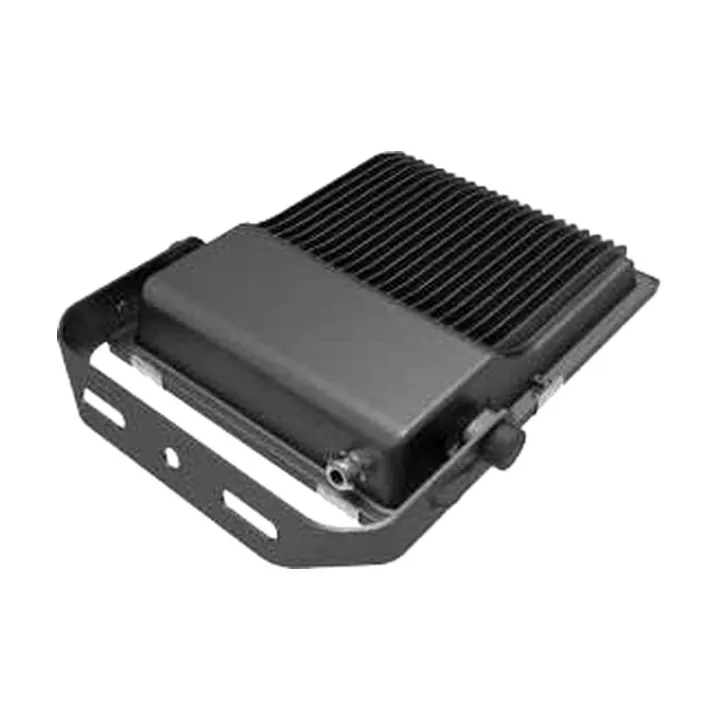
Our slim LED floodlights and modular floodlights are general-purpose floodlights; tell us the colour temperature and beam you need when asking for a quote, and we will confirm which options are available.
Warm white on different materials
Warm white light flatters warm-coloured materials: red and yellow brick, sandstone, limestone, timber cladding and terracotta. It brings out their tones and makes buildings look inviting. On white render and pale stone, 3000 K gives a soft cream tone, while 4000 K looks cleaner and whiter. On blue-grey slate, glass and steel, warm light can look muddy; neutral white often suits these better. Testing a sample floodlight on the actual facade at night is the most reliable way to decide, and it takes only a few minutes.
Warm white for gardens and trees
On trees and planting, warm white looks natural and comfortable, especially near seating areas. Some designers use slightly cooler light, around 4000 K, on evergreen foliage to bring out the green, while keeping warm light on bark, paths and the house. If you mix colour temperatures like this, keep each one consistent within its area so the scheme looks intentional.
Example: front of a house
A typical detached house might use two 30 W warm white floodlights under the eaves to light the drive and entrance, a 10–20 W narrow-beam floodlight to uplight a feature tree, and a low-glare wall light by the door. Together they give a welcoming front at night without spill into the street or neighbours’ windows.
For facade projects
For buildings, monuments and hotels, a lighting calculation shows how many floodlights, which beams and what positions give an even, attractive result. Send us photos and dimensions of the facade and we will suggest a layout.
Sources
Frequently asked questions
Is warm white or cool white better for flood lights?
Warm white is better for homes, gardens, facades and hospitality, where comfort and appearance matter. Cool white is better for security, industrial areas, car parks and sports, where alertness and colour contrast matter.
What colour temperature is warm white?
Warm white is about 2700–3000 K. Some suppliers use 3500 K for a slightly whiter warm tone.
Are warm white LED flood lights less bright?
At the same wattage, warm white LEDs give slightly fewer lumens, typically 5–10% less. Choose by lumens rather than watts, and allow a little more wattage if needed.