
Modern Landscape Lighting: Clean Lines, Linear Light and Layered Design
How to design modern landscape lighting: hidden fixtures, linear LED, wall washing, grazing, in-ground uplights, step lights, colour temperature and controls.
Key points
- Modern landscape lighting hides the fixtures and shows the effect: lines of light, washed walls and lit trees rather than visible lamps.
- Linear LED, recessed step lights, in-ground uplights and slim bollards are the core fixtures.
- Light the architecture and planting in layers, and keep paths and steps lit for safety.
- Use one warm colour temperature, often 2700–3000 K, and control scenes with timers or smart controls.
Modern gardens and buildings use simple forms: concrete, timber, steel, glass, gravel and bold planting. Lighting them well means doing the same with light. The aim is to see the effect, not the fixture. This guide covers the techniques and fixtures that give a contemporary look.
Principles
Hide the source. Fixtures sit in the ground, under ledges, behind planting or recessed into walls. You see light on surfaces, not glowing lamps.
Light lines and planes. Modern design is about lines: the edge of a step, the base of a wall, the underside of a bench. Linear light emphasises them.
Use contrast. Not everything should be lit. Darkness between lit features gives depth.
Keep it consistent. One colour temperature, a limited set of fixture types and matching finishes.
Key techniques
Linear light under edges
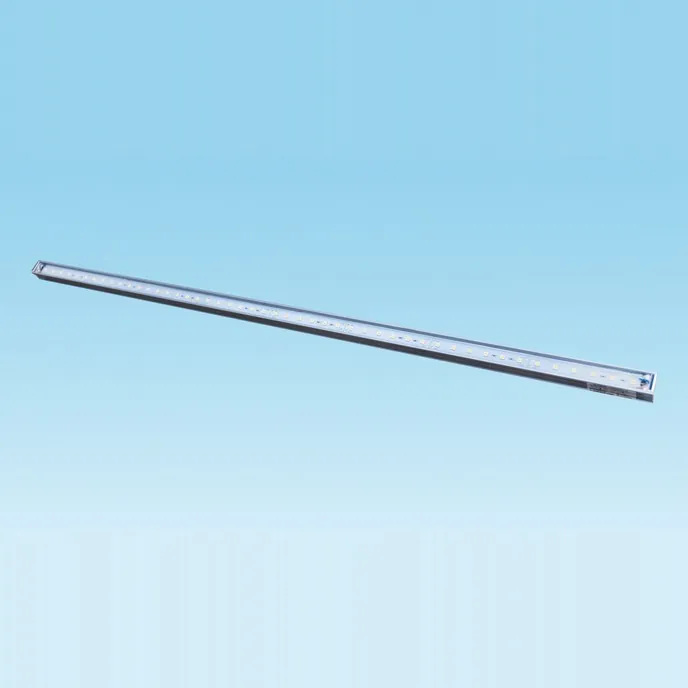
Slim LED profiles under benches, floating steps, decking edges, wall copings and planters create glowing lines. Hide the LED inside an aluminium channel with a diffuser so you see an even line, not dots.
Wall washing
Wide-beam fixtures at the base of a wall, or above it, spread soft, even light across the surface. Ideal for smooth rendered walls and screens. Our LED wall washer is designed for this.
Grazing
Fixtures placed close to a textured wall, aimed along it, reveal the texture of stone, brick or timber cladding with strong shadows.
Uplighting trees and architecture
In-ground uplights at the base of trees, columns and facades give dramatic vertical light. Choose narrow beams for tall, slim trees and wider beams for spreading canopies. Our LED in-ground uplight is used this way.
Silhouetting
Lighting a wall behind a sculptural plant or object shows its outline against the light.
Low path and step light
Recessed step lights, flush markers and slim bollards keep paths safe without cluttering the design. See low profile pathway lights.
Facade lighting
Linear lights along roof edges, window reveals and columns emphasise the building’s geometry. Our LED linear facade light is designed for building outlines and architectural detail.
Fixtures that suit a modern look
| Fixture | Best for |
|---|---|
| Linear LED profile | Steps, benches, decks, copings |
| Recessed wall / step light | Retaining walls, stairs |
| In-ground uplight | Trees, columns, facades |
| Slim square bollard | Paths, drives |
| Narrow-beam spot on stake | Feature plants, sculptures |
| Wall washer | Smooth walls, screens |
| Linear facade light | Building edges, windows |
Choose fixtures in dark bronze, black or graphite to disappear by day, or finishes that match the architecture.
Layered design
- Architecture: wash or outline the house and walls
- Focal points: uplight key trees, sculptures, water features
- Paths and steps: low, glare-free light for safety
- Social areas: soft, dimmable light on terraces, decks and seating
- Boundaries: subtle light on boundary planting so the garden feels larger
Start with the view from inside the house. In winter, the garden is mostly seen through windows, and a few well-lit features make it feel like an extension of the room.
Colour temperature and colour
Warm white of 2700–3000 K works with timber, stone and planting. Neutral 4000 K can suit stark minimal designs but looks cold if used everywhere. A small amount of tunable or coloured light can be used for events, but most modern schemes stay white. See the colour temperature chart.
Glare control
Modern schemes rely on the source being hidden. Use:
- Recessed and deep-set LEDs
- Glare shields and honeycomb louvres on spotlights
- Asymmetric optics on step and wall lights
- Careful aiming away from seating areas and windows
Controls
- Timers or astronomical clocks to switch on at dusk
- Separate circuits or zones for architecture, paths and features
- Dimming for terraces and seating areas
- Smart controls for scenes such as “evening”, “party” and “late night”
Power: low voltage or mains
Most residential modern schemes use 24 V DC for linear LED and 12 V or 24 V for spotlights, with drivers or transformers in accessible locations. Larger commercial schemes may use mains-powered fittings. Plan cable routes and driver locations before hard landscaping is laid. See landscape lighting wiring.
Durability in modern materials
Fixtures recessed into concrete, stone or timber need careful detailing:
- Drainage below in-ground fixtures
- IP67/IP68 ratings for in-ground and underwater fittings
- Corrosion-resistant housings and stainless fixings
- Allowance for timber movement on decks
Common mistakes
- Using too many fixture types and finishes
- Visible LED dots in linear details
- Lighting every plant equally, losing contrast
- Mixed colour temperatures
- Forgetting drivers and access for maintenance
Lighting water, glass and reflective surfaces
Modern gardens often include pools, rills, mirrors and glass balustrades. Water can be lit from within with underwater fittings rated IP68, giving a glowing surface, or left dark to reflect lit trees and walls beyond, which is often more striking. Glass and polished stone reflect bright sources, so keep fixtures out of the line of sight in reflections, and test aiming at night from the main viewpoints. A dark pool that mirrors a carefully lit wall or tree is one of the most effective and least expensive effects in a modern scheme.
Lighting for the view from inside
Large glass walls are common in modern houses. At night, a dark garden turns glass into a mirror that reflects the room. Lighting the garden to a level close to the interior reduces reflection and extends the room visually. Start with the elements visible from the main living spaces, and keep exterior light levels balanced so the view through the glass looks natural.
Planning with the designer
The best modern lighting is planned with the landscape and architecture, not added later. Recesses for step lights, channels for linear LED and sleeves for cables must go in while walls and paving are built. Give the lighting designer the landscape drawings early, and agree fixture positions before concrete is poured.
Commercial projects
Hotels, offices, campuses and residential developments use the same principles at a larger scale, often with mains-powered fittings and central control. Our landscape lighting ideas guide covers more applications. We supply linear, wall washer, in-ground and garden fixtures for projects; send us your landscape plans and we will suggest fixtures and a layout.
Sources
Frequently asked questions
What is modern landscape lighting?
Outdoor lighting that uses minimal, often hidden fixtures to create clean effects: linear light under benches and steps, washed and grazed walls, uplit trees and low path lighting, usually in warm white.
What fixtures are used in modern landscape lighting?
Linear LED profiles, recessed wall and step lights, in-ground uplights, slim square bollards, narrow-beam spotlights and wall washers, all in simple shapes and dark or matching finishes.
What colour temperature suits modern landscape lighting?
Most designers use 2700–3000 K for warmth with modern materials. 4000 K can suit stark concrete and steel designs, but used across a whole garden it often feels cold.