
Cast Aluminum Light Poles: Decorative Posts, Weight, Corrosion and Installation
Cast aluminum light poles: decorative and heritage designs, heights, weight compared with cast iron and steel, corrosion, powder coating, bases and fixtures.
Key points
- Cast aluminum poles reproduce decorative and heritage designs at a fraction of the weight of cast iron, and do not rust.
- They are typically 3–5 m for post-top lanterns and up to about 6–8 m with arms, on anchor bases with decorative base covers.
- Powder coating over a pre-treated surface gives long-lasting colour; marine-grade finishes suit coastal sites.
- They suit town centres, parks, campuses, estates and private drives; for tall roads, steel or extruded aluminium poles are used.
Cast aluminium has replaced cast iron for most new decorative light poles. It reproduces the fluted columns, ornate bases and scrolls of traditional designs, but weighs far less and does not rust. This guide explains where cast aluminium poles fit and what to check.
Why cast aluminium?
- Light: often a third or less of the weight of an equivalent cast iron post, easier to transport and install
- No rust: aluminium forms a protective oxide layer
- Less brittle: less likely to shatter on impact than cast iron
- Ornate designs: casting allows detailed bases, collars and finials
- Recyclable
Typical designs
- Heritage columns: fluted shafts with decorative bases, for post-top lanterns
- Single and twin arm posts: scrolled arms carrying lanterns
- Bollards: short decorative posts
- Modern decorative: clean shapes with cast details
Heights are typically 3–5 m for post-top lanterns, and up to around 6–8 m for arm-mounted designs. Taller decorative poles often use an extruded aluminium or steel shaft with a cast aluminium base cover.
Cast vs extruded vs steel
| Cast aluminium | Extruded aluminium | Steel | |
|---|---|---|---|
| Shape | Ornate, decorative | Smooth, tapered or straight | Any, usually plain |
| Weight | Light | Light | Heavy |
| Corrosion | No rust | No rust | Needs galvanising |
| Typical height | 3–8 m | Up to about 12–15 m | Any |
| Use | Heritage, parks, estates | Streets, car parks | Roads, highways |
For heavy cast iron heritage posts, see cast iron lamp posts; for heritage lantern styles, see Victorian street lamps.
Finishes
- Powder coating: durable colour (black, dark green, bronze, grey), applied over a chemical pre-treatment
- Marine-grade systems: extra pre-treatment and primer for coastal sites
- Textured finishes: hide minor marks and look like cast iron
- Gold or contrast detailing: on collars and finials in heritage schemes
Specify the coating system for the environment, especially near the sea or roads treated with salt.
Bases and foundations
Most cast aluminium poles stand on an anchor base: a base plate bolted to anchor bolts cast in a concrete foundation, covered by a decorative base shroud. Some smaller posts are direct-buried. See direct burial light poles and square light poles for foundation details.
Foundations must be designed for pole height, lantern weight, wind and soil. Use stainless steel or galvanised anchor bolts and isolate aluminium from direct contact with concrete and dissimilar metals where specified, to avoid corrosion.
Fixtures
Cast aluminium poles usually carry:
- Post-top heritage lanterns
- Modern post-top LED luminaires
- Arm-mounted decorative lanterns
- Small LED street lights on residential roads
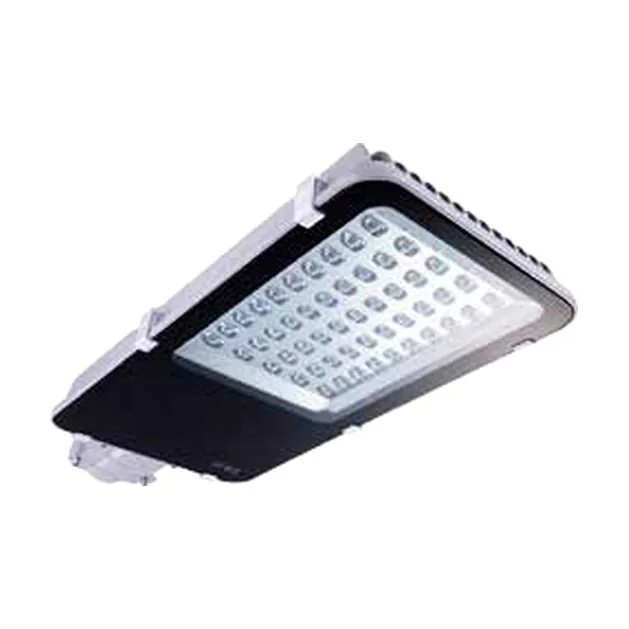
LED fixtures are lighter than old sodium lanterns, which suits cast aluminium poles well. Choose warm white (2700–3000 K) for heritage looks, with optics that reduce glare and upward light. Our compact LED street light LDZ30J suits residential roads where modern and decorative poles meet.
Where they are used
- Town centres and conservation areas
- Parks, promenades and squares
- University and hospital campuses
- Residential estates and gated communities
- Hotels and resorts
- Private drives and gardens; see driveway lamp posts
Installation tips
- Handle with slings to protect the coating
- Keep base covers and finials separate until the pole is set
- Level the base carefully; leaning decorative poles are very noticeable
- Seal the access door and cable entry
- Earth the pole according to local codes
Maintenance
- Wash poles occasionally, especially near the coast
- Touch up chips in the coating promptly
- Check base cover fixings and access doors
- Check anchor nuts during routine maintenance
See light pole maintenance for a full checklist.
Impact and vandalism
Cast aluminium is tougher than cast iron in impacts but can still crack. Place poles back from kerbs and parking bays, and use bollards or kerbs to protect them in car parks. Replacement parts such as base covers and finials are usually available from the manufacturer.
Solar on cast aluminium poles
Solar heritage lanterns and compact all-in-one solar lights can be mounted on decorative poles, avoiding trenching in parks and estates. Check the pole’s load rating for the panel’s wind area.
Choosing a design for a scheme
For a whole street, park or estate, choose one pole family and use it consistently: the same base, shaft and finish, with variations only in height and arm configuration. This keeps the look coherent and simplifies spare parts. Check that the chosen design is available in all the heights you need, and that lanterns from the same range fit both post-top and arm-mounted versions. Ask for a sample or visit an existing installation before ordering large quantities, because colour and detail look different outdoors than in a catalogue.
Lighting performance
Decorative poles should not mean poor light. Agree the light levels and uniformity needed for the road or path, run a lighting calculation with the chosen lantern, and adjust spacing and heights to meet it. Heritage-style lanterns with modern LED optics can meet residential road classes at sensible spacings, but lanterns with no optical control often need closer spacing.
Lead times
Cast aluminium poles are made in moulds and powder coated, so lead times can be longer than for standard steel poles. Plan orders early, particularly for custom colours or details.
Recycling and sustainability
Aluminium is one of the most recycled materials, and many cast aluminium poles contain a high share of recycled metal. At the end of their life, poles can be recycled again with little loss of quality, which makes them a sound choice for councils with sustainability targets.
Supply
We supply LED street and area lights, decorative lanterns and poles for estates, parks and town centres. Send us the design style, heights, quantities and site conditions, and we will suggest poles and fixtures together.
Sources
Frequently asked questions
Are cast aluminum light poles strong?
Yes, for decorative and low to medium heights. They are lighter than cast iron and less brittle on impact. For tall poles and heavy loads, steel or extruded aluminium shafts are used, sometimes with cast aluminium bases.
Do cast aluminum poles rust?
No. Aluminium does not rust, though it can corrode in some aggressive conditions. Powder coating protects and colours the surface.
What is the difference between cast and extruded aluminum poles?
Cast poles are poured into moulds, allowing ornate shapes. Extruded poles are pushed through dies, giving long, smooth tapered or straight shafts. Many decorative poles combine a cast base with an extruded shaft.