
Square Light Poles: Sizes, Wall Thickness, Heights and When to Choose Square over Round
Square light poles explained: 4, 5 and 6 inch straight square steel and aluminium poles, wall gauges, 10–39 ft heights, EPA and wind ratings, anchor base vs direct burial and square vs round.
Key points
- Square poles are common in parking lots and commercial sites; 4 in (100 mm) poles typically go to about 20–25 ft, 5–6 in poles to 30–39 ft.
- Wall thickness (often 11 gauge or 7 gauge in steel) and height set how much fixture weight and wind area (EPA) a pole can carry.
- Check the pole's rated EPA at your design wind speed against the total EPA of fixtures and brackets.
- Square suits shoebox area lights and architectural sites; round tapered poles suit roads and higher wind loads.
Walk through almost any parking lot in North America and you will see square poles carrying shoebox LED area lights. Square poles are also common on campuses, commercial sites and architectural projects. This guide explains the sizes, how to read pole ratings and how to choose.
What is a square light pole?
A straight (non-tapered) hollow pole with a square cross-section, usually in galvanised or painted steel or in aluminium. Most stand on a concrete foundation with anchor bolts through a base plate, covered by a square base cover. Fixtures mount on the top or side with tenons, arms or drilled patterns.
Common sizes
| Size (outside) | Typical heights | Typical use |
|---|---|---|
| 4 in (about 100 mm) | 10–25 ft (3–7.5 m) | Small lots, paths, building perimeters |
| 5 in (about 125 mm) | 20–35 ft (6–10.5 m) | Larger parking lots, commercial sites |
| 6 in (about 150 mm) | 30–39 ft (9–12 m) | Large lots, multiple heavy fixtures |
Metric markets use similar sizes in millimetres, often with a slight taper.
Wall thickness
Steel square poles are commonly made in:
- 11 gauge: about 3 mm (0.120 in), lighter loads and lower heights
- 7 gauge: about 4.5 mm (0.180 in), heavier loads, taller poles, higher wind
Aluminium poles use thicker walls to match steel strength and resist corrosion without coating, at a higher price.
EPA and wind ratings
Every pole has a rated EPA (effective projected area) it can carry at a given design wind speed. Each fixture and bracket also has an EPA. The total EPA on the pole, plus a safety margin, must not exceed the pole’s rating at your site’s wind speed.
Example: a 25 ft, 4 in, 11 gauge pole might be rated for about 7 sq ft at one wind speed and much less at a higher wind speed. Two shoebox fixtures at 1.0 sq ft each plus arms are well within that; four large floodlights may not be.
Wind speeds come from local codes and maps. Coastal and hurricane regions need much stronger poles.
Height and spacing
Taller poles allow wider spacing and fewer foundations. In parking lots:
- 20 ft poles: spacing about 60–80 ft
- 25 ft poles: about 75–100 ft
- 30 ft poles: about 90–120 ft
Spacing depends on fixture output, optic type and required light levels. Our parking lot light poles guide covers layouts, and the pole height and spacing calculator checks a design.
Fixture mounting
- Direct arm (bolt-on): the area light’s arm bolts to a drilled pattern on the pole side; common for shoebox fixtures
- Tenon top: a round tenon on the pole top for slip-fitter fixtures
- Bullhorn brackets: two to four arms from a tenon for multiple floodlights
Order the drill pattern or tenon to match the fixture, and the number of fixtures per pole (single, twin at 180°, twin at 90°, quad).
Base types
Anchor base: a base plate bolted to anchor bolts cast in a concrete foundation. Most common; allows replacement without new foundations.
Direct burial: part of the pole is embedded in the ground and backfilled. Cheaper foundations but harder to replace or re-plumb, and more exposed to corrosion at the ground line.
Square vs round
| Square straight | Round tapered | |
|---|---|---|
| Look | Architectural, matches shoebox lights | Classic road look |
| Strength per weight | Lower | Higher |
| Wind performance | Good to moderate heights | Better for tall and high-wind |
| Fixture mounting | Drilled patterns, tenons | Tenons, arms |
| Typical use | Parking lots, campuses | Roads, highways, high masts |
For roads, see our street light pole guide.
Finishes
- Hot-dip galvanised: best corrosion protection for steel
- Powder coat over galvanising: colour plus protection (bronze, black, grey, white)
- Aluminium: naturally corrosion-resistant, often powder coated
Near the coast or road salt, specify galvanising under any paint.
Installing square poles
- Foundation designed for pole height, EPA and soil
- Anchor bolts set with a template to the pole’s bolt circle
- Concrete cured before loading
- Pole raised, levelled with nuts, bolts tightened, base cover fitted
- Fixtures fitted and wired, with a handhole for connections
Protect poles in parking lots from vehicle impact with raised concrete bases.
Maintenance and inspection
Square poles need little care but should be inspected every few years: check anchor nuts for tightness, look for corrosion at the base plate and inside the handhole, check that base covers are in place and that the pole is still plumb. After a vehicle strike, inspect the pole and foundation before reusing them. Damaged galvanising can be repaired with zinc-rich paint, which slows corrosion at scratches and cut edges.
Buying checklist
- Height, size and wall thickness
- Rated EPA at your design wind speed
- Base plate, bolt circle and anchor bolt size
- Drill pattern or tenon for your fixtures
- Handhole size and position
- Finish and colour
- Certificates and structural calculations if required
Poles with fixtures
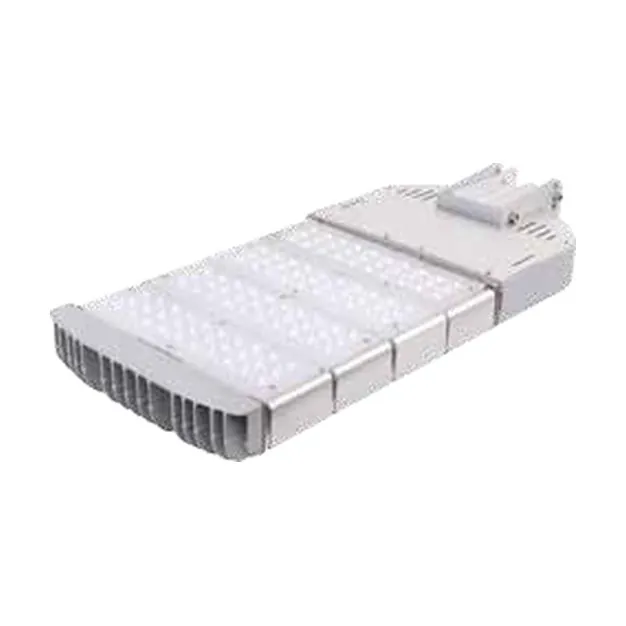
We supply LED area and street lights with matched poles for parking lots, campuses and roads, including our modular LED street lights. See also LED parking lot lights. Send us your layout, heights and design wind speed, and we will propose poles and fixtures together.
Sources
Frequently asked questions
What size square light pole do I need?
For 10–20 ft, a 4 in square pole is common. For 20–30 ft, a 4 or 5 in pole with thicker walls. For 30–39 ft, a 5 or 6 in pole. The final choice depends on fixture weight and EPA and the local design wind speed.
What does 11 gauge or 7 gauge mean on a square pole?
It is the steel wall thickness. 11 gauge is about 3 mm (0.120 in); 7 gauge is about 4.5 mm (0.180 in). Thicker walls carry more load and wind area.
Are square poles better than round poles?
Neither is better in general. Square poles match shoebox area lights and modern buildings. Round tapered poles are lighter for the same strength and more common on roads and in high-wind areas.