
Low Profile Pathway Lights: Bollards, Brick Lights and Step Lights That Stay Out of Sight
Low profile pathway lights explained: short bollards, mushroom caps, brick and paver lights, in-ground markers and wall-recessed step lights, with heights, spacing, glare control and power options.
Key points
- Low profile path lights sit close to the ground, from flush with the paving up to about 30–45 cm, and keep the source out of eye line.
- Mushroom and hooded caps throw light down onto the path; brick, paver and in-ground lights mark edges with little glare.
- Space taller low-profile lights about 2–3 m apart; flush markers closer, about 1–2 m, because they light less of the surface.
- Choose fittings with sealed housings, IP65 or higher (IP67 for in-ground), and warm white light.
Tall path lights on stakes can look like a runway and get knocked over. Low profile path lights do the job more quietly: they sit close to the ground, hide the light source and put light where feet go. This guide covers the types, how to place them and what to look for.
Why go low?
- Less glare. The source is below eye level and often shielded, so people see the path, not the lamp.
- Neater look. Fittings disappear into planting by day.
- Harder to damage. Less exposed to mowers, feet and children.
- Less light pollution. Light goes down, not out and up.
Types of low profile path light
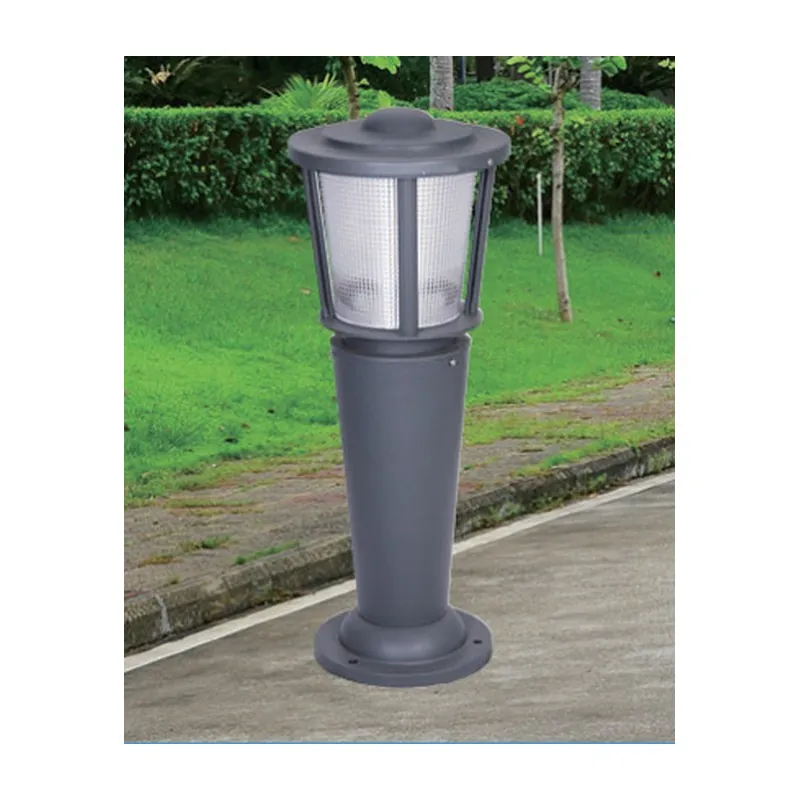
Short bollards (20–45 cm)
Compact posts with a downward light at the top. They light a circle of path around them and are robust enough for public areas. Our LED lawn light BG-CP is a mains-powered bollard used in parks and campuses.
Mushroom and hooded caps
A wide hat over the light source throws light down and out in a circle. Popular in gardens; they look like small sculptures by day.
Brick and paver lights
Lights the size of a brick or paver set into walls, steps or paving. They mark edges and steps with very little glare. They work best as guides rather than as the only light on a path.
Flush in-ground markers
Small round or square lights set flush into paving or decking. Driveable versions exist for drives. They show the line of a path or the edge of a terrace.
Wall-recessed step lights
Lights set into a low wall or the side of steps, throwing light across the treads. They are among the most effective low lights for safety. See solar step lights for solar versions.
Low in-ground uplights used as path guides
Small, narrow-beam in-ground lights set along a path can uplight plants or walls beside it, giving reflected light on the path. Our LED in-ground uplight is often used this way.
Heights and spacing
| Type | Typical height | Typical spacing |
|---|---|---|
| Short bollard | 30–45 cm | 2.5–4 m |
| Mushroom / hooded cap | 20–40 cm | 2–3 m |
| Brick / paver light | Flush or in wall | 1–2 m, or each step |
| Flush marker | Flush | 1–2 m along edge |
| Step light | In riser or wall | Every step or every second step |
Stagger lights along one side and then the other for a natural look, and add lights at junctions, steps and changes of direction.
Brightness and colour
Low lights need less output because they are close to the surface. Typical levels:
- Markers: 10–50 lumens
- Caps and short bollards: 50–300 lumens
- Step lights: 30–150 lumens
Use warm white of 2700–3000 K in gardens and residential areas. See the soft white vs daylight guide for choosing colour.
Power options
Low voltage (12 V): the most common for gardens; safe and flexible. See low voltage landscape lighting and landscape lighting wiring.
Mains: used in public spaces, campuses and commercial sites for robust bollards.
Solar: fine for sunny paths, but small low lights have small panels. Look for models with a reasonable panel size and replaceable batteries; see rechargeable batteries for solar lights.
Glare control
Even low lights glare if the LED is visible. Look for:
- Light sources set back inside the housing
- Louvres or slots that direct light down
- Frosted or prismatic diffusers
- Asymmetric optics that throw light across the path, not into eyes
Durability
- In-ground and flush: IP67, with a drainage bed of gravel below, toughened glass and a load rating for where they sit
- Bollards and caps: IP65 or better, die-cast aluminium, stainless steel or composite
- Coastal sites: marine-grade finishes and stainless fixings
- Lens temperature: in-ground lights on paths where people walk barefoot should have low surface temperatures
Layout ideas
- Garden path: mushroom caps every 2.5 m, staggered, with a step light at each set of steps
- Modern terrace: flush markers along the edge, step lights in the riser walls, uplights on planting beside
- Public park path: short bollards every 4 m on one side, brighter at junctions
- Driveway edge: driveable flush markers every 2–3 m, see solar driveway lights
Common mistakes
- Spacing low lights too far apart, leaving dark patches
- Using flush markers alone on paths where people need to see the surface
- Choosing cool white, which looks harsh at ground level
- Forgetting drainage under in-ground lights
Maintenance of low lights
Because they sit close to the ground, low lights collect leaves, soil, mulch and grass clippings, and plants grow over them quickly. Include them in routine garden maintenance: clear debris from caps and lenses, trim plants back, and check that in-ground lights still drain freely after heavy rain. Replace cracked lenses promptly, since water in a low fitting soon damages the LED board.
Combining with other light
Low path lights work best with some light from above: a wall light at the door, uplit trees, or a post light at the entrance. Together they give a layered scheme. Our pathway lighting guide covers whole-path design, and landscape lighting ideas shows how path lights fit into a garden scheme.
For projects
We supply bollards, lawn lights, in-ground uplights and garden lights for hotels, campuses, parks and residential developments. Send us the path layout and the look you want, and we will suggest fittings and spacing.
Sources
Frequently asked questions
What are low profile pathway lights?
Path lights that sit close to the ground rather than on tall stakes or posts: short bollards and mushroom caps up to about 45 cm, lights set into bricks or pavers, flush in-ground markers and step lights recessed into walls.
Are low profile path lights bright enough?
Low lights with a hood or cap that directs light down can light the path surface well. Flush markers mostly show the edge. For wider paths, use low bollards on both sides or add light from walls or trees above.
How far apart should low path lights be?
Low bollards and mushroom lights are usually 2–3 m apart. Flush markers and brick lights are usually 1–2 m apart, or at regular intervals along a step or edge.