
LED Landscape Lighting Kits with Transformer: What’s Inside and How to Choose One
What LED landscape lighting kits with a transformer include, how to judge fixtures, transformer size and timer, cable and connectors, and when a custom system is better.
Key points
- A typical kit includes 4–12 LED fixtures, a low-voltage transformer with timer or photocell, cable and connectors.
- The quality differences are in the fixtures (housing, seals, LEDs), the transformer (capacity, taps, timer) and the connectors.
- Choose a transformer with spare capacity so you can add lights later, and check cable length against your garden.
- Kits suit small gardens and DIY; larger or design-led gardens benefit from a custom system with chosen fixtures.
Landscape lighting kits promise a lit garden in an afternoon: a box of lights, a transformer, cable and connectors. Some are excellent; others last a season. This guide explains what is in a kit, what to check and when to build a custom system instead.
What a kit includes
- Fixtures: spotlights for uplighting, path lights, sometimes well lights or wall lights; usually 4–12 pieces
- Transformer: converts mains to 12 V (AC or DC), with a timer, photocell or both
- Cable: low-voltage landscape cable, usually 15–30 m
- Connectors: often piercing connectors; sometimes sealed ones
- Stakes and mounts
Fixtures: what to check
Housing material. Die-cast aluminium, brass or copper last much longer outdoors than plastic. Thin aluminium can corrode; brass and copper weather to a patina.
Sealing. Look for IP65 or better, with gaskets on the lens and cable entry.
LEDs. Integrated LED fixtures are compact and efficient. Fixtures with replaceable MR16 LED lamps allow changing beam angle and output later.
Beam angles. Spotlights with 15–60° beams; path lights with downward distribution. A mix suits most gardens.
Colour temperature. 2700–3000 K for gardens; avoid cool white unless you want a stark look.
Output. Spotlights of 3–7 W LED (about 200–500 lm) light most shrubs and small trees; larger trees need more or several fixtures.
Transformer: what to check
- Capacity: rated watts. Choose about 20–25% more than the total load, plus room for future lights
- Output: 12 V AC is traditional; 12/24 V DC suits some LED systems; check the fixtures match
- Taps: multi-tap transformers (12–15 V) help with long runs
- Timer and photocell: dusk-on, timed-off is the most useful mode
- Weather rating: outdoor-rated enclosure, mounted at least 30 cm off the ground near an outdoor outlet with RCD/GFCI protection
Cable and connectors
Kits often include thin cable and piercing connectors, fine for short runs and few lights. For longer runs or more lights, use thicker cable (12 or 14 AWG) and sealed gel-filled connectors. See landscape lighting wire connectors and landscape lighting wiring for layouts and sizes.
Planning before you buy
- Walk the garden at night with a torch and decide what to light: paths, steps, trees, walls, the house front
- Count fixtures by type
- Measure cable runs from the outlet to each group
- Check the outlet: outdoor, protected, near where the transformer will go
- Pick a kit that matches, or buy fixtures and a transformer separately
Installing a kit
- Mount the transformer near the outlet, off the ground
- Lay fixtures in place and run cable to them
- Connect fixtures to the cable with connectors
- Switch on at dusk and adjust aiming
- Bury cable about 15 cm deep, leaving slack at each fixture
- Set the timer
Test before burying the cable. Our landscape lighting installation guide covers the process in more detail.
Expanding a kit
Many kits can be extended with extra fixtures of the same brand. Check the transformer capacity and cable size before adding. LED fixtures draw little power, so a 100 W transformer can usually run 15–20 small LED fixtures if cable runs are reasonable.
Kit or custom system?
| Kit | Custom system |
|---|---|
| Quick and simple | Chosen fixtures for each effect |
| One fixture style | Mix of styles and beams |
| Basic connectors and cable | Proper cable sizing and sealed joints |
| Small to medium gardens | Large or design-led gardens |
| Lower cost upfront | Better durability over years |
Many people start with a kit and add better fixtures later.
Common problems with cheap kits
- Water ingress through thin seals
- Plastic stakes breaking
- Piercing connectors corroding
- Lights dim at the end of long runs
- Transformer timers resetting after power cuts
Low voltage, mains or solar?
Low-voltage kits are safe, flexible and reliable. Solar kits avoid cables but depend on sun; see top rated solar path lights. Mains-powered fixtures are used in larger commercial sites. For a comparison of low-voltage systems, see low voltage landscape lighting.
Design ideas
Use kits to light the most visible features first: the front path, the steps, the main tree, the front of the house. Add more later. For inspiration, see landscape lighting ideas.
How many lights does a garden need?
A small front garden often looks good with four to six lights: two or three path lights, one or two uplights on a tree or shrub, and a light on the house number or door. A medium back garden might use eight to twelve: path and step lights, uplights on two or three features, and soft light on a terrace. Larger gardens are better planned in zones, each with its own cable run from the transformer, so the system stays balanced and can be switched or dimmed by area. Starting with fewer, well-placed lights and adding more later almost always looks better than spreading many lights evenly everywhere.
Checking quality before you buy
Before buying a kit, look at the product photos closely: the thickness of the housing, the quality of the lens, the cable gland and the stake. Read low reviews for patterns such as water inside fixtures or failing transformers. Ask the seller what the housing is made of, the IP rating, the LED colour temperature and the transformer’s rating. A seller who can answer clearly is more likely to supply a kit that lasts.
For projects
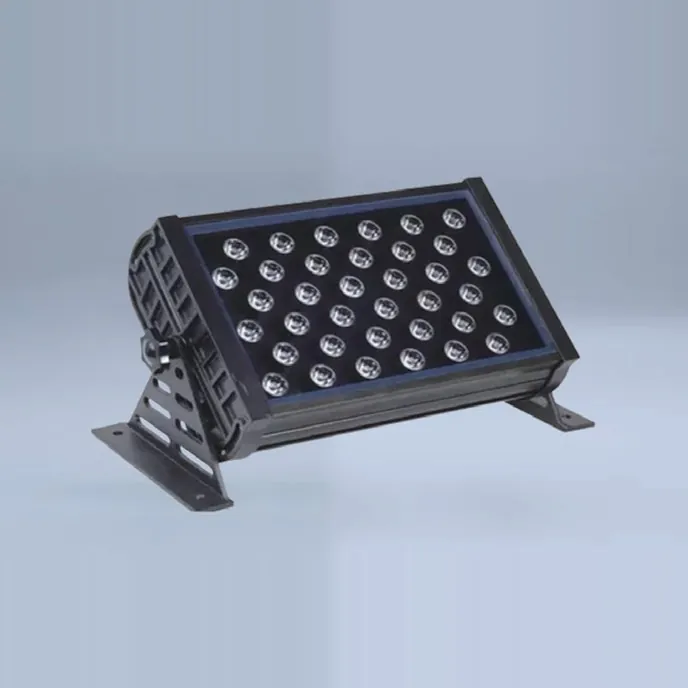
For hotels, campuses and residential developments, kits are rarely enough. We supply landscape spotlights and floodlights, in-ground uplights and garden lights for projects. Send us a plan of the area and we will suggest fixtures, quantities and a layout.
Sources
Frequently asked questions
What comes in an LED landscape lighting kit?
Usually a set of spotlights or path lights, a plug-in low-voltage transformer with a timer and photocell, a reel of low-voltage cable, connectors and ground stakes. Some kits add in-ground lights or wall lights.
How big a transformer do I need for landscape lights?
Add up the wattage of all fixtures and choose a transformer rated about 20–25% higher. A kit of eight 5 W LED lights (40 W) works on a 60–100 W transformer, leaving room to add more.
Are landscape lighting kits worth it?
For a small garden and a quick DIY result, yes. For larger gardens, specific effects or long-term durability, choosing fixtures and a transformer separately usually gives better results.