
Rechargeable Batteries for Solar Lights: Ni-MH, Li-ion and LiFePO4 Compared
Which rechargeable batteries solar lights use, from AA Ni-MH in garden lights to LiFePO4 packs in street lights: capacity, voltage, cycle life, heat, replacement and how to size a battery.
Key points
- Small garden lights use 1.2 V Ni-MH AA or AAA cells; wall and flood lights use 3.2–3.7 V lithium cells; street lights use 12.8 V or 25.6 V LiFePO4 packs.
- Replace like for like: same chemistry and voltage. Capacity can be the same or higher; never fit alkaline cells in a solar light.
- LiFePO4 lasts about 2,000 or more cycles to 80% capacity and handles heat best, which is why it dominates solar street lights.
- Battery capacity in watt-hours (V × Ah) is what to compare between lights and between replacement batteries.
The battery is the part of a solar light that wears out first. The LEDs can last tens of thousands of hours and the panel decades, but the battery loses capacity with every cycle and faster in heat. Choosing the right chemistry, and replacing it correctly, decides how many years a solar light really lasts.
Which battery each type of solar light uses
| Light | Typical battery | Voltage | Capacity |
|---|---|---|---|
| Stake and path lights | Ni-MH AA or AAA | 1.2 V | 300–2,000 mAh |
| String and decorative lights | Ni-MH AA, or small Li-ion | 1.2 / 3.7 V | 600–2,000 mAh |
| Wall and security lights | Li-ion 18650 cells or LiFePO4 | 3.2–3.7 V | 2–10 Ah |
| Solar flood lights | LiFePO4 packs | 3.2 V | 5–30 Ah |
| All-in-one street lights | LiFePO4 packs | 12.8 V | 9–60 Ah |
| Split street lights | LiFePO4 or gel | 12.8 / 25.6 V | 30–200 Ah |
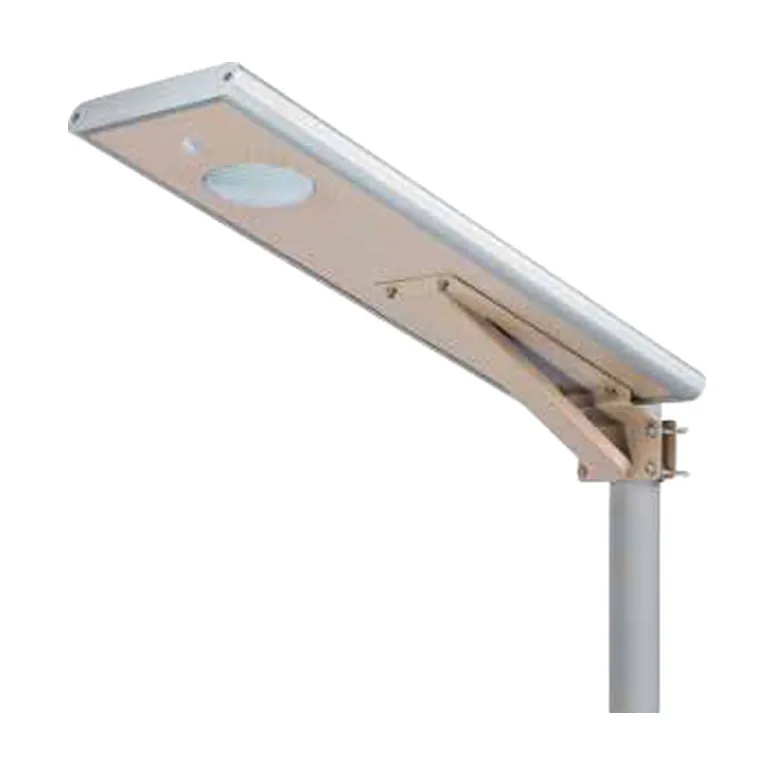
Our 5 W solar wall light uses a 3.7 V 8 Ah lithium battery; the all-in-one SL series uses 12.8 V lithium batteries from 9 to 33 Ah.
The chemistries compared
| Ni-MH | Li-ion (NMC) | LiFePO4 | Gel lead-acid | |
|---|---|---|---|---|
| Cell voltage | 1.2 V | 3.6–3.7 V | 3.2 V | 2 V (12 V blocks) |
| Energy per weight | Low | High | Medium | Low |
| Cycle life to 80% | 300–1,000 | 500–1,000 | 2,000+ | 500–800 at 50% DoD |
| Heat tolerance | Fair | Poorer; ages fast in heat | Good | Poor above 35 °C |
| Safety | Good | Needs protection circuit | Very good | Good |
| Typical use | Garden lights | Small lights, portable | Street, flood, wall lights | Older split systems |
For a detailed comparison of the two main street light options, see LiFePO4 vs gel batteries.
Replacing batteries in garden lights
- Match the size: AA or AAA, sometimes a non-standard size such as 2/3 AA
- Match the chemistry and voltage: Ni-MH 1.2 V replaces Ni-MH or older Ni-Cd 1.2 V
- Capacity: the same or somewhat higher mAh is fine; very much higher may not fully charge from a tiny panel
- Low self-discharge Ni-MH holds charge better through cloudy spells
- Never alkaline: they are not rechargeable and can leak
Charge new cells in sunlight for one or two full days before judging runtime.
Replacing lithium batteries
Lithium batteries in wall, flood and street lights have a built-in protection board, and the light’s controller is set for that chemistry. When replacing:
- Use the same chemistry: LiFePO4 for LiFePO4 (3.2 V per cell), Li-ion for Li-ion (3.7 V per cell)
- Match the pack voltage exactly (for example 12.8 V LiFePO4)
- Capacity can increase if it fits and the panel can recharge it
- Connector and cable polarity must match
- For street lights, check that the controller’s charge settings suit the new pack
Fitting a Li-ion pack where LiFePO4 was used, or the other way round, can overcharge or undercharge it. If in doubt, ask the supplier for the original part number.
Why batteries fail early
| Cause | Effect | Prevention |
|---|---|---|
| Heat | Faster capacity loss, especially Li-ion and gel | LiFePO4, shaded or vented battery position |
| Deep discharge every night | Fewer cycles | Larger battery, dimming modes |
| Never fully charged | Ni-MH and lead-acid lose capacity | Panel sized to recharge fully, clean panel |
| Cold | Temporary capacity loss; lithium must not charge below 0 °C | Controllers with low-temperature charge cut-off |
| Cheap cells | Capacity well below label | Reputable suppliers, test reports |
Sizing a battery for a solar light
Battery energy in Wh = voltage × Ah. For a light that runs 12 hours with dimming, average 40% of a 30 W LED:
- Energy per night ≈ 30 W × 0.4 × 12 h ≈ 144 Wh
- Usable battery at 80% depth of discharge for LiFePO4: battery ≥ 144 ÷ 0.8 = 180 Wh for one night
- For two to three nights of autonomy: 360–540 Wh, about 28–42 Ah at 12.8 V
Our battery autonomy calculator runs this with your own power, hours, dimming and climate. Our battery capacity guide explains each step.
Battery life in years
Cycle life converts to years by how deep the battery is discharged each night:
- A LiFePO4 pack discharged to about 30–40% each night may last 8 years or more
- The same pack discharged to 80% each night may last about 5–6 years
- High temperature shortens both
This is why a slightly larger battery often costs less over the life of the light.
Checking a battery claim
When comparing solar lights or replacement packs, ask for:
- Chemistry and cell type
- Nominal voltage and capacity in Ah, and the Wh figure
- Cycle life and at what depth of discharge
- Operating and charging temperature ranges
- Whether a test report is available
Be wary of very high mAh numbers on small cells; an AA Ni-MH above about 2,800 mAh is unlikely.
Recycling
Ni-MH, lithium and lead-acid batteries should not go into household waste. Return them to collection points or the supplier. For large projects, plan battery replacement and recycling into the maintenance contract.
For projects
If you are replacing batteries across a solar street light project, send us the light model, battery label photos, controller type and the number of units. We will advise on compatible packs, or on upgrading to LiFePO4 where older gel batteries were used.
Sources
Frequently asked questions
What rechargeable batteries are best for solar lights?
For small garden lights with AA or AAA cells, low self-discharge Ni-MH of the same size and voltage. For larger lights, the same lithium chemistry the light was designed for; for solar street lights, LiFePO4 (lithium iron phosphate) packs give the longest life and best heat tolerance.
Can I use regular AA batteries in solar lights?
No. Alkaline batteries are not rechargeable; the solar charger will try to charge them, which can make them leak or swell. Use rechargeable cells of the same type and voltage as the original.
How often should solar light batteries be replaced?
Ni-MH cells in garden lights typically every 1–2 years. Li-ion cells every 2–4 years. LiFePO4 packs in street lights often 5–8 years, depending on depth of discharge and temperature.