
LED Flood Light Bulbs: PAR and BR Bulbs for Indoor, Outdoor and Colour-Changing Use
LED flood light bulbs explained: PAR38, PAR30, PAR20, BR30 and BR40 shapes, indoor vs outdoor ratings, beam angles, lumens, colour-changing RGB bulbs and when to choose a fixture instead.
Key points
- LED flood bulbs come in reflector shapes: PAR for focused beams and outdoor use, BR for soft, wide light indoors.
- Outdoor bulbs must be rated for wet locations and used in fittings that protect the socket.
- Typical lumens: PAR20 about 450–550 lm, PAR30 750–1,000, PAR38 1,200–1,800, BR30 650–850, BR40 1,000–1,400.
- Colour-changing RGB bulbs suit decoration; for security or large areas, a dedicated LED floodlight is brighter and more durable.
Before LED floodlight fixtures were common, homes and shops used reflector bulbs in lampholders: the classic “flood” bulb in a porch light, a recessed can or a garden spike. LED versions of these bulbs are still widely sold. This guide explains the types and when a bulb is the right choice.
Reflector bulb shapes
PAR (parabolic aluminised reflector). A thick, often glass or aluminium body with a precise reflector and a flat lens. Gives a defined beam. Sizes are in eighths of an inch: PAR20 is 2.5 in, PAR30 is 3.75 in, PAR38 is 4.75 in across.
BR (bulged reflector). A softer reflector with a domed face, giving a wide, even beam. Common in recessed cans at home. BR30 and BR40 are the usual sizes.
R (reflector). An older, simpler reflector shape, similar to BR.
Most use an E26/E27 screw base; some use E14 or GU10.
Typical output
| Bulb | Typical LED wattage | Typical lumens | Beam |
|---|---|---|---|
| PAR20 | 6–8 W | 450–550 lm | 25–40° |
| PAR30 | 9–12 W | 750–1,000 lm | 25–40° |
| PAR38 | 13–20 W | 1,200–1,800 lm | 25–40° |
| BR30 | 8–10 W | 650–850 lm | 100–120° |
| BR40 | 12–17 W | 1,000–1,400 lm | 100–120° |
For comparison, an old 90 W halogen PAR38 gave about 1,300 lm.
Indoor flood bulbs
BR30 and BR40 bulbs are the standard for recessed cans in homes. They give soft light with little glare. PAR bulbs suit track heads and accent lights where you need a defined beam on a picture, shelf or worktop. For recessed cans, a retrofit trim that replaces both bulb and trim is often better than a bulb.
Check that the bulb is rated for enclosed fittings if it goes in a closed can, and dimmable if on a dimmer.
Outdoor flood bulbs
PAR38 bulbs are the classic outdoor flood bulb, in porch lights, eave holders and garden spikes. For outdoor use:
- Choose bulbs rated for wet locations, sealed against rain
- Use lampholders with weatherproof gaskets so water does not reach the socket
- Point the bulb down or sideways where possible; bulbs pointing up collect water at the base
- Use motion sensors or photocells in the holder to save energy
Colour-changing bulbs
RGB and RGBW flood bulbs can produce millions of colours, controlled by remote, app or smart home system. They are popular for:
- Holiday and party lighting
- Accent lighting on trees and walls
- Coloured porch lights for events
Limits: in colour modes, output is lower than in white, and colours look weaker at distance. For colour-washing large facades and trees, dedicated RGB floodlights are much brighter. See RGB colour-changing flood lights.
Beam angle choice
- Narrow (15–25°): picture lights, tall trees, distant targets
- Medium (30–40°): porch and yard lighting, walls
- Wide (100–120° BR): general indoor lighting in cans
The flood light lens guide explains beam angles in more detail.
Colour temperature and CRI
- 2700–3000 K for homes and porches
- 3000–4000 K for shops and displays
- 4000–5000 K for security and utility areas
Choose CRI 90 for kitchens, retail displays and art.
Bulb or fixture?
Bulbs make sense when you already have lampholders or cans and want a quick upgrade. A dedicated LED floodlight fixture is better when:
- You need more than about 2,000 lm
- The light is exposed to rain, dust or knocks
- You want long life without bulb changes
- You need precise optics, such as asymmetric beams
- The site is commercial or industrial
A 30–50 W LED floodlight gives 3,000–7,000 lm in a sealed IP65 body, far more than any screw-in bulb. Our slim LED floodlight is a common choice for yards and building perimeters. For more on choosing floodlights, see LED flood light questions.
Heat and lifetime
LED bulbs fail mainly from heat. Reflector bulbs in enclosed cans or sealed outdoor holders run hot. Choose bulbs with a good heat sink, rated for enclosed fittings, and avoid very high wattages in small holders.
Replacing halogen floods
| Halogen | LED replacement |
|---|---|
| 50 W PAR20 | 6–7 W LED PAR20 |
| 75 W PAR30 | 9–11 W LED PAR30 |
| 90–120 W PAR38 | 13–18 W LED PAR38 |
| 65 W BR30 | 8–10 W LED BR30 |
Savings are typically 80–85% in energy, and LED bulbs last many times longer.
Smart bulbs
Smart flood bulbs connect to Wi-Fi, Zigbee or Bluetooth and allow schedules, scenes and colour control. Outdoors, check that the signal reaches the bulb, and that the bulb is rated for wet locations.
Choosing for a porch or entrance
A porch or entrance is the most common place for an outdoor flood bulb. Here, comfort matters more than raw output. A single 800–1,200 lumen PAR30 or PAR38 bulb at 2700–3000 K, aimed down at the step and door, welcomes visitors and lets cameras see faces without dazzling anyone. Bulbs aimed outward across the garden mostly light the neighbours’ windows. If the holder has a motion sensor, set a short hold time and a sensible range so the light is not triggered by passing cars. For security lighting over a wider area, a dedicated floodlight fixture on the wall or eave is a better tool than a bulb.
Disposal and recycling
LED bulbs contain electronics and should be recycled as electronic waste rather than put in household rubbish. Old halogen bulbs can usually go in general waste, but check local rules.
Projects
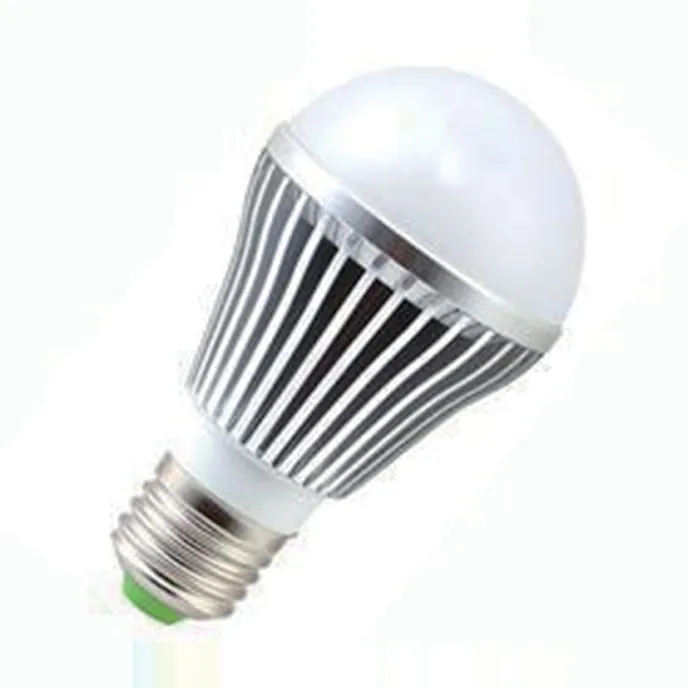
For hotels, shops and commercial sites, we supply LED bulbs, spotlights and floodlights. Our LED bulb BG-QPVAJ range covers general lamp replacement. Send us your fitting list and we will suggest bulbs or fixtures to suit.
Sources
Frequently asked questions
What is the difference between PAR and BR flood bulbs?
PAR (parabolic aluminised reflector) bulbs have a precise reflector and give a defined beam, often 25–40°. BR (bulged reflector) bulbs have a softer, wider beam of around 100–120°, suited to recessed cans indoors.
Can indoor LED flood bulbs be used outside?
Only if they are rated for damp or wet locations and used in a fitting that protects them. Many indoor bulbs are not sealed and fail quickly when exposed to rain.
Are colour-changing flood bulbs bright enough?
They are fine for accent and party lighting. In colour modes their output is lower than in white. For lighting facades or large areas in colour, a dedicated RGB floodlight is much brighter.