Solar Street Lights in Kenya: Sizing for Nairobi, Mombasa, Kisumu and Garissa
Sizing solar street lights for Kenya with PVGIS data: worst-month sun hours for Nairobi, Mombasa, Kisumu and Garissa, panel and battery for a 40 W light, and quotation checks.
Key points
- Kenya is sunny on average, but Nairobi's worst month (June, the cool cloudy season) has only about 4.05 peak sun hours on a flat panel, against 5.5 in Kisumu and Garissa.
- A 40 W light running 5 h at full power and 7 h at 30% uses about 316 Wh a night and needs about a 120 Wp panel in Nairobi, 100 Wp in Mombasa and 80 Wp in Kisumu or Garissa.
- In Nairobi, an 82 Ah battery with 120 Wp passes the average day but takes weeks to refill after four overcast days; 100 Ah with 150 Wp lasts about 5 nights and refills in about 8 days.
- Near the equator, tilt the panel only 10–20°, mainly so rain cleans it; at the coast, specify corrosion protection for poles, brackets and fixings.
Kenya has some of the best solar resources in the world, and solar street lights are now common on county roads, in markets, estates and schools. Yet the same complaint comes up in Nairobi every year: lights that were bright in February are dim or dark by July. The equator does not guarantee sun every month. This guide sizes a typical light for four Kenyan cities using public satellite data and our free calculators.
Sun hours by city
We took monthly irradiation on a horizontal surface from the European Commission’s PVGIS database. The figures are average peak sun hours (kWh/m² per day):
| City | Annual average | Worst month | Why that month |
|---|---|---|---|
| Nairobi (highlands, 1,700 m) | 5.46 | 4.05 (June) | Cool, overcast “winter” season, June–August |
| Mombasa (coast) | 5.96 | 4.47 (May) | Long rains |
| Kisumu (Lake Victoria) | 6.27 | 5.55 (June) | Rain spread through the year, but strong sun |
| Garissa (north-east, arid) | 6.08 | 5.57 (June) | Dry and sunny almost all year |
The annual averages differ by less than 1 hour. The worst months differ by 1.5 hours, which in Nairobi means a 50% larger panel than in Garissa for the same light. Nairobi and the central highlands (Nyeri, Nakuru, Kiambu) are the hard case: the long rains in April and May are followed by weeks of low grey cloud from June to August, which many people do not expect on the equator.
The light we sized
A typical light for a county road, estate or market:
- 40 W LED, 5 hours at 100% from dusk, then 7 hours at 30%
- LiFePO4 battery at 12.8 V, MPPT controller, 90% efficient driver
- 3 nights of battery autonomy
That uses about 316 Wh a night and needs a battery of about 1,050 Wh (82 Ah). The solar street light calculator gives the panel for each city:
| City | Worst month (PSH) | Panel needed | Standard panel |
|---|---|---|---|
| Nairobi | 4.05 | about 108 Wp | 120 Wp |
| Mombasa | 4.47 | about 98 Wp | 100 Wp |
| Kisumu | 5.55 | about 79 Wp | 80 Wp |
| Garissa | 5.57 | about 79 Wp | 80 Wp |
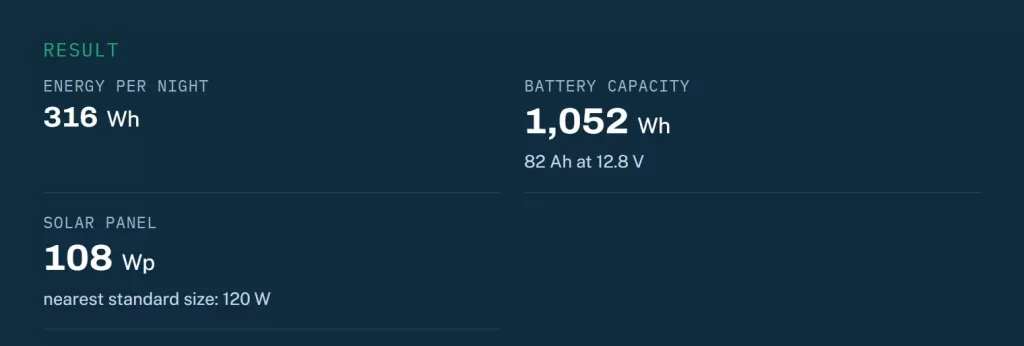
Open the Nairobi example and enter your own wattage and schedule.
Quiet village roads usually need less than this 40 W light; our guide to rural solar street lights sizes 20 W and 30 W lights and covers spacing per kilometre, theft and who maintains them.
The overcast-season test
The table balances one average day of the worst month. Nairobi’s June brings runs of heavily overcast days, followed by days that are only moderately bright. We ran the light through the battery autonomy calculator with a 4-day overcast spell, assuming the panel gives 20% of a normal day under heavy cloud:
| System | Nights on battery | Days to refill after 4 overcast days | Result |
|---|---|---|---|
| 82 Ah + 120 Wp | about 3.8 | about 27 | Fails: the battery never catches up |
| 100 Ah + 150 Wp | about 5.1 | about 8 | Passes |
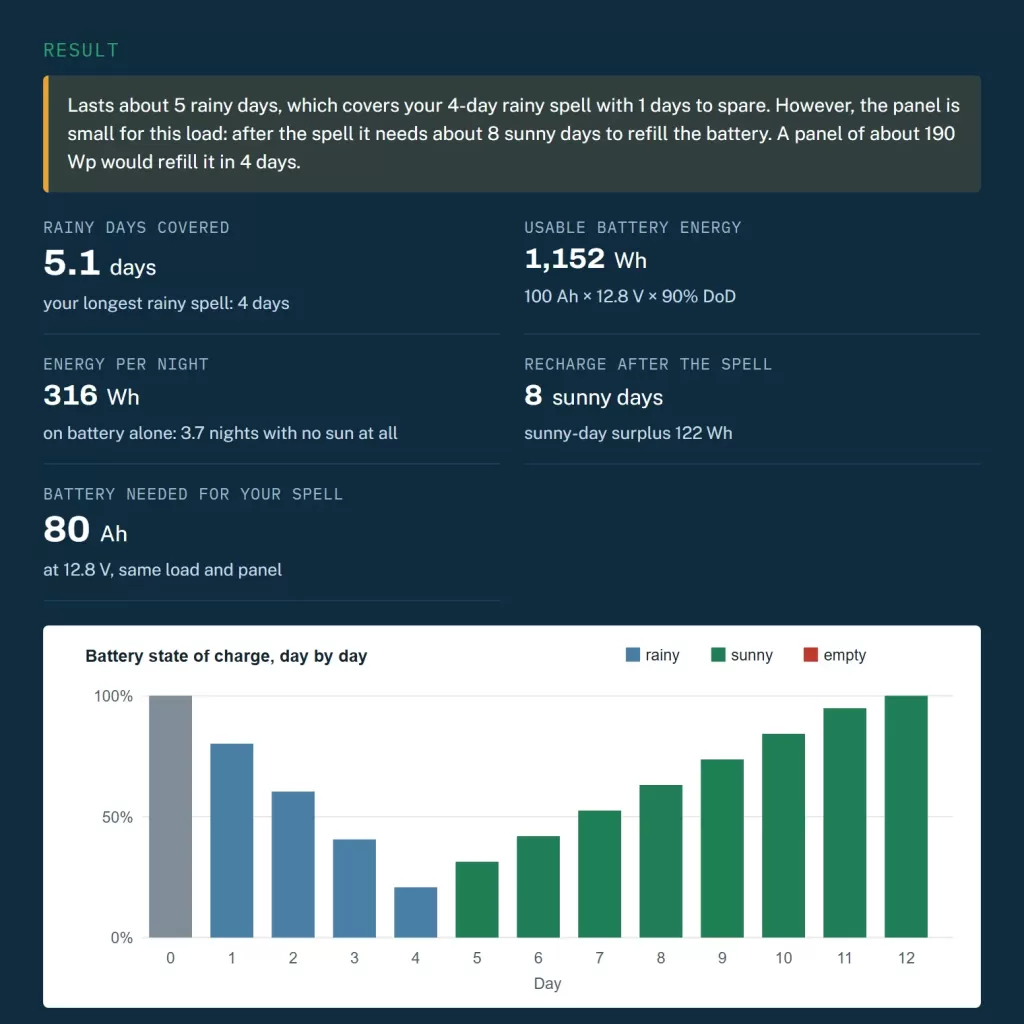
Try the Nairobi example and reduce the panel to 120 Wp to see the recovery time grow.
The lesson is the same as in our rainy-day guide: the smaller system is not wrong on an average day; it has no surplus to refill the battery. In the highlands, buy the extra 30 Wp. In Kisumu and Garissa, the lighter system is fine.
Panel tilt on the equator
Kenya lies between about 5° N and 4.7° S, so the sun is north of the panel from about April to August and south of it from October to February. Our solar panel tilt guide shows the effect for Nairobi:
- Flat: worst month 4.05 PSH
- 10° facing north: 4.24
- 20° facing north: 4.35, though the annual total falls slightly
So for Nairobi and southern Kenya, a north-facing tilt of 10–20° helps the June worst month a little. In the north, where the worst month may fall in a different season, check PVGIS for the site. Either way, never install the panel flat: it collects dust and water, and dust in the dry season can cost more than any tilt gains.
Coast, dust and heat
- Mombasa and the coast. Salt air corrodes steel and aluminium. Specify hot-dip galvanised poles with a minimum zinc thickness, stainless-steel fixings, powder coating suited to coastal sites and an IP66 or IP67 lamp head. See IP65 vs IP66 vs IP67.
- The north and east. Garissa, Isiolo and Turkana have strong sun, high temperatures and dust. The panel is not the limit here; the battery’s temperature is. Keep it shaded and ventilated, and use LiFePO4. See how long solar street lights last.
- Wind. Open plains and the coast can be windy; pole and foundation design must allow for the panel’s wind load. See our street light pole guide.
Theft and vandalism
Panels and batteries on accessible poles are a target in many places. Common measures are:
- Mounting the battery at the top of the pole, inside the pole, or in an all-in-one housing rather than in a box at head height
- Anti-theft screws and brackets for the panel
- Poles of at least 6 m so the equipment is out of easy reach
- Remote monitoring on larger projects, so a dark or removed light is noticed quickly; see smart street light control systems
Import documents
Many products imported into Kenya need a Certificate of Conformity under the Kenya Bureau of Standards (KEBS) Pre-Export Verification of Conformity (PVoC) programme. Lithium batteries also need UN38.3 test reports and dangerous-goods documents for shipping. Tell your supplier at the quotation stage that the goods are for Kenya, so inspection and documents are planned in before the goods leave the factory.
What to check in a quotation
- Panel Wp and battery Wh for your county, with the sun hours assumed. If the quote does not say, ask.
- Real usable battery capacity in Wh at 12.8 V (or 25.6 V), from LiFePO4 cells
- MPPT controller with a programmable dimming profile and low-battery dimming; see MPPT vs PWM
- Panel tilt and direction for the site
- Coastal-grade corrosion protection where relevant
- Pole height, spacing and lamp wattage for the road, checked with our pole height and spacing calculator
Get a sizing for your site
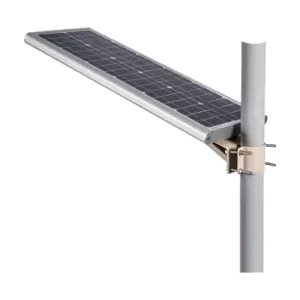
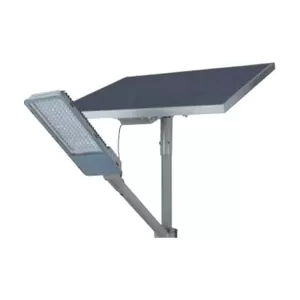
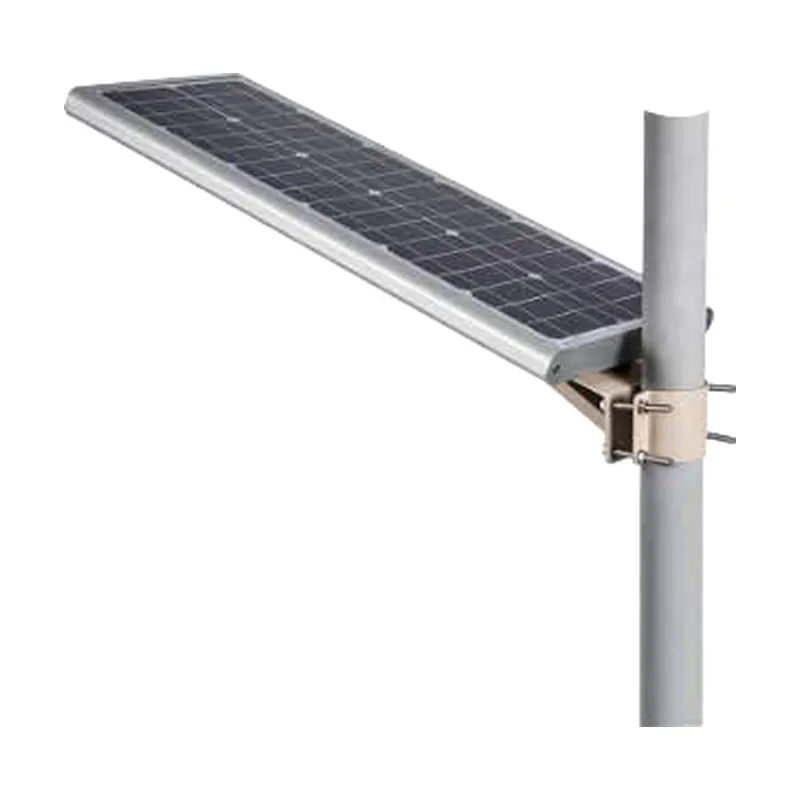
Send us the GPS location, the road width, the number of lights and the burning hours. We check panel and battery against satellite data for your exact site and quote complete sets. Our all-in-one solar street lights (15–60 W) suit estates, markets and paths; our split solar street lights take larger, tilted panels for the highlands and main roads.
Sources
Frequently asked questions
How many peak sun hours does Nairobi get?
PVGIS satellite data give Nairobi an annual average of about 5.5 kWh/m² per day on a horizontal surface, but only about 4.05 in June, during the cool, overcast season. Size solar street lights for that worst month, not the annual average.
What size solar panel does a 40 W solar street light need in Kenya?
With 5 hours at full power and 7 hours at 30% (about 316 Wh a night), an MPPT controller and 3 nights of battery: about 120 Wp in Nairobi, 100 Wp in Mombasa and 80 Wp in Kisumu or Garissa. Add margin for rainy-season recovery and for dust.
Which way should solar street light panels face in Kenya?
Kenya lies on the equator, so the sun passes north of the panel for part of the year and south for the rest. For Nairobi and the south, a slight north-facing tilt of 10–20° helps the June worst month; in the north, a slight south-facing tilt suits. The tilt also lets rain wash the panel.