Rural Solar Street Lights: Sizing, Spacing, Theft and Maintenance for Village Roads
How to plan solar street lights for villages and rural roads: how much light, 20 W and 30 W sizing from our calculator, spacing per kilometre, lithium vs gel, theft and who maintains them.
Key points
- Village roads need only a few lux; a 20 W LED on a 5–6 m pole at about 17 m spacing gives around 9–10 lux on a 5 m road in our calculator.
- For 3 nights of autonomy at 4.5 sun hours, a 20 W light on a typical profile needs about 474 Wh of lithium battery and a 50 Wp panel; a 30 W light about 711 Wh and 80 Wp.
- Lithium (LiFePO4) batteries give about 1.8 times the usable energy of the same nominal gel capacity, which matters where lights are rarely serviced.
- Plan theft protection and a named maintenance person before ordering; in rural projects these matter as much as the technical sizing.
Solar street lights are often the only practical option for villages and rural roads: there is no grid nearby, or connecting a few dozen lights would cost more than the lights themselves. But rural projects fail for different reasons from city ones. The sizing must work with little maintenance, theft is a real risk, and someone has to be responsible after the contractor leaves. This guide covers all three, with numbers from our calculators.
How much light a village road needs
Rural roads and village lanes carry few vehicles at low speed and are used mostly by people on foot, bicycles and motorbikes. They usually fall into the lowest lighting classes, around 3–7.5 lux average. The aim is to see the road edge, potholes, people and animals, not to light it like a city street.
On a typical 5 m wide village road with 5 m poles on one side and 20 W LEDs at 100 lm/W, our pole height and spacing calculator gives:
- spacing about 17 m, set by uniformity (3.5 × pole height);
- about 9.5 lux average, comfortably above the P4 class of 5 lux;
- about 59 lights per kilometre.
At junctions, bridges, schools, clinics and markets, add lights or use 30 W heads.
Sizing the battery and panel
We used our solar street light calculator with a profile common on rural roads: full power for 4 hours after dusk, then 30% for the rest of a 12-hour night, 4.5 peak sun hours (a typical figure for much of Africa and South Asia in the weaker months), an MPPT controller and 3 nights of autonomy:
| LED power | Energy per night | Battery needed (LiFePO4) | Panel needed | Standard panel |
|---|---|---|---|---|
| 20 W | 142 Wh | 474 Wh (37 Ah at 12.8 V) | 44 W | 50 Wp |
| 30 W | 213 Wh | 711 Wh (56 Ah at 12.8 V) | 66 W | 80 Wp |
With gel batteries, which should only be discharged to about 50%, the 30 W light would need about 1,280 Wh of nominal capacity instead of 711 Wh. That is why we recommend lithium (LiFePO4) for rural projects where batteries are rarely checked: more usable energy, lighter weight and a longer cycle life. Our LiFePO4 vs gel guide compares them in detail.
Use your own site’s sun hours from PVGIS or a similar source for the worst month, not the yearly average.
All-in-one or split for rural roads
| All-in-one | Split | |
|---|---|---|
| Installation | Fastest, no cabling | Panel, battery and head mounted separately |
| Theft | Everything high up in one body | Battery box and panel are targets if mounted low |
| Panel and battery size | Limited by the housing | Larger panel and battery possible |
| Shade and orientation | Panel faces the same way as the lamp | Panel can face the sun independently |
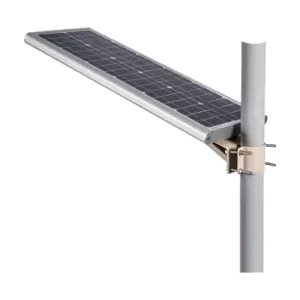
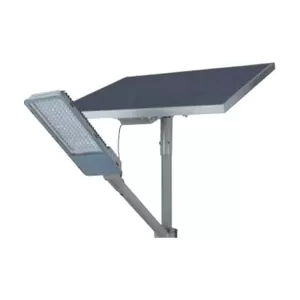
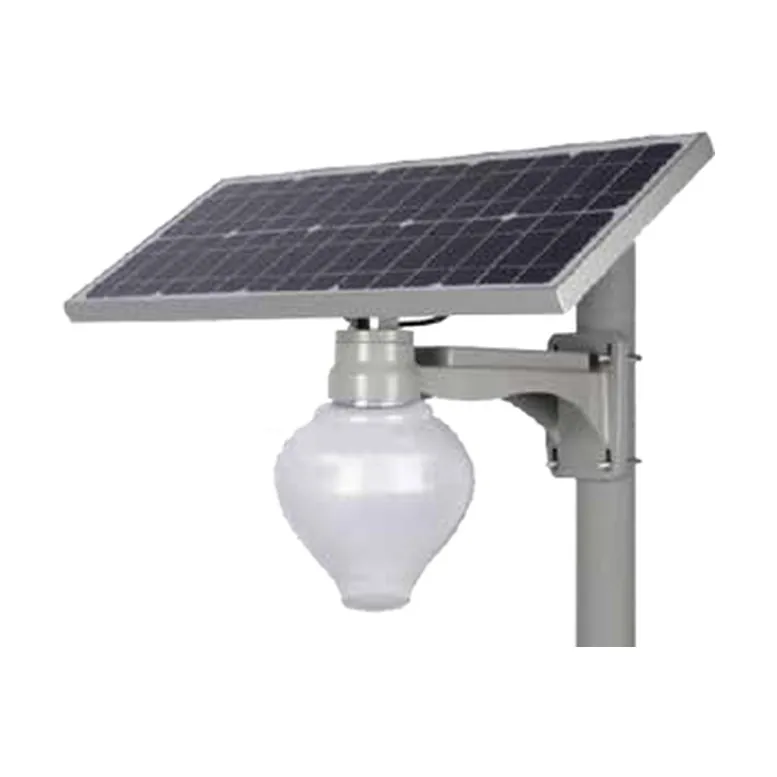
For most village lanes, an all-in-one solar street light such as our 15–60 W SL series is the simplest choice. For roads in cloudy regions, or where the sun is on the wrong side, a split solar street light like the SL4830G (20–60 W, 60–180 Wp panel, designed for 3–5 rainy days) gives more margin. Our all-in-one vs split guide covers the trade-offs.
Theft and vandalism
In many rural projects, theft does more damage than weather. Measures that work:
- Anti-theft fasteners on the lamp head, battery box and panel.
- Battery up the pole or inside the lamp body, never in a box at the base.
- Panels at height and on brackets that need special tools.
- Marking panels and batteries with the project name so they are hard to resell.
- Community involvement: let the village decide where lights go and who looks after them.
Some governments now treat solar light theft seriously; see solar street lights in Nigeria for one market’s experience.
Who maintains them?
Solar street lights need little maintenance, but not none:
- clean the panels every few months in dusty areas;
- check that trees have not grown over panels;
- replace batteries after their life, typically 5–8 years for LiFePO4;
- fix any damaged or failed units quickly, before people lose trust in the project.
Name a person or organisation responsible for this before the lights are installed, and leave them spare fuses, a few spare controllers and contact details for support.
Budget per kilometre
To budget a village road, multiply the lights per kilometre by the price of the chosen light and pole, and add foundations, transport and installation. At about 17 m spacing, one side of the road needs around 59 lights per kilometre; at 20 m, 50. Lighting only junctions and populated stretches instead of the whole road can cut the number by half or more without much loss of safety.
Summary
For rural roads, keep the light modest (15–30 W), the spacing sensible (3–3.5 × pole height) and the battery generous, preferably lithium. In our examples, a 20 W light needs about 474 Wh of lithium battery and a 50 Wp panel for three dull nights. Above all, plan theft protection and maintenance before ordering: those decide whether the lights are still working in five years.
Sources
Frequently asked questions
What wattage solar street light is best for a village road?
Usually 15–30 W of LED on 4–7 m poles. 20 W is enough for most village lanes at a few lux; use 30 W for wider roads, junctions, markets and school entrances.
How far apart should solar street lights be in a village?
Roughly 3–3.5 times the pole height: about 15–20 m for 5–6 m poles. Wider spacing saves money but leaves dark gaps; at junctions and crossings, put a light close by.
How do you stop solar street lights being stolen?
Use anti-theft bolts, mount the battery high or inside the pole or lamp body, involve the community in choosing locations, mark components, and agree a responsible person before installation.
All-in-one or split solar street lights for rural roads?
All-in-one lights are quicker to install and harder to steal from because everything is up the pole. Split lights allow a bigger panel and battery for cloudy regions or long nights, and let the panel face the sun independently.