Street Light Cycling On and Off: Six Causes, How to Tell Them Apart, and What the Fix Saves
Why a street light goes on and off at night: end-of-life sodium lamps, photocells seeing their own light, overheating drivers, loose connections and solar battery cut-off, with what an LED swap saves.
Key points
- The classic cause is an old high-pressure sodium lamp: as it ages its operating voltage rises until the ballast cannot hold the arc, so it goes out, cools for a minute or two and restarts.
- A photocell that sees light reflected from its own lamp, a wall or a sign switches the light off, then on again when it goes dark: a slow cycle of several minutes.
- An LED light that dims or switches off after running for a while and returns later often points to a driver protecting itself from heat or from a supply problem.
- On solar street lights, a battery that cuts off at low voltage, recovers and reconnects makes the light flash on and off late at night.
- In our retrofit calculator, replacing one cycling 250 W sodium light (about 288 W with ballast) with a 100 W LED saves about 821 kWh a year.
A street light that goes out, waits a minute or two and comes back on, over and over all night, is one of the most common street lighting faults. Residents notice it and report it; maintenance teams can often diagnose it from the timing alone. This guide explains the six usual causes, how to tell them apart, and what the fix saves when the answer is to replace the lamp with LED.
First, look at the timing
The rhythm of the cycle is the best clue:
| Pattern | Most likely cause |
|---|---|
| Lamp glows orange, goes out, back on after 1–2 minutes, repeats all night | End-of-life sodium lamp |
| Light switches off soon after coming on, back on after several minutes | Photocell seeing light |
| Light flickers or drops out when wind blows | Loose connection |
| LED light dims or switches off after running a while, returns later | Driver heat or supply protection |
| Solar light goes on and off late at night, worse after cloudy days | Low battery cut-off and reconnect |
| Light flashes rapidly | Failing driver or ballast, or a failing photocell contact |
Cause 1: end-of-life high-pressure sodium lamp
High-pressure sodium (HPS) lamps are the orange street lights still common on many roads. As an HPS lamp ages, the voltage it needs to keep its arc going rises. Eventually it rises above what the ballast can supply. The lamp goes out, cools, the igniter strikes it again, it warms up over a minute or two, and goes out again. This is called cycling, and it is the classic sign that the lamp has reached the end of its life.
The fix is a new lamp, or better, conversion to LED. A cycling lamp also stresses the igniter and ballast, so on an old fitting replacing only the lamp is often a short-term repair. Our article on replacing high-pressure sodium lights with LED covers road-scale conversions.
Cause 2: the photocell sees light
A photocell switches the light on when it gets dark and off when it gets light. If the photocell can see light from:
- its own lamp, reflected off a white wall, a sign or a shiny road surface,
- a neighbouring floodlight or a lit advertising board,
- car headlights sweeping past repeatedly,
it decides it is daytime and switches the light off. It gets dark again, and the photocell switches it back on after its built-in delay. The cycle repeats every few minutes.
Fixes: turn the photocell to face north (away from the sun in the northern hemisphere, and away from reflections), fit a shield, or move to a photocell with a longer delay. Our guide to photocells for outdoor lights explains switching levels and NEMA twist-lock types.
Cause 3: a failing photocell
Photocells wear out. A failing one may switch at the wrong light level, chatter, or flash the light. On a NEMA twist-lock socket the test is simple: swap the photocell for a known good one, or for a shorting cap that keeps the light on, and see if the cycling stops.
Cause 4: loose or corroded connections
A loose terminal in the luminaire, a corroded twist-lock socket or a damaged cable joint can break the circuit intermittently, especially when the wind moves the pole. The light flickers or drops out, often with no regular rhythm. Look for heat marks on terminals and corrosion on socket contacts.
Cause 5: LED driver protection
LED drivers protect themselves. A driver that gets too hot, because the luminaire is sealed in direct sun, the heat sink is covered in dirt, or the driver is undersized, may dim or switch off until it cools. Drivers also shut down on overvoltage and some supply disturbances. The light switches off after running for some time and comes back later.
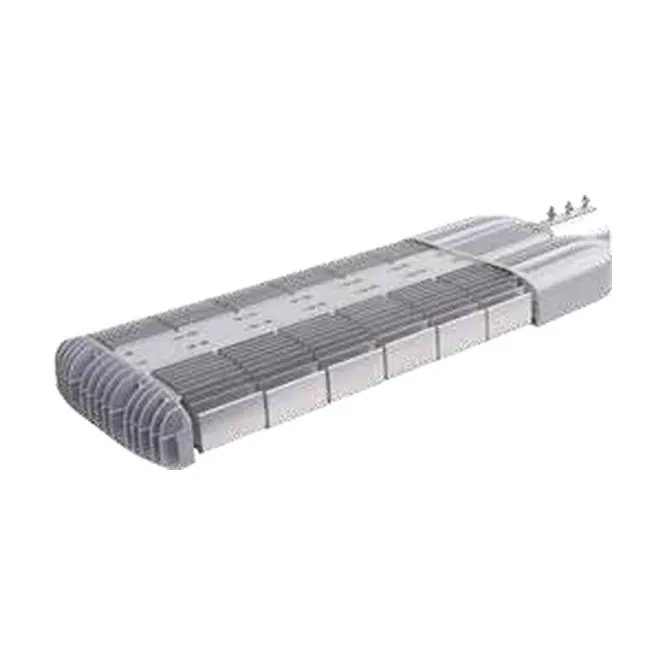
Check the luminaire’s operating temperature range against the site, clean the heat sink, and check the supply voltage at night, when load on the network is lower and voltage may be higher. Our modular LED street lights LDM30C are specified for −30 °C to +50 °C with a die-cast aluminium heat sink and an AC 185–264 V input range.
Cause 6: solar battery cut-off
On solar street lights, the controller protects the battery by switching the light off when the battery voltage falls to a minimum. Without the load, the battery voltage recovers slightly. If the reconnect level is set too close to the cut-off, the controller turns the light back on, the voltage drops again, and the light flashes on and off. It usually starts late at night and is worse after cloudy days.
Fixes: check for shade and dirt on the panel, check the battery health, and set a reconnect voltage clearly above the cut-off. Many controllers also have a step-down mode that dims the light as the battery gets low instead of running it to cut-off. Our solar street light troubleshooting guide walks through the checks, and our guide to solar street light battery replacement covers worn batteries.
What replacing a cycling sodium light saves
When the cause is an end-of-life sodium lamp, LED conversion is usually the right fix. We used our LED retrofit savings calculator for one light:
- 250 W HPS with a 15% ballast loss: about 288 W from the supply.
- Replaced by a 100 W LED.
- 12 hours a night, every night, at $0.15 per kWh.
| 250 W HPS | 100 W LED | |
|---|---|---|
| Energy per year | 1,259 kWh | 438 kWh |
| Cost per year | $189 | $66 |
The saving is 821 kWh a year per light, 65%, about $123 at our tariff, before counting fewer lamp changes. On a road with 100 such lights that is over 82,000 kWh a year. Open the example and enter your own number of lights and tariff. Our HPS to LED conversion chart gives typical LED wattages for other sodium lamps.
For residents
If a street light outside your home cycles on and off, report it to the local council, municipality or utility that maintains the lights, with the pole number if there is one. Do not try to repair it: street lights carry mains voltage and are mounted at height. A short note of the pattern (how often it goes off and for how long) helps the maintenance team bring the right parts.
For maintenance teams and contractors
Record the cycle pattern on fault reports; it narrows the cause before the crew arrives. Where many lights on a route are sodium lamps reaching end of life at the same time, a planned LED conversion is cheaper than replacing lamps and igniters one call-out at a time. Send us the lamp wattages, pole heights and spacing, and we will suggest LED wattages that meet the road’s lighting class at the existing spacing.
Sources
Frequently asked questions
Why does my street light keep turning on and off?
Most often because a high-pressure sodium lamp is at the end of its life and cannot stay lit. Other causes are a photocell seeing its own light, a loose connection, an overheating driver or, on solar lights, a low battery reconnecting.
How do I report a street light that cycles on and off?
Contact the local council, municipality or utility that maintains the street lights, with the pole number if there is one. Many have an online fault reporting form. Do not try to repair a public street light yourself.
Do LED street lights cycle on and off?
Much less often. When they do, the cause is usually a failing photocell, a loose connection, a driver protecting itself from heat or overvoltage, or a supply problem.
Why does a solar street light flash on and off at night?
Usually because the battery is low. The controller cuts the light off, the battery voltage recovers a little without load, and the controller turns the light on again. Check panel shading, dirt, battery health and the controller settings.